


Water hyacinth conversion to biochar for soil nutrient enhancement in improving agricultural product
- PMID: 39805940
- PMCID: PMC11730674
- DOI: 10.1038/s41598-024-84729-x
Water hyacinth conversion to biochar for soil nutrient enhancement in improving agricultural product
Abstract
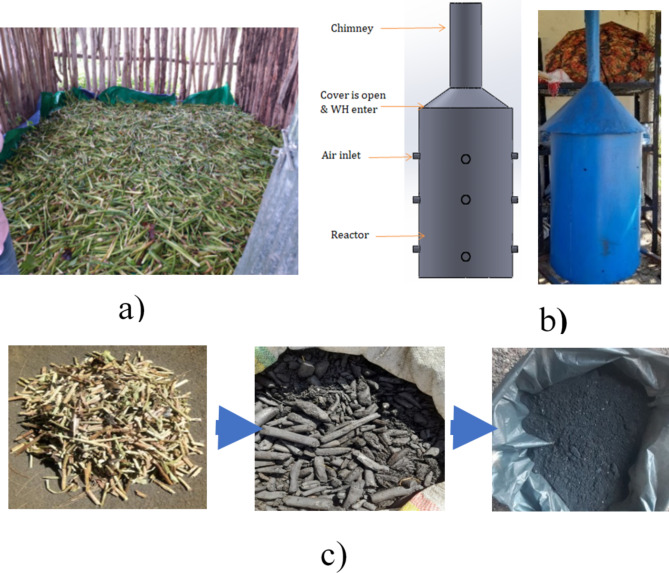
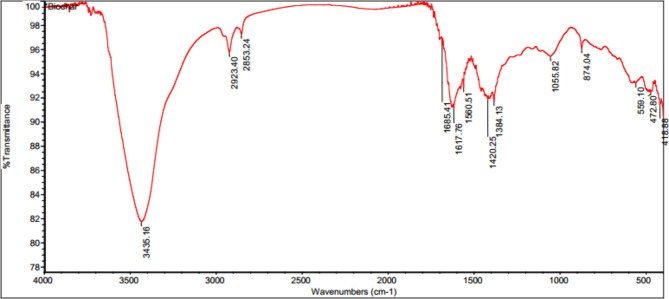
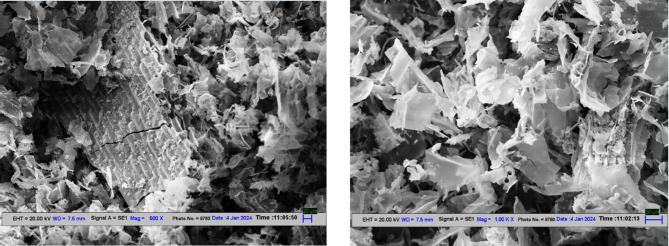
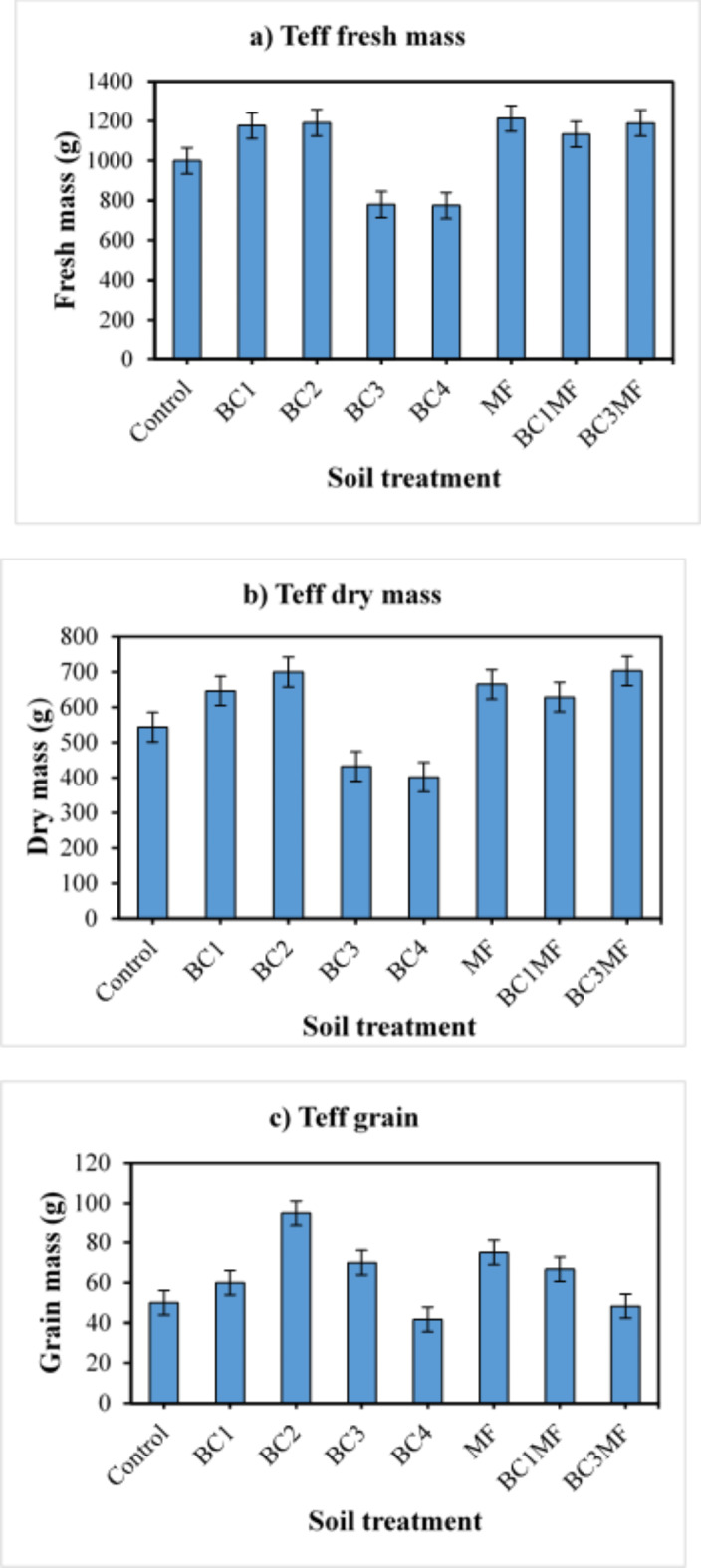
The conversion of water hyacinth into biochar offers a sustainable solution to mitigate its proliferation and enhances its potential as a soil amendment for agriculture. This study examined the physicochemical properties of water hyacinth biochar (WHBC) and its impact on soil fertility. Water hyacinth (Eichhornia crassipes) was pyrolyzed at 300 °C for 40 minute with restricted airflow (2-3 m/s), producing biochar with desirable properties and a yield of 44.6%. WHBC exhibited a pH of 8.11 ± 0.91, electrical conductivity of 18.70 ± 1.15 mS/cm, and nutrient contents including TN (0.69 ± 0.10%), TP (8.80 ± 0.01%), OC (13.95 ± 0.65%), C/N ratio (20.22 ± 0.95), S (0.34 ± 0.03%), and metallic nutrients (Ca, Mg, K). Heavy metals (Fe, Mn, Cu, Ni, Cd, Pb, Cr, Zn) were within permissible limits for biochar. Soil amended with 2500 kg/ha WHBC (BC2) produced comparable Teff crop yields (fresh mass: 1191.67 ± 428.44 g, dry mass: 700.00 ± 248.34 g, grain yield: 95.00 ± 39.69 g) to those with mineral fertilizers and mixed amendments. Fourier Transform Infrared (FTIR) and Scanning Electron Microscopy (SEM) revealed significant structural changes in WHBC, enhancing its pore structure and surface morphology. These results demonstrate the potential of WHBC as an effective soil amendment to improve agricultural sustainability and soil fertility.
Keywords: Biochar; Carbon stability; Nutrient; Teff; Water hyacinth.
© 2025. The Author(s).
Conflict of interest statement
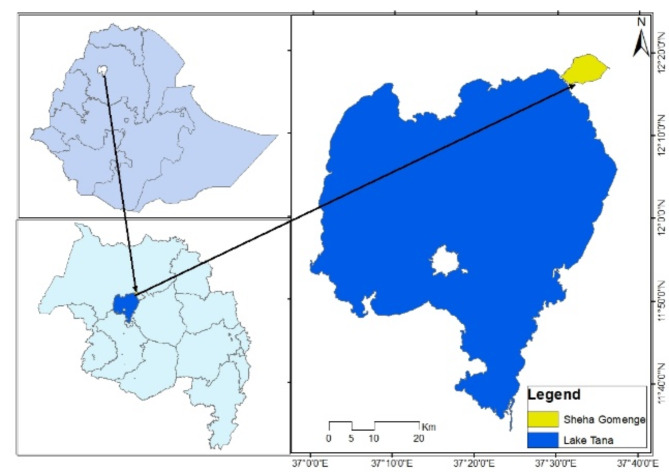
Declarations. Competing interests: The authors declare no competing interests. Ethical approval and guidelines: All methods are carried out according to the institution’s guidelines and regulations. Statement on permission for Water Hyacinth Collection: We confirm that all necessary permissions and licenses for the collection and utilization of water hyacinth were obtained from college of natural and computational science ethical committee in University of Gondar. These permissions ensure compliance with local and national regulations regarding the sustainable management of invasive species in the ecosystem surrounding Lake Tana. Identification and authentication of the water hyacinth plant: The water hyacinth plant was identified and authenticated by Botanist Mr. Abiyu Enyew, MSc in Botanical Sciences, who currently serves as the Head of the Department of Biology at the College of Natural and Computational Sciences, University of Gondar.
Figures

References
-
- Lubembe, S. I. et al. Water Hyacinth, an invasive species in Africa: A literature review. East. Afr. J. Environ. Nat. Resour.6 (1), 198–216. 10.37284/eajenr.6.1.1293 (2023). - DOI
-
- Nwamo, R. D., Ajonina, G. N., Ngwasiri, P. N., Besack, F. & Moudingo, E. H. Problems of Invasive species of Water Hyacinth (Eichhornia Crassipes [Mart.] Solms) in Cameroon with Special Reference to its eradication and valorization: a bibliographical review. Energy Environ. Res.12 (1), 56. 10.5539/eer.v12n1p56 (2022). - DOI
-
- Wang, Y. The environmental impacts and High-Effective Solutions of Invasion of Water Hyacinth. IOP Conf. Ser. Earth Environ. Sci.1011(1). 10.1088/1755-1315/1011/1/012045 (2021).
Publication types
MeSH terms
Substances
LinkOut - more resources
Full Text Sources
