


Do we feel colours? A systematic review of 128 years of psychological research linking colours and emotions
- PMID: 39806242
- PMCID: PMC12325498
- DOI: 10.3758/s13423-024-02615-z
Do we feel colours? A systematic review of 128 years of psychological research linking colours and emotions
Abstract
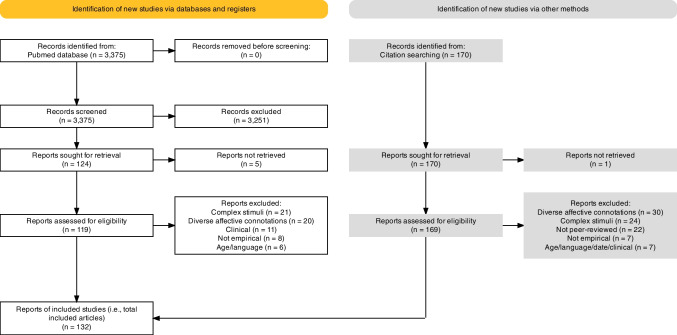
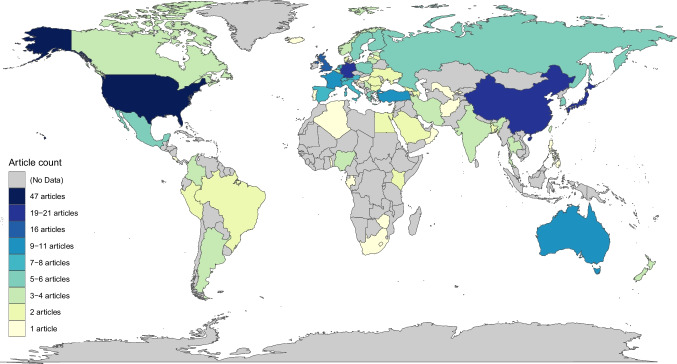
Colour is an integral part of natural and constructed environments. For many, it also has an aesthetic appeal, with some colours being more pleasant than others. Moreover, humans seem to systematically and reliably associate colours with emotions, such as yellow with joy, black with sadness, light colours with positive and dark colours with negative emotions. To systematise such colour-emotion correspondences, we identified 132 relevant peer-reviewed articles published in English between 1895 and 2022. These articles covered a total of 42,266 participants from 64 different countries. We found that all basic colour categories had systematic correspondences with affective dimensions (valence, arousal, power) as well as with discrete affective terms (e.g., love, happy, sad, bored). Most correspondences were many-to-many, with systematic effects driven by lightness, saturation, and hue ('colour temperature'). More specifically, (i) LIGHT and DARK colours were associated with positive and negative emotions, respectively; (ii) RED with empowering, high arousal positive and negative emotions; (iii) YELLOW and ORANGE with positive, high arousal emotions; (iv) BLUE, GREEN, GREEN-BLUE, and WHITE with positive, low arousal emotions; (v) PINK with positive emotions; (vi) PURPLE with empowering emotions; (vii) GREY with negative, low arousal emotions; and (viii) BLACK with negative, high arousal emotions. Shared communication needs might explain these consistencies across studies, making colour an excellent medium for communication of emotion. As most colour-emotion correspondences were tested on an abstract level (i.e., associations), it remains to be seen whether such correspondences translate to the impact of colour on experienced emotions and specific contexts.
Keywords: Affect; Association; Colour; Cross-cultural; Emotion; Perception; Preferences.
© 2025. The Author(s).
Conflict of interest statement
Declarations. Ethics approval: Not applicable because only secondary data were used. Consent to participate: Not applicable because only secondary data were used. Consent for publication: Not applicable because only secondary data were used. Conflicts of interest/Competing interests: The authors declare no conflict of interest.
Figures


References
-
- Adams, F. M., & Osgood, C. E. (1973). A cross-cultural study of the affective meanings of color. Journal of Cross-Cultural Psychology,4(2), 135–157. 10.1177/002202217300400201 - DOI
-
- Al-Ayash, A., Kane, R. T., Smith, D., & Green-Armytage, P. (2016). The influence of color on student emotion, heart rate, and performance in learning environments. Color Research & Application,41(2), 196–205. 10.1002/col.21949 - DOI
-
- Allen, E. C., & Guilford, J. P. (1936). Factors determining the affective values of color combinations. The American Journal of Psychology, 48(4), 643–648. https://www.jstor.org/stable/1416516
-
- Androulaki, A., Gômez-Pestaña, N., Mitsakis, C., Jover, J. L., Coventry, K., & Davies, I. (2006). Basic colour terms in Modern Greek: Twelve terms including two blues. Journal of Greek Linguistics, 7, 3–47. https://brill.com/view/journals/jgl/7/1/article-p3_2.xml
Publication types
MeSH terms
LinkOut - more resources
Full Text Sources
Research Materials
