The role of serum zinc and selenium levels in etiology of febrile seizures
- PMID: 39810503
- PMCID: PMC12062387
- DOI: 10.3345/cep.2024.01410
The role of serum zinc and selenium levels in etiology of febrile seizures
Abstract
Background: Febrile seizures (FSs) are the most common form of childhood seizures. Determining the role of trace elements in the pathophysiology of FSs will contribute to the management of FSs by pediatricians.
Purpose: This study aimed to investigate the effects of zinc and selenium on the nervous system and how they may influence the risk of FSs.
Methods: In this case-control study, there were 60 children in the simple FS group and 40 children in the complex FS group. The control groups comprised 50 children with fever but without seizures and 50 healthy children. Blood samples were collected within the first hour after FS.
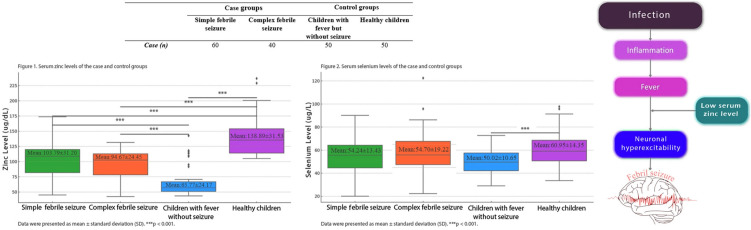
Results: Zinc and selenium levels were significantly lower in children with fever but without seizures versus healthy children (P<0.001). Serum zinc levels were lower in children with FSs (simple and complex FSs) than in healthy children (P<0.001) but higher than in children with fever but without seizures (P<0.001). Serum selenium levels in children with FSs (simple and complex) were lower than in healthy children but higher than in the children with fever but without seizures. However, these differences were not statistically significant (P>0.05).
Conclusion: Serum zinc levels are significantly decreased during infection, whereas they show a statistically significant increase within the first hour after FS activity. This indicates that the body secretes zinc during FSs to restore homeostasis, reduce oxidative stress, and increase the seizure threshold. Therefore, zinc supplementation during febrile periods may effectively prevent FSs in high-risk children.
Keywords: Febrile seizure; Selenium; Trace elements; Zinc.
Conflict of interest statement
No potential conflict of interest relevant to this article was reported.
Figures


References
-
- Clinical practice guideline—febrile seizures: guideline for the neurodiagnostic evaluation of the child with a simple febrile seizure. Pediatrics. 2011;127:389–94. - PubMed
-
- El-Masry HMA, Sadek AA, Hassan MH, Ameen HH, Ahmed HA. Metabolic profile of oxidative stress and trace elements in febrile seizures among children. Metab Brain Dis. 2018;33:1509–15. - PubMed
-
- Schweizer U, Fradejas-Villar N. Why 21? The significance of selenoproteins for human health revealed by inborn errors of metabolism. FASEB J. 2016;30:3669–81. - PubMed
LinkOut - more resources
Full Text Sources