


Bacterial Isolates and Their Antimicrobial Susceptibility Patterns Among Pediatric Patients with Urinary Tract Infections: A Retrospective Cross-Sectional Study at Tertiary Level in Afghanistan
- PMID: 39811399
- PMCID: PMC11730758
- DOI: 10.2147/IDR.S499017
Bacterial Isolates and Their Antimicrobial Susceptibility Patterns Among Pediatric Patients with Urinary Tract Infections: A Retrospective Cross-Sectional Study at Tertiary Level in Afghanistan
Abstract
Introduction: The widespread use of antibiotics is a serious and alarming situation in terms of the development of antimicrobial resistance. The current study was conducted to demonstrate the types of organism isolated from the urine of patients presenting with UTI symptoms as well as their antimicrobial sensitivity spectrum.
Methodology: A descriptive cross-sectional study was conducted, and 272 positive urine cultures from children under 5 years of age with signs and symptoms of a UTI were included in the study. The types of organisms isolated from the urine cultures and their susceptibility to antibiotics were identified. The data collection form was designed as an Excel spreadsheet that included both dependent and independent variables, such as patient age, gender, WBC, red blood cell (RBC) count, nitrite, organism isolated, and antiprogram results.
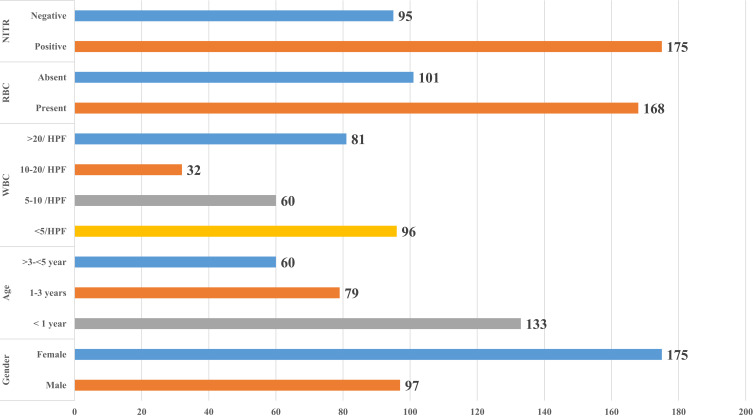
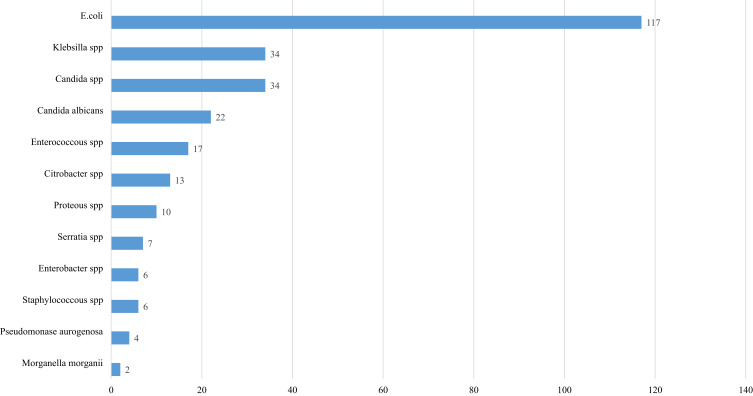
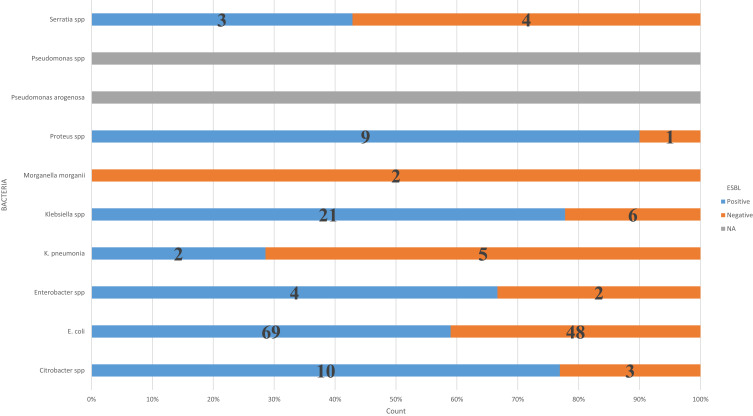
Results: Of the patients included, 64% were female. The majority were under one year of age, followed by children aged one to three. Among these children, 63% had pyuria and hematuria, and 64% had nitrite-positive urine samples. The most commonly isolated organisms included Escherichia coli, Klebsiella species, Candida species, Candida albicans, and Enterococcus species. In this study, 62% of gram-negative organisms were ESBL positive, among which the Proteus species demonstrated the highest ESBL positivity, followed by the Klebsiella species and E. coli. The majority of Enterobacteriaceae isolates in this study showed resistance to Augmentin and Ampicillin. Similarly, E. coli was highly resistant to third-generation cephalosporins, ceftazidime, and ceftriaxone.
Conclusion: Due to the high prevalence of UTIs in pediatric patients and their nonspecific signs and symptoms, particularly in infants or young children, diagnosing and treating them, whilst difficult, is crucial. Urine samples should be analyzed for all pediatric patients with fever and, if pyuria is present, a urine culture is necessary.
Keywords: UTI; antimicrobial susceptibility; bacterial isolates; pediatric patients.
© 2025 Esmat et al.
Conflict of interest statement
The authors declare that they have no competing interests.
Figures
References
-
- World Health Organization. Urinary tract infections in infants and children in developing countries in the context of IMCI. Discussion Papers on Child Health. 2005:1–24.
-
- Urinary tract infections in infants and children in developing countries in the context of IMCI department of child adolescent health development. 2005.
LinkOut - more resources
Full Text Sources
