


Immunohistochemistry-based molecular subtypes of urothelial carcinoma derive different survival benefit from platinum chemotherapy
- PMID: 39817402
- PMCID: PMC11736421
- DOI: 10.1002/2056-4538.70017
Immunohistochemistry-based molecular subtypes of urothelial carcinoma derive different survival benefit from platinum chemotherapy
Abstract
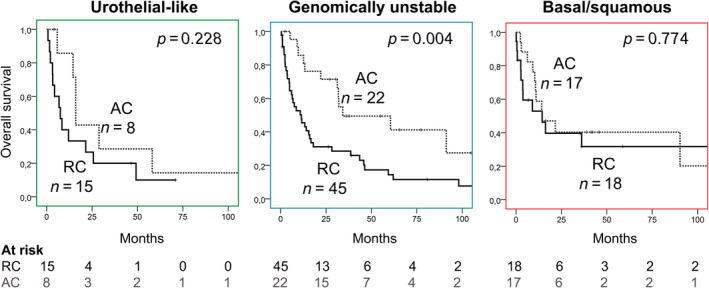
Distinct molecular subtypes of muscle-invasive bladder cancer (MIBC) may show different platinum sensitivities. Currently available data were mostly generated at transcriptome level and have limited comparability to each other. We aimed to determine the platinum sensitivity of molecular subtypes by using the protein expression-based Lund Taxonomy. In addition, we assessed the tumor heterogeneity within the primary tumor and between the primary and lymph node (LN) metastatic sites. Thirteen immunohistochemical markers were stained in a tissue microarray with an overall number of 1,508 cores. Statistical evaluation was performed in 199 patients divided into three chemo-naïve MIBC cohorts: (1) pT3/4 and/or LN+ patients who received radical cystectomy without platinum treatment, (2) patients who received adjuvant chemotherapy (AC), and (3) patients who underwent palliative platinum treatment for metastatic disease or postoperative progression. Overall survival (OS) was used as the primary endpoint. Patients with the genomically unstable (GU) subtype had significantly better OS in the AC group compared to the radical cystectomy group (HR: 0.395, 95% CI: 0.205-0.795, p = 0.005). In contrast, no such association was observed for the basal/squamous (Ba/Sq) subtype. Intratumor heterogeneity was present in 19% of cases, with the lowest level in the Ba/Sq and GU tumors (14% each) and the highest level of 43% in small-cell/neuroendocrine-like tumors. There was greater subtype heterogeneity between primary tumors and LN metastases. In conclusion, immunohistochemistry-based Lund Taxonomy subtypes remain stable within the same primary tumor, with the GU subtype deriving the greatest OS benefit from AC. However, high tumor heterogeneity between the primary tumor and metastatic sites can impact the effectiveness of therapies.
Keywords: Lund Taxonomy; bladder cancer; chemotherapy; cisplatin; immunohistochemistry; molecular subtype classification.
© 2025 The Author(s). The Journal of Pathology: Clinical Research published by The Pathological Society of Great Britain and Ireland and John Wiley & Sons Ltd.
Figures


References
-
- Alfred Witjes J, Max Bruins H, Carrión A, et al. European Association of Urology guidelines on muscle‐invasive and metastatic bladder cancer: summary of the 2023 guidelines. Eur Urol 2024; 85: 17–31. - PubMed
MeSH terms
Substances
Grants and funding
LinkOut - more resources
Full Text Sources
Medical
