


Phosphoproteomics for studying signaling pathways evoked by hormones of the renin-angiotensin system: A source of untapped potential
- PMID: 39821680
- PMCID: PMC11737475
- DOI: 10.1111/apha.14280
Phosphoproteomics for studying signaling pathways evoked by hormones of the renin-angiotensin system: A source of untapped potential
Abstract
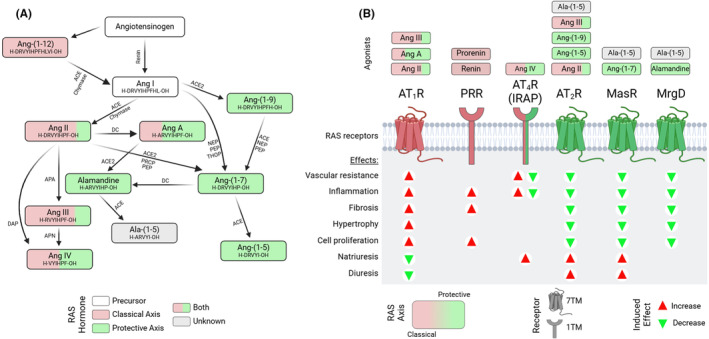
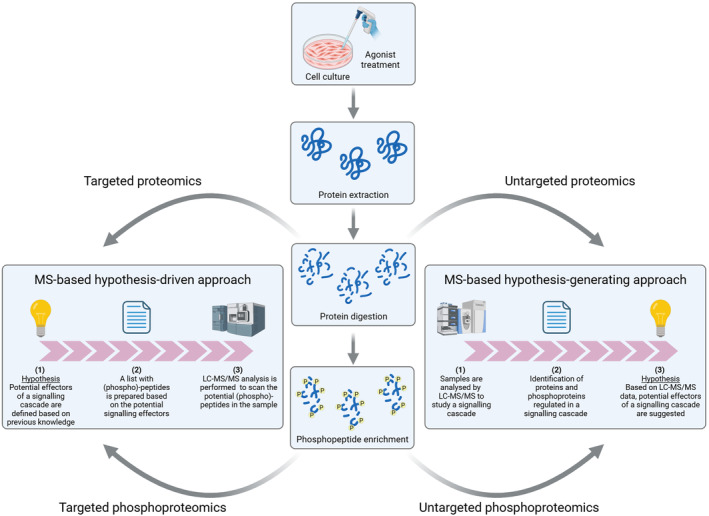
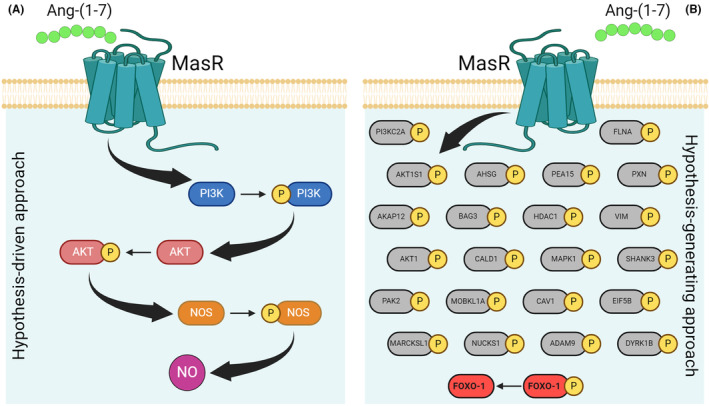
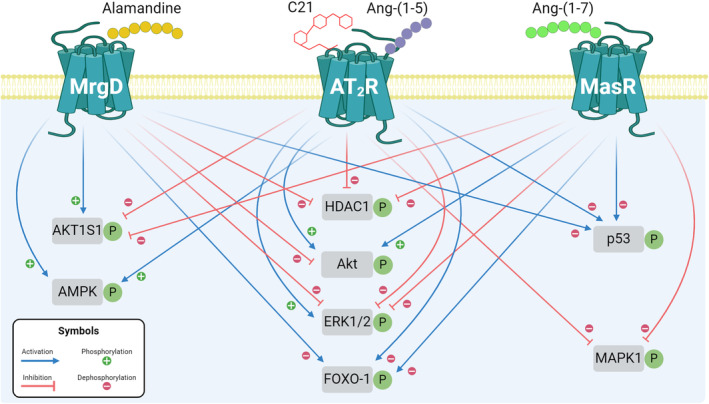
The Renin-Angiotensin System (RAS) is a complex neuroendocrine system consisting of a single precursor protein, angiotensinogen (AGT), which is processed into various peptide hormones, including the angiotensins [Ang I, Ang II, Ang III, Ang IV, Ang-(1-9), Ang-(1-7), Ang-(1-5), etc] and Alamandine-related peptides [Ang A, Alamandine, Ala-(1-5)], through intricate enzymatic pathways. Functionally, the RAS is divided into two axes with opposing effects: the classical axis, primarily consisting of Ang II acting through the AT1 receptor (AT1R), and in contrast the protective axis, which includes the receptors Mas, AT2R and MrgD and their respective ligands. A key area of RAS research is to gain a better understanding how signaling cascades elicited by these receptors lead to either "classical" or "protective" effects, as imbalances between the two axes can contribute to disease. On the other hand, therapeutic benefits can be achieved by selectively activating protective receptors and their associated signaling pathways. Traditionally, robust "hypothesis-driven" methods like Western blotting have built a solid knowledge foundation on RAS signaling. In this review, we introduce untargeted mass spectrometry-based phosphoproteomics, a "hypothesis-generating approach", to explore RAS signaling pathways. This technology enables the unbiased discovery of phosphorylation events, offering insights into previously unknown signaling mechanisms. We review the existing studies which used phosphoproteomics to study RAS signaling and discuss potential future applications of phosphoproteomics in RAS research including advantages and limitations. Ultimately, phosphoproteomics represents a so far underused tool for deepening our understanding of RAS signaling and unveiling novel therapeutic targets.
Keywords: cellular signaling; phosphoproteome; phosphoproteomics; renin‐angiotensin system.
© 2025 The Author(s). Acta Physiologica published by John Wiley & Sons Ltd on behalf of Scandinavian Physiological Society.
Conflict of interest statement
The authors declare no conflict of interest.
Figures
References
-
- Dzau VJ. Theodore cooper lecture: tissue angiotensin and pathobiology of vascular disease: a unifying hypothesis. Hypertension. 2001;37(4):1047‐1052. - PubMed
-
- Tigerstedt R, Bergman PQ. Niere und Kreislauf. Skandinavisches Archiv Für Physiologie. 1898;8(1):223‐271.
Publication types
MeSH terms
Substances
Grants and funding
- 6239/Novo Nordisk Fonden
- 0058592/Novo Nordisk Fonden
- 4004-00485B/Danmarks Frie Forskningsfond
- 0134-00297B/Danmarks Frie Forskningsfond
- BPD-00133-22/Fundação de Amparo à Pesquisa do Estado de Minas Gerais
- 88881.700905/2022-01/Coordenação de Aperfeiçoamento de Pessoal de Nível Superior
- 88887.916694/2023-00/Coordenação de Aperfeiçoamento de Pessoal de Nível Superior
- 406936/2023-4/Conselho Nacional de Desenvolvimento Científico e Tecnológico
- 309965/2022-5/Conselho Nacional de Desenvolvimento Científico e Tecnológico
LinkOut - more resources
Full Text Sources
Research Materials
Miscellaneous
