


A time-varying index for agricultural suitability across Europe from 1500-2000
- PMID: 39824905
- PMCID: PMC11742442
- DOI: 10.1038/s41597-024-04194-z
A time-varying index for agricultural suitability across Europe from 1500-2000
Abstract
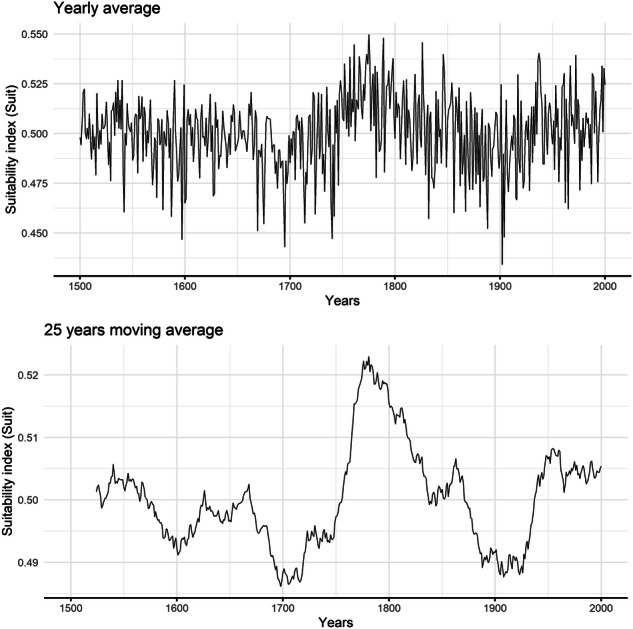
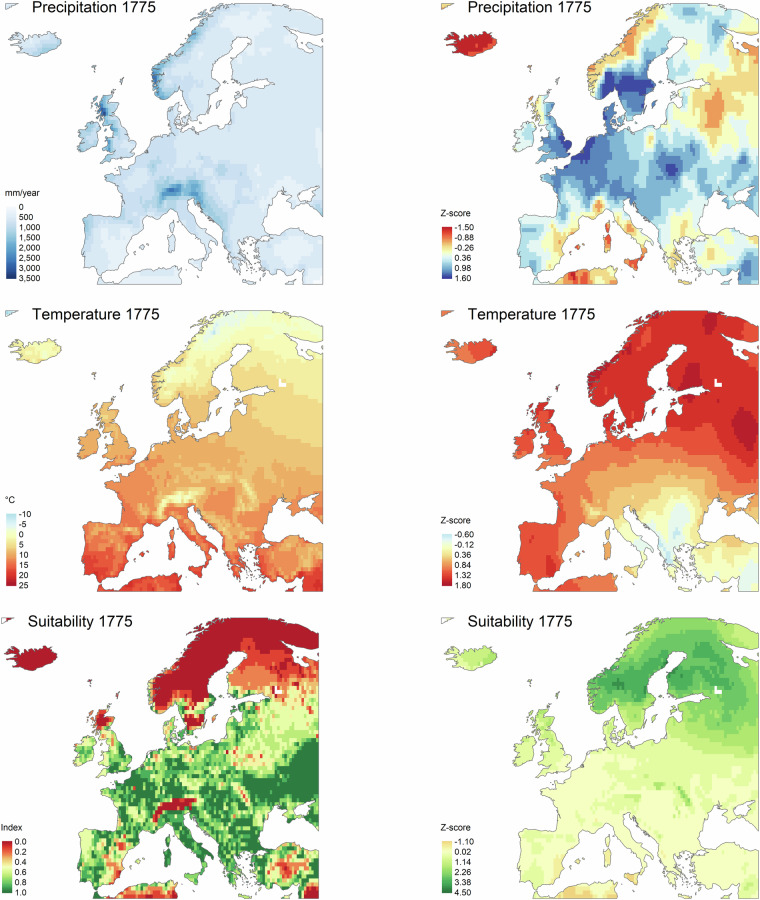
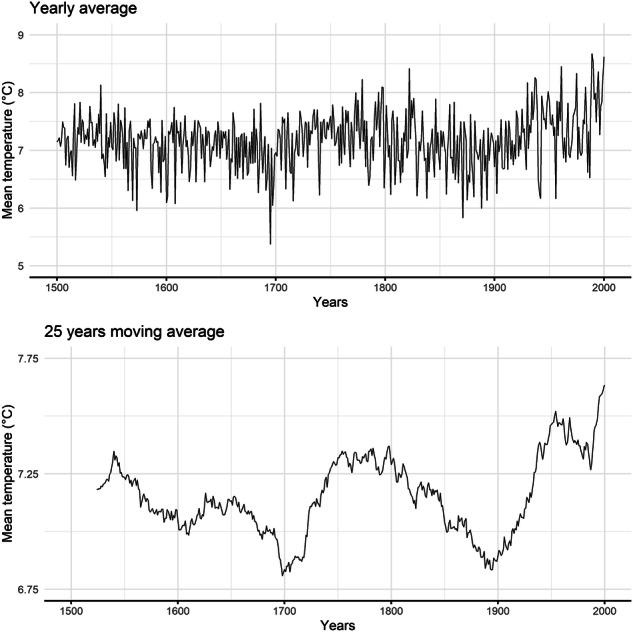
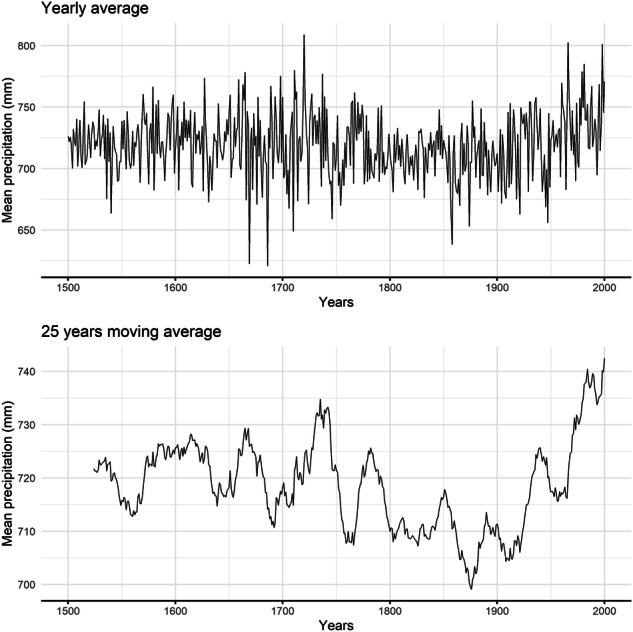
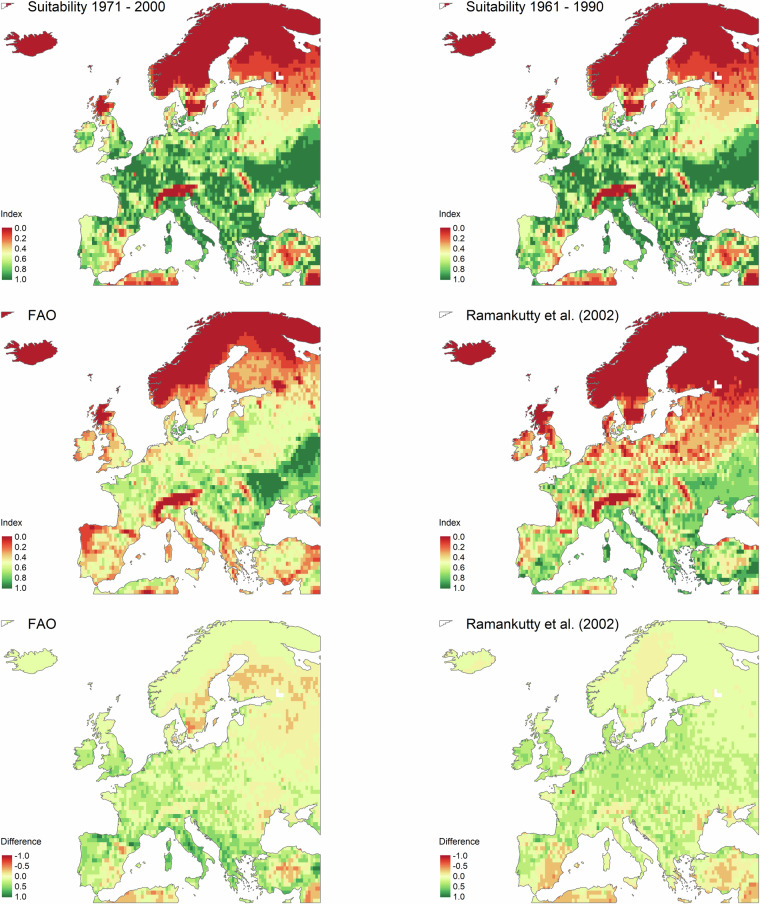
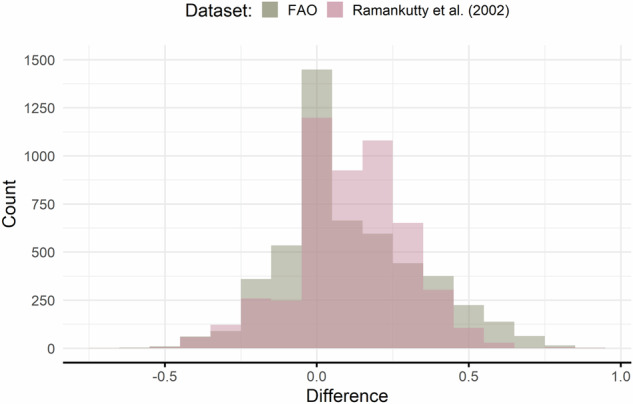
Throughout the last centuries, European climate changed substantially, which affected the potential to plant and grow crops. These changes happened not just over time but also had a spatial dimension. Yet, despite large climatic fluctuations, quantitative historical studies typically rely on static measures for agricultural suitability due to the non-availability of time-varying indices. Relying on recent advances in paleoclimatology, we bridge this gap by constructing a spatio-temporal measure for agricultural suitability across Europe for a period of 500 years. Our gridded index has a 0.5° resolution and is available at a yearly level. It relies on a simple surface energy and water balance model, focusing only on so-called exogenous geographic and climatic features. Our index captures not just long-term trends, such as the Little Ice Age, but also short-term climatic shocks. It will empower researchers to explore the interplay between climatic fluctuations and Europe's agricultural landscape, analyze human responses at a local and regional scale, and foster a deeper understanding of the region's historical dynamics.
© 2025. The Author(s).
Conflict of interest statement
Competing interests: The authors declare no competing interests.
Figures
References
-
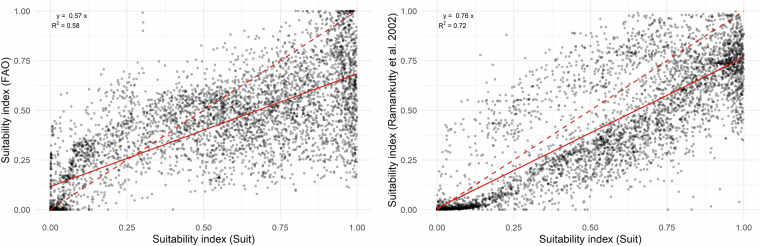
- Ramankutty, N., Foley, J. A., Norman, J. & McSweeney, K. The global distribution of cultivable lands: Current patterns and sensitivity to possible climate change. Global Ecology and Biogeography11, 377–392 (2002).
-
- Cipolla, C. M. The Economic History of World Population (Penguin Books, Baltimore, 1962), 1 edn.
LinkOut - more resources
Full Text Sources
Miscellaneous
