


Anaesthetic efficacy of intraligamentary injection compared to incisive nerve block using 3% mepivacaine hydrochloride: a randomized clinical trial
- PMID: 39825316
- PMCID: PMC11740491
- DOI: 10.1186/s12903-024-05147-z
Anaesthetic efficacy of intraligamentary injection compared to incisive nerve block using 3% mepivacaine hydrochloride: a randomized clinical trial
Abstract
Background: In dentistry, local anesthetic is frequently used to manage pain throughout several phases of dental treatments, including tooth extraction. The study aimed to compare the effectiveness of two techniques for controlling pain during mandibular exodontia (tooth extraction), specifically focusing on the pain experienced during injection and extraction of mandibular anterior and premolars teeth. The two techniques being compared are the intraligamentary injection technique (ILI) and the incisive nerve block technique (INB).
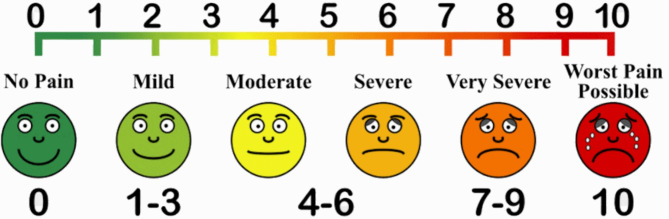
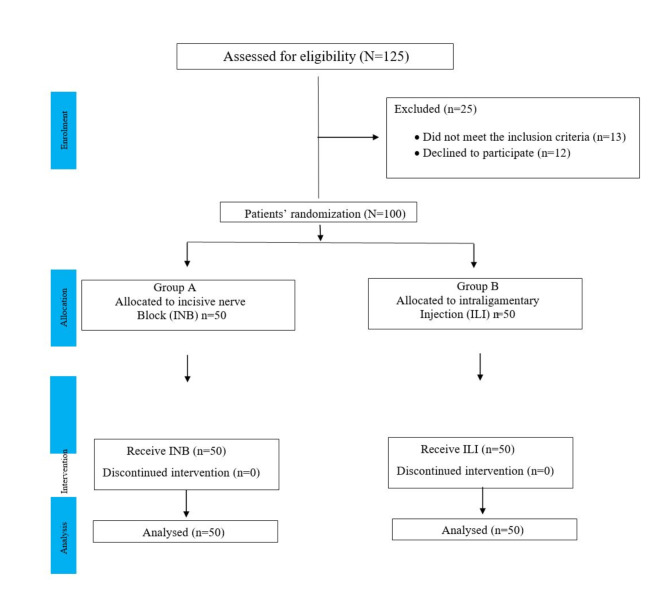
Materials and methods: In this study, 100 mandibular anterior and premolars and teeth that were indicated for extraction were included. The effectiveness of the two local anaesthesia techniques, intraligamentary injection technique (ILI) and incisive nerve block (INB), were compared using Modified Dental Anxiety Scale for Dental Extraction Procedure (MDAS-DEP) and visual analogue scale (VAS) during the injection and extraction stages of the procedure.
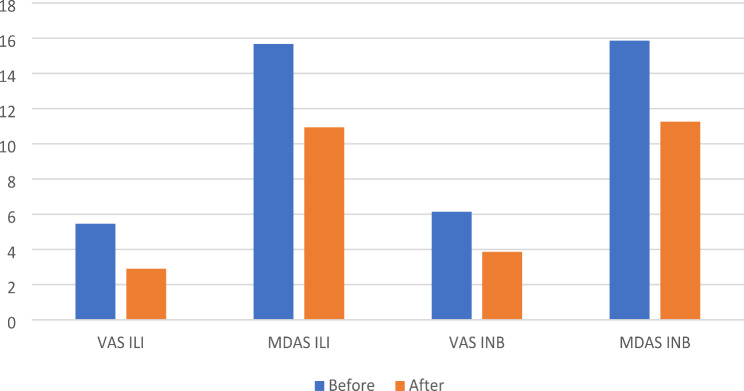
Results: A total of 100 participants (42 females, 58 males) with a mean age of 50.97 ± 11.59 years took part in the study. The mean VAS score in the INB group was 6.14 after injection and 3.86 after extraction, while in the ILI group, it was 5.46 and 2.90, respectively. There was a statistically significant difference between the two groups both after injection (p = 0.001) and extraction (p < 0.001), as well as within each group (Control: p < 0.001; Study: p < 0.001). For MDAS-DEP, the INB group had mean scores of 15.86 and 11.26 after injection and extraction, respectively, while the ILI group had scores of 15.68 and 10.94, showing a significant difference within each group after both injection (p < 0.001) and extraction (p = 0.001). However, no significant difference was found when comparing MDAS-DEP scores between the two groups from injection to extraction (p = 0.802).
Conclusion: The intraligamentary injection technique (ILI) appears less painful during injection and provides profound pain relief during extraction. The results suggest that ILI can be used as a sole anaesthetic technique during extraction of lower anterior and premolar teeth.
Trial registration: This trial was retrospectively registered on 27/01/2023 with the identifier ISRCTN83272316 in Isrctn.com.
Keywords: Anxiety; Incisive nerve block; Intraligamentary injection technique.
© 2024. The Author(s).
Conflict of interest statement
Declarations. Competing interests: The authors declare no competing interests. Consent to participate and trial registration: All authors declare that written informed consent was obtained from the patient prior conducting this research. Ethics approval: All authors hereby declare that all experiments have been examined and approved by the Dental Ethics Committee, College of Dentistry, Qassim University (Code#: EA/6015/2018) and was registered on 27/01/2023 with the identifier ISRCTN83272316 in Isrctn.com) and have therefore been performed in accordance with the ethical standards laid down in the 1964 declaration of Helsinki. Consent to publish: Not Applicable.
Figures

References
-
- Armfield J, Heaton L. Management of fear and anxiety in the dental clinic: a review. Aust Dent J. 2013;58:390–407. - PubMed
-
- Lock F, Vernino D, Sadove M. Mepivacaine HCI (carbocaine): a preliminary clinical study. J Oral Surg Anesth Hosp Dent Serv. 1961;19:16–20. - PubMed
-
- Sadove MS, Vernino D, Lock F, Kolodny S. An evaluation of mepivacaine hydrochloride. J Oral Surg Anesth Hosp Dent Serv. 1962;20:399–404. - PubMed
-
- Bromage PR. Pharmacologic basis for use of local anesthetics. Physiol Pharmacol Physicians. 1966;1:1–4. - PubMed
-
- Ding S, Zhu Y-Q, Wu Y-N, Cao D. [Efficacy and safety of 3% mepivacaine hydrochloride injection for oral local anesthesia]. Shanghai Kou Qiang Yi Xue. 2008;17:328–31. - PubMed
Publication types
MeSH terms
Substances
LinkOut - more resources
Full Text Sources
