


Metabolic response to burn injury: a comprehensive bibliometric study
- PMID: 39830385
- PMCID: PMC11739346
- DOI: 10.3389/fmed.2024.1451371
Metabolic response to burn injury: a comprehensive bibliometric study
Abstract
Objective: Burns lead to systemic changes manifested by systemic disturbances in water-electrolyte balance and systemic metabolic and inflammatory responses. The hypermetabolic response after a burn injury relies on metabolic, hormonal, and inflammatory dysregulation mechanisms. This study aimed to provide a comprehensive bibliometric analysis of the burn metabolism research field, identifying key trends, influential contributors, and emerging research hotspots to inform future investigative efforts. Ultimately, we conducted an extensive review of the literature, synthesizing the findings to clarify the present understanding within our field of study.
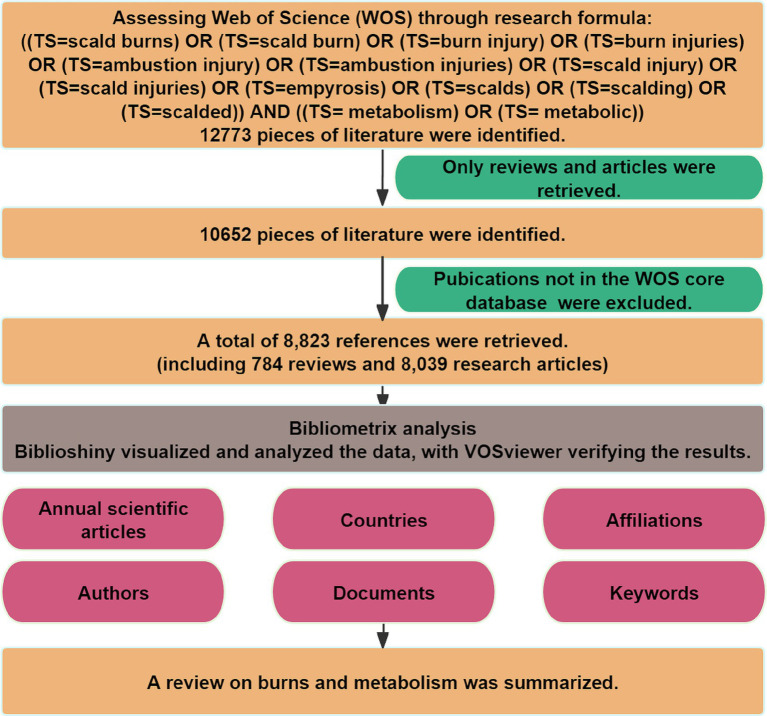
Methods: We obtained 8,823 scientific publications on burn injury and metabolism from the core Web of Science (WOS) database collection. In this work, biblioshiny was used to visualize and analyze the data, and VOSviewer was used to verify the results.
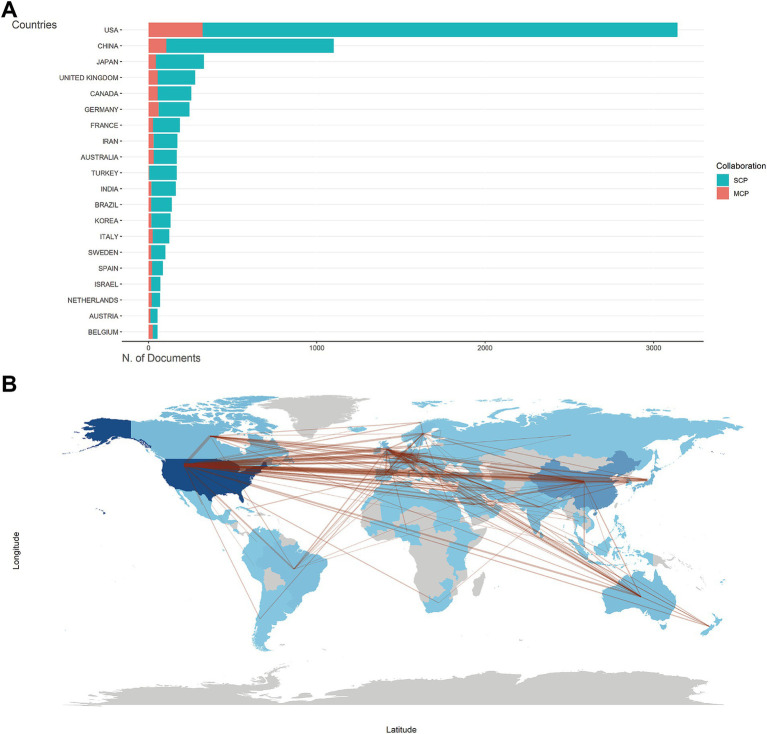
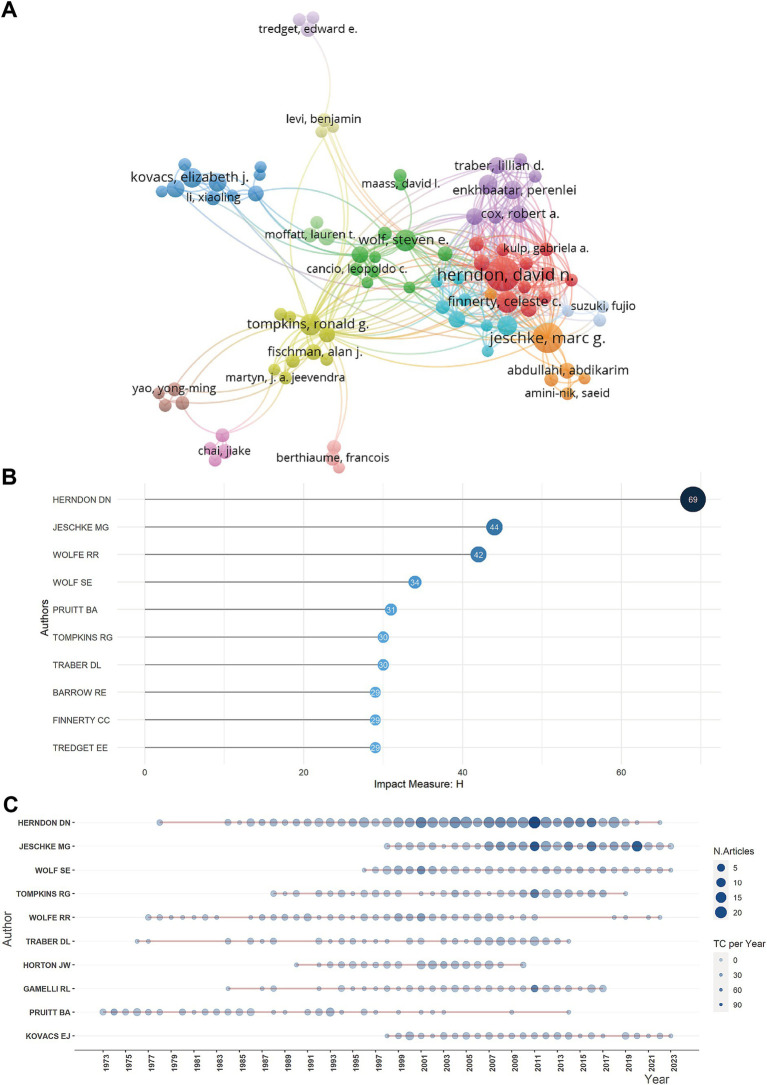
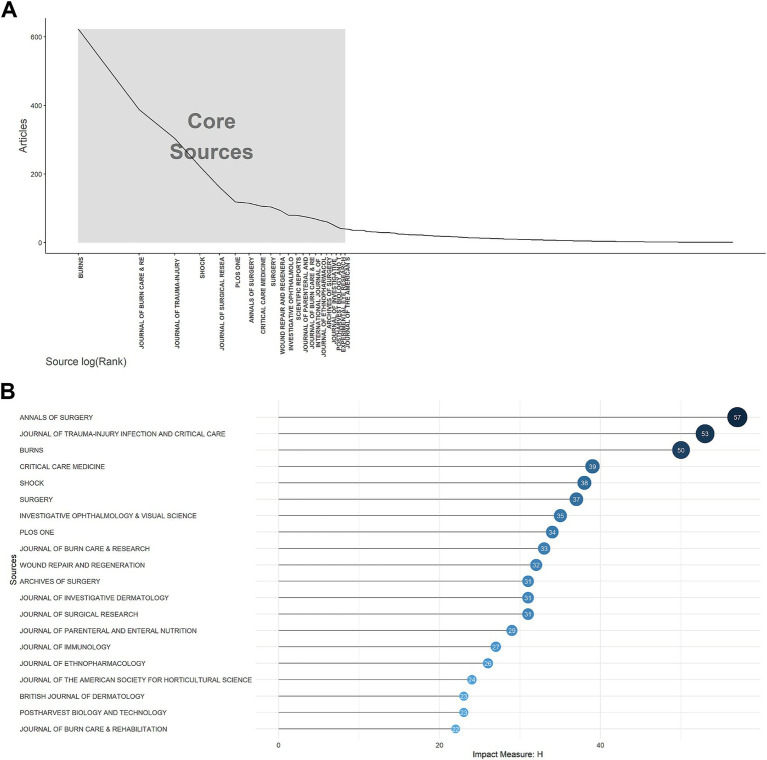
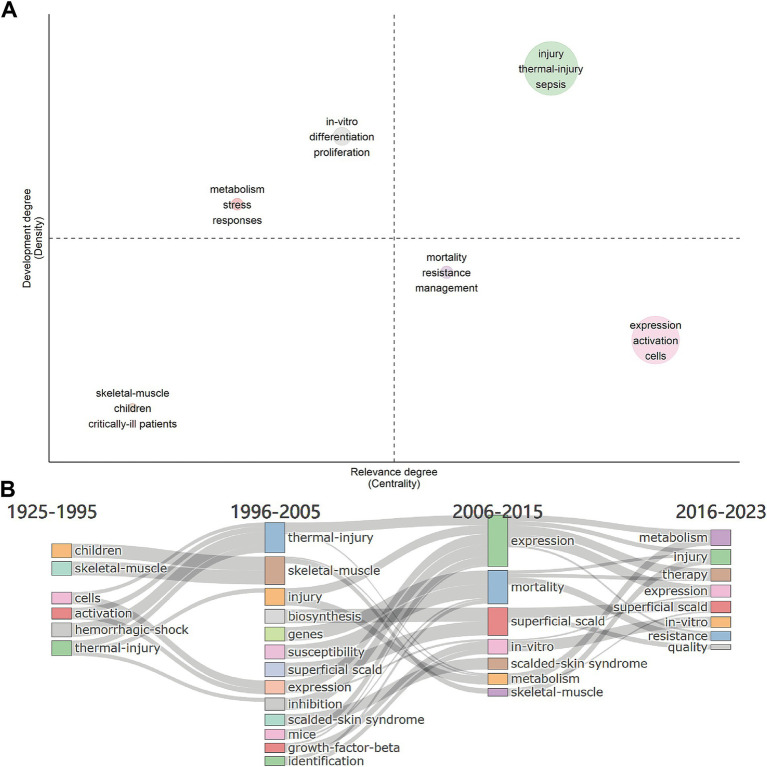
Results: From a total of 8,823 publications, we found a general upward trend in annual publications and citation frequency. According to Bradford's Law, 21 high-production journals were classified as core sources based on the number of publications, and the most productive journal was Burns. The most published countries and authors in this field were the United States and Herndon DN. The most local cited document in this field was the article titled "Catecholamines: Mediator of the Hypermetabolic Response to Thermal Injury" authored by Wilmore DW. The thematic map showed that studies on injury, thermal injury, and sepsis were relatively mature. In contrast, research on metabolism, stress, and responses, and research on mortality, resistance, and management were less well-developed but were essential for the field.
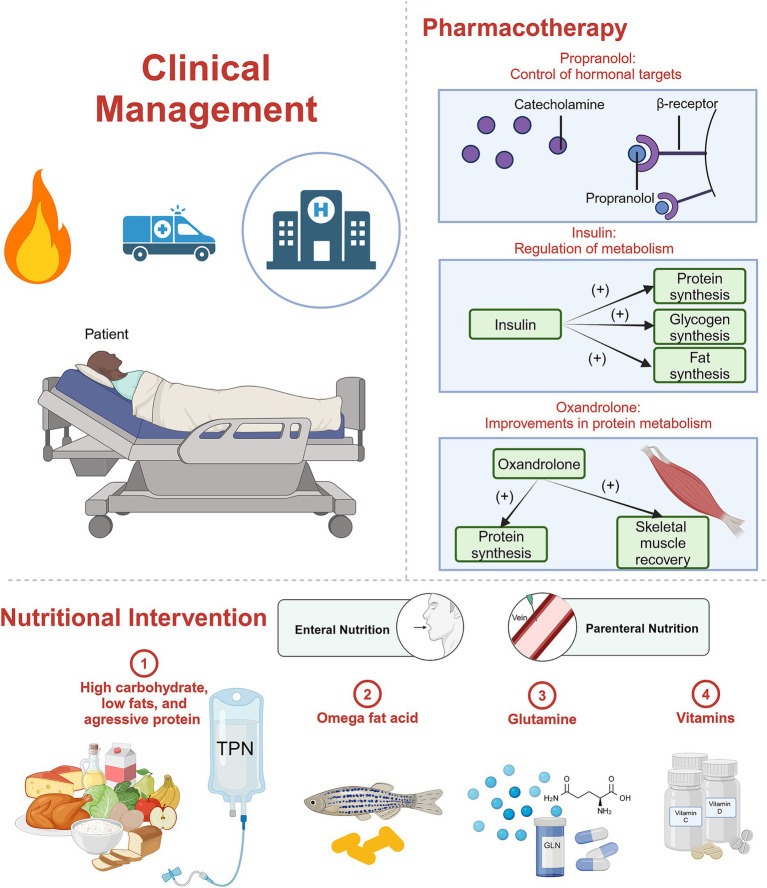
Conclusion: Research on burns and metabolism is increasing. Based on the bibliometric analysis, our study summarized the complex interplay between burn-induced systemic metabolic alterations and inflammatory responses, emphasizing the significance of hypermetabolism and its management. The role of propranolol, insulin, oxandrolone, and nutritional interventions in modulating the hypermetabolic state was discussed. Additionally, our study underscored the challenges of managing sepsis and drug-resistant infections in burn patients as an important future area of research.
Keywords: burn injury; inflammatory; management; metabolism; thermal injury.
Copyright © 2025 Li, Liu, Xie, Zhu, Ding, Zhang, Xian, Wu, Sun, Yan, Lu, Yao, Qian, Lu, Yang, Xu, Huang and Ji.
Conflict of interest statement
The authors declare that the research was conducted in the absence of any commercial or financial relationships that could be construed as a potential conflict of interest.
Figures
References
-
- Schaefer TJ, Tannan SC. Thermal burns. Treasure Island, FL: StatPearls Publishing; (2024). - PubMed
LinkOut - more resources
Full Text Sources
