


Effects of 8 Weeks of Moderate- or High-Volume Strength Training on Sarcoplasmic Reticulum Ca2+ Handling in Elite Female and Male Rowers
- PMID: 39831408
- PMCID: PMC11744491
- DOI: 10.1111/sms.70017
Effects of 8 Weeks of Moderate- or High-Volume Strength Training on Sarcoplasmic Reticulum Ca2+ Handling in Elite Female and Male Rowers
Abstract
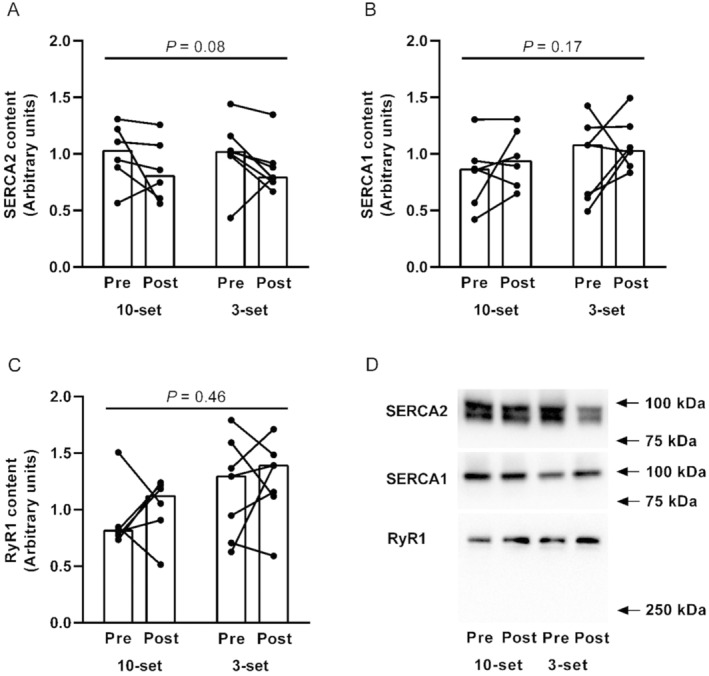
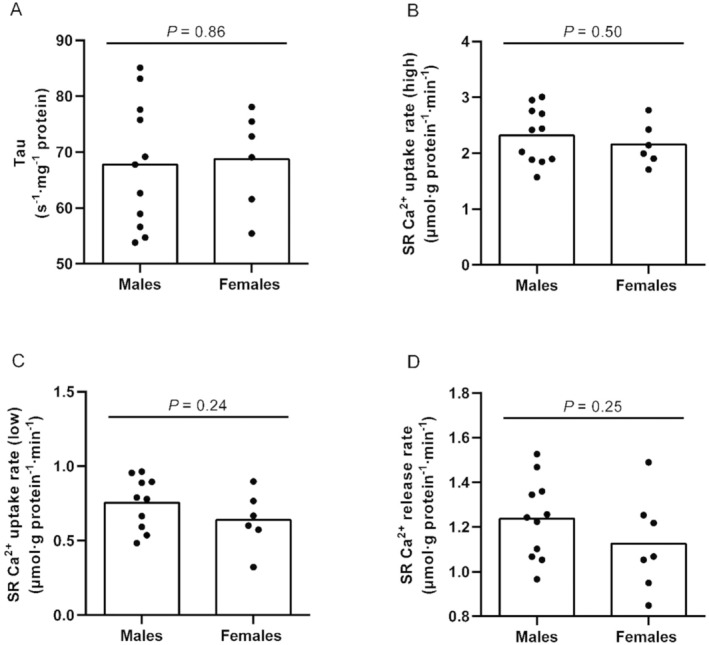
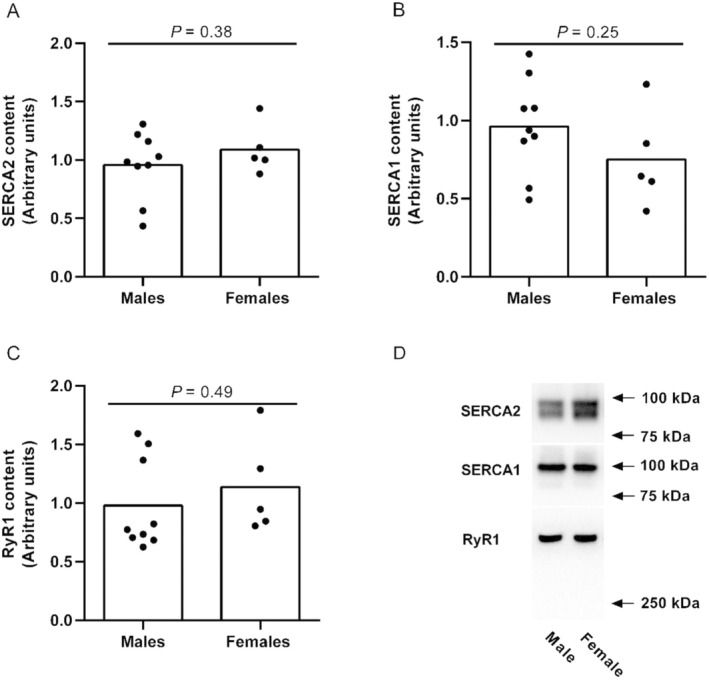
While acute exercise affects sarcoplasmic reticulum (SR) function, the impact of resistance training remains unclear. The purpose of the present study was to investigate SR Ca2+ handling plasticity in response to moderate- and high-volume strength training in elite rowers. Twenty elite male (n = 12) and female (n = 8) rowers performed three weekly strength training sessions for 8 weeks and were randomly allocated to either perform 3 sets (3-SET) or progressive increase from 5 to 10 sets (10-SET) of 10 repetitions during the training period. Skeletal muscle biopsies were collected before and after the intervention period and analyzed for SR vesicle Ca2+ handling, SR related proteins, and myosin heavy chain (MHC) composition. Muscle strength was determined by isometric midthigh pull (IMTP). Training increased both the overall SR Ca2+ release (19%) and uptake rates (34%), with no differences between groups. SR protein analysis revealed a high variability but suggests an increase of RYR1 and SERCA1, while SERCA2 decreased, corroborating changes in SR function, with no differences between groups. Regardless of training volume, a 9% higher relative MHCIIa proportion and a 7% decrease in the MHCI isoform was observed. There was an overall 8% increase of IMTP. Males exhibited higher SR Ca2+ uptake and release rates compared to females, likely explained by a higher proportion of MHCII. These findings suggest that 8 weeks of moderate- or high-volume strength training enhances SR vesicle Ca2+ uptake and release rates in elite male and female rowers, accompanied by a shift toward a larger proportion of MHCIIa fiber type.
Keywords: Ca2+ release; Ca2+ uptake; muscle plasticity; sex difference; strength training.
© 2025 The Author(s). Scandinavian Journal of Medicine & Science In Sports published by John Wiley & Sons Ltd.
Conflict of interest statement
The authors declare no conflicts of interest.
Figures

References
-
- Allen D., Lamb G. D., and Westerblad H., “Impaired Calcium Release During Fatigue,” Journal of Applied Physiology 104 (2008): 296–305. - PubMed
-
- Li J., Wang X., Fraser S., Carey M., Wrigley T., and McKenna M., “Effects of Fatigue and Training on Sarcoplasmic Reticulum Ca2+ Regulation in Human Skeletal Muscle,” Journal of Applied Physiology 92 (2002): 912–922. - PubMed
-
- Duhamel T., Stewart R., Tupling A. R., Ouyang J., and Green H., “Muscle Sarcoplasmic Reticulum Calcium Regulation During Consecutive Days of Exercise and Recovery,” Journal of Applied Physiology 103 (2007): 1212–1220. - PubMed
-
- Green H., Duhamel T., Smith I., et al., “Muscle Fatigue and Excitation‐Contraction Coupling Responses Following a Session of Prolonged Cycling,” Acta Physiologica 203 (2011): 441–455. - PubMed
Publication types
MeSH terms
Substances
Grants and funding
LinkOut - more resources
Full Text Sources
Medical
Research Materials
Miscellaneous
