


Polypharmacy and anticholinergic burden scales in older adults: a cross-sectional study among psychiatric outpatients in a tertiary care hospital
- PMID: 39833708
- PMCID: PMC11744821
- DOI: 10.1186/s12877-024-05584-z
Polypharmacy and anticholinergic burden scales in older adults: a cross-sectional study among psychiatric outpatients in a tertiary care hospital
Abstract
Introduction: Mental disorders are prevalent among older adults, often leading to the use of multiple medications, many with anticholinergic properties. Polypharmacy, common in this population, is a major contributor to anticholinergic burden, which is linked to cognitive and physical decline. This study investigates the relationship between polypharmacy and anticholinergic burden across seven anticholinergic burden scales in elderly patients attending the psychiatric outpatient.
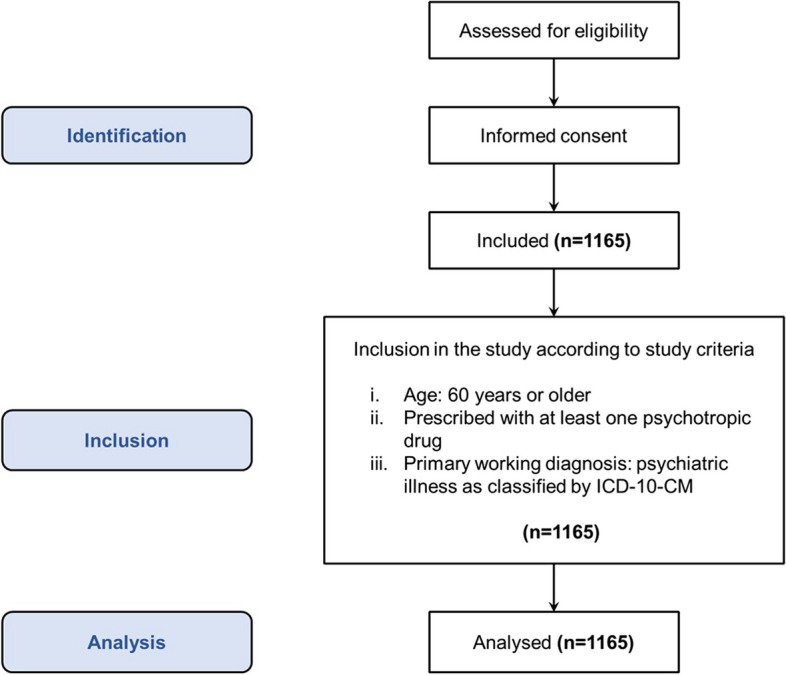
Methods: Study was conducted at a psychiatry outpatient clinic at All India Institute of Medical Sciences, Rishikesh, India, from December 2021 to March 2023. Elderly patients (aged ≥ 60 years) who were on at least one psychotropic medication and had a primary working diagnosis of psychiatric illness were included. All psychotropic medications, including antidepressants, antipsychotics, mood stabilizers, and hypnotics, were evaluated. Anticholinergic burden scales were calculated by the respective tools. Univariate analysis was adopted to determine the factors that may affect polypharmacy.
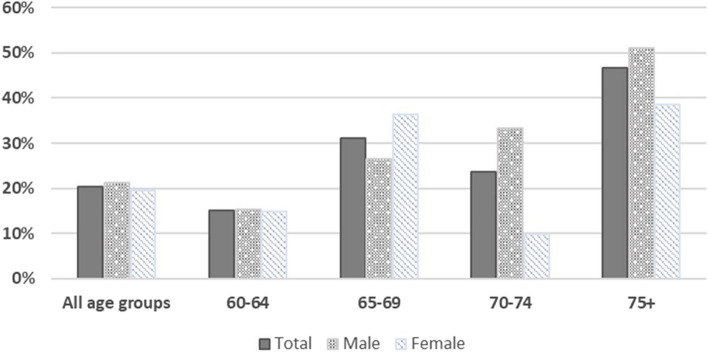
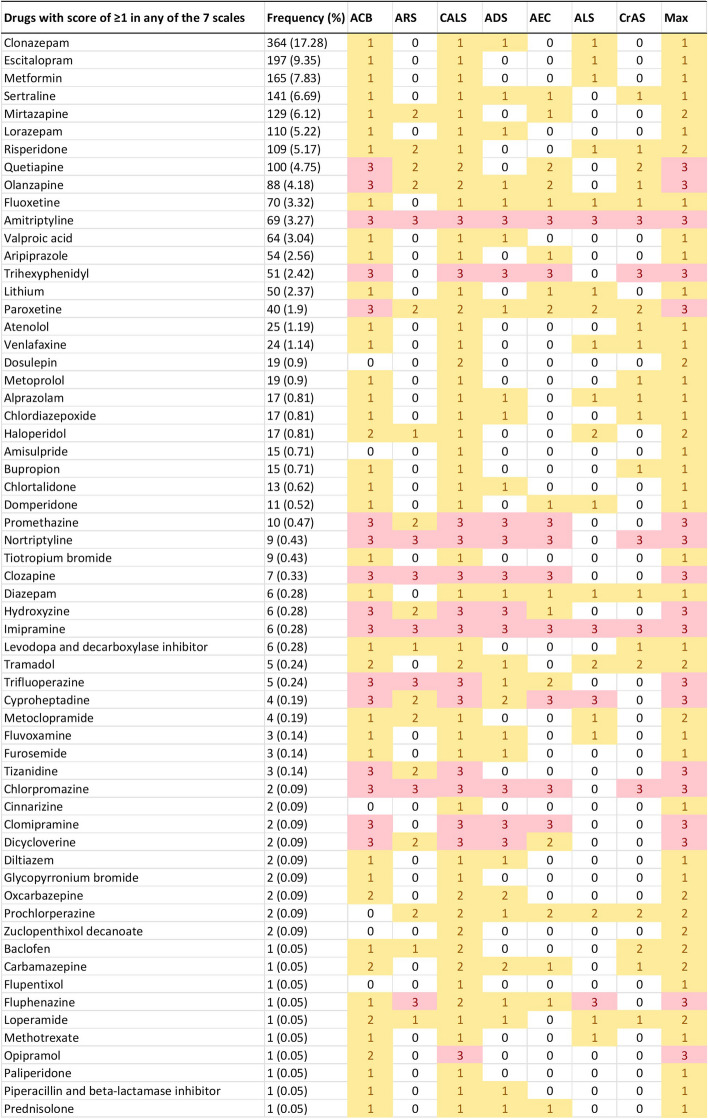
Results: Study included 1165 elderly patients aged ≥ 60 years. The prevalence of polypharmacy was 20.43% (n = 238). Clonazepam (n = 364, 17.28%), escitalopram (n = 197, 9.35%), metformin (n = 165, 7.83%), sertraline (n = 141, 6.69%), mirtazapine (n = 129, 6.12%), and lorazepam (n = 110, 5.22%) were among the most frequently prescribed anticholinergic drugs. Univariate analysis demonstrated that all anticholinergic risk assessment scales were closely correlated with polypharmacy, with the strongest association observed for the Anticholinergic Load Scale (ALS) (Odds Ratio = 4.3; p < 0.001). Polypharmacy was also positively associated with adverse drug reactions (Odds Ratio = 1.81; 95% Confidence Interval = 1.27-2.56).
Conclusion: The anticholinergic burden in this cohort of elderly psychiatry patients was high, with 95.1% (n = 1108) experiencing a significant burden. Adverse drug events and anticholinergic burden scales were positively associated with polypharmacy, with a stronger correlation between polypharmacy and ALS scores than with other anticholinergic burden scales in older adults.
Keywords: Anticholinergic burden; Elderly; Polypharmacy; Psychotropics.
© 2025. The Author(s).
Conflict of interest statement
Declarations. Ethics approval and consent to participate: Ethical approval for this study protocol was obtained from the Institutional Ethics Committee (IEC) (Reference No. 467/IEC/PGM/2021, dated 26/11/2021), AIIMS, Rishikesh. Written informed consent was obtained from all participants after a detailed explanation of the study prior to its commencement. Consent for publication: Not applicable. Competing interests: The authors declare no competing interests.
Figures

References
-
- Institute for Health Metrics and Evaluation (IHME). Global Health Data Exchange (GHDx). Available from: https://vizhub.healthdata.org/gbd-results. Accessed 2 Jan 2024.
-
- Taylor-Rowan M, Edwards S, Noel-Storr AH, McCleery J, Myint PK, Soiza R, et al. Anticholinergic burden (prognostic factor) for prediction of dementia or cognitive decline in older adults with no known cognitive syndrome. Cochrane Database Syst Rev. 2021;2021:CD013540. 10.1002/14651858.CD013540.pub2. - DOI - PMC - PubMed
-
- Ancelin ML, Artero S, Portet F, Dupuy A-M, Touchon J, Ritchie K. Non-degenerative mild cognitive impairment in elderly people and use of anticholinergic drugs: longitudinal cohort study. BMJ. 2006;332:455–9. 10.1136/bmj.38740.439664.DE. - DOI - PMC - PubMed
MeSH terms
Substances
LinkOut - more resources
Full Text Sources
Medical
Miscellaneous
