


International expert consensus on micronutrient supplement use during the early life course
- PMID: 39833730
- PMCID: PMC11744953
- DOI: 10.1186/s12884-024-07123-5
International expert consensus on micronutrient supplement use during the early life course
Abstract
Background: Growing evidence demonstrates that maternal nutrition is crucial for the health of the mother-to-be, and early life course of the offspring. However, for most micronutrients, guidelines are inconsistent. This Delphi study aimed to investigate the level of expert consensus on maternal nutrition and micronutrient needs during preconception, pregnancy and lactation.
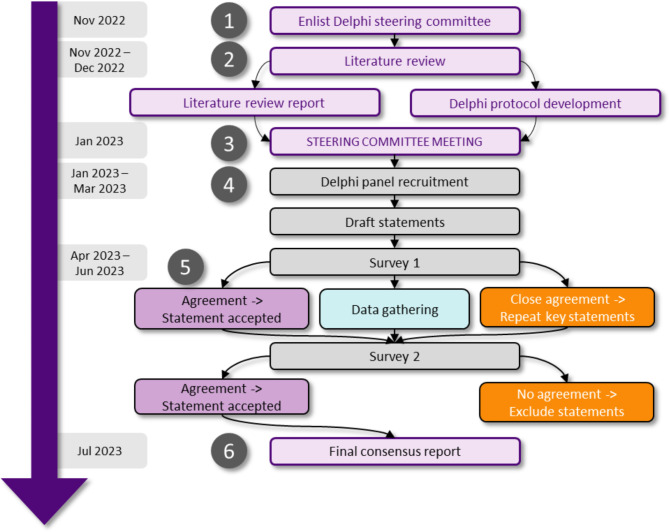
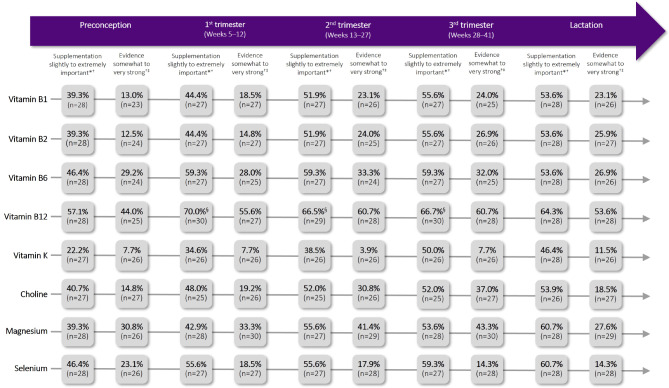
Methods: We conducted a two-round web-based Delphi survey on various topics including general approaches to diet and supplement use, and existing guidelines. For the periods of preconception, pregnancy and lactation, questions focused on the importance and strength of evidence for supplement use with the following micronutrients for low- and high-risk populations: folic acid, choline, iodine, magnesium, calcium, iron, selenium, docosahexaenoic acid (DHA), and vitamins B1, B2, B6, B12, D and K.
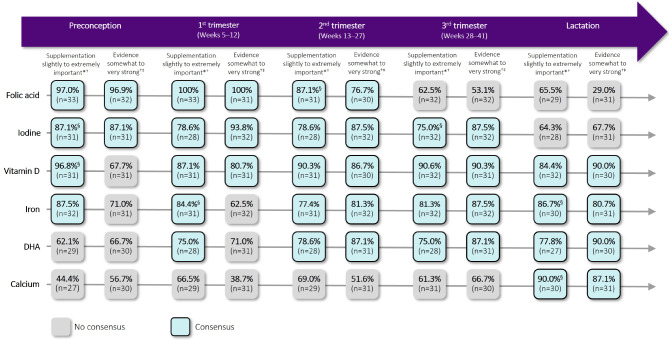
Results: Thirty-five experts participated in the panel, who were healthcare professionals (HCPs), researchers and joint HCP-researchers with expertise in nutrition, gynaecology and/or obstetrics. Panellists reached consensus on the importance of diet and dietary supplement use during pregnancy and agreed on the lack of clarity and consistency in current guidelines, and the need for education in these areas for HCPs, pregnant people and the general population. For general low-risk populations, there was consensus on the importance of supplement use with iron and vitamin D from preconception through lactation, with folic acid and iodine from preconception through the second and third trimesters, respectively, with DHA from the first trimester through lactation and with calcium during lactation. Panellists agreed that the evidence for supplement use with each of these micronutrients during these phases to improve outcomes and/or foetal development is strong, except for vitamin D (preconception), DHA (first trimester), and iron (both periods). There was also consensus that supplement use advice should be tailored for people following vegan/vegetarian diets, restricted diets due to food intolerances, obesity, polycystic ovary syndrome, diabetes mellitus, and previous nutrition-related pregnancy complications.
Conclusion: The findings revealed robust consensus on various aspects of maternal nutrition, including the need for education, the lack of consistency in current guidelines on supplement use, the importance of supplement use across specific phases of pregnancy and the at-risk groups requiring tailored approaches.
Keywords: Guidelines; Lactation; Maternal diet; Preconception; Pregnancy; Trace-elements; Vitamins.
© 2024. The Author(s).
Conflict of interest statement
Declarations. Ethics approval and consent to participate: The study was reviewed by Pearl Institutional Review Board (2023-0047, https://www.pearlirb.com/ ) and received a Category 2 exemption from full review, in accordance with the US Department of Health and Human Services and Code of Federal Regulations (CFR; 45 CFR 46.104(d)(2)). Participants gave informed consent to participate as part of the survey and could withdraw at any time. Consent for publication: Not applicable. Competing interests: IC has received payments/honoraria unrelated to the present publication from Procter & Gamble (P&G), Bayer and Italfarmaco and has participated on a data safety monitoring board/advisory board for Italfarmaco. RD has received payments/honoraria unrelated to the present publication from P&G and Metagenics and participated on a data safety monitoring board/advisory board for Pfizer and Janssen Pharmaceuticals. RO and SP have received consulting fees and payments/honoraria unrelated to the present publication from P&G. All authors received payment for participation in a steering committee meeting related to the data presented in this manuscript.
Figures
References
Publication types
MeSH terms
Substances
Grants and funding
LinkOut - more resources
Full Text Sources
Medical
Miscellaneous
