


Regulatory trends of organophosphate and pyrethroid pesticides in cannabis and applications of the Comparative Toxicogenomics Database and Caenorhabditis elegans
- PMID: 39836634
- PMCID: PMC11979763
- DOI: 10.1093/toxsci/kfaf009
Regulatory trends of organophosphate and pyrethroid pesticides in cannabis and applications of the Comparative Toxicogenomics Database and Caenorhabditis elegans
Abstract
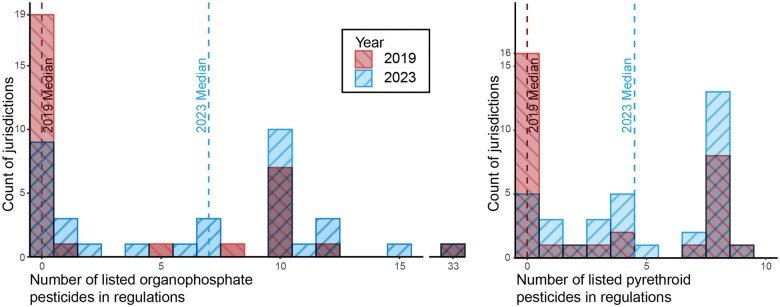
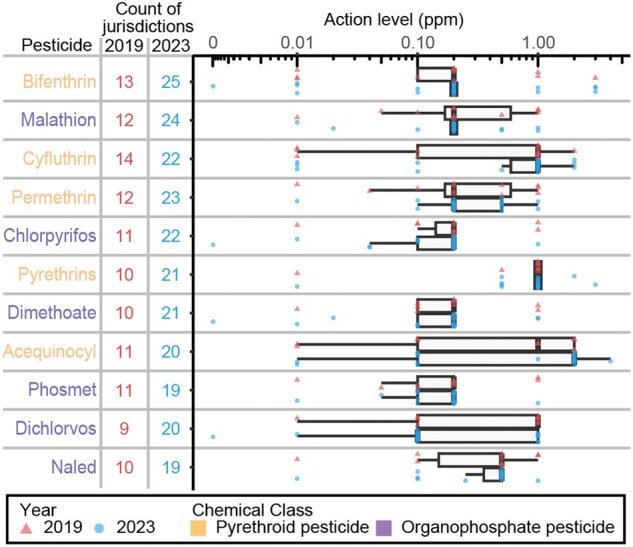
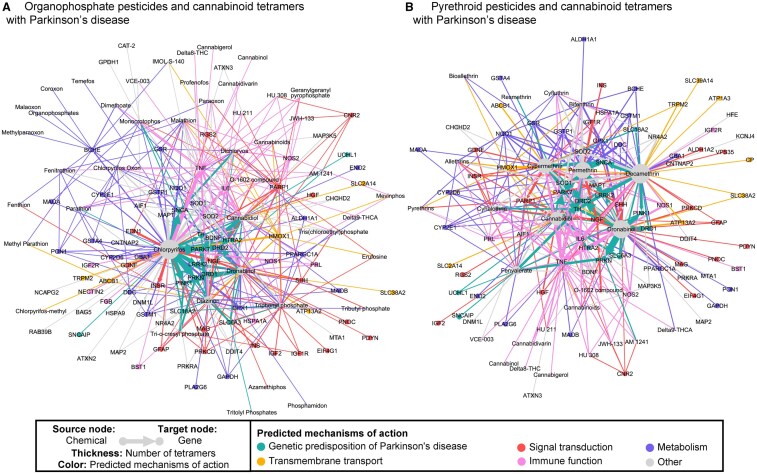
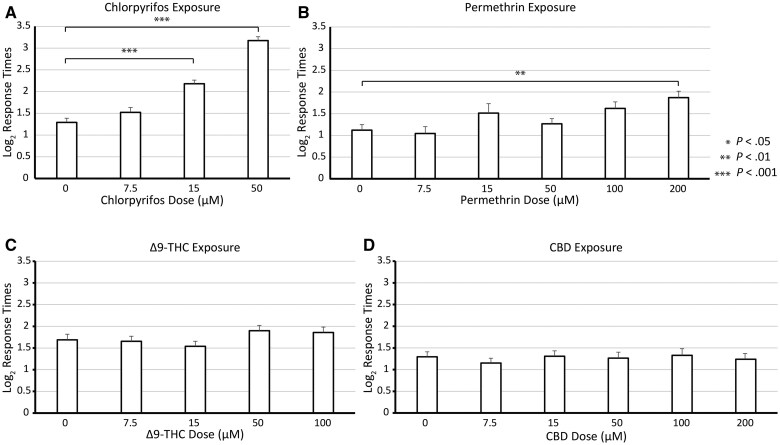
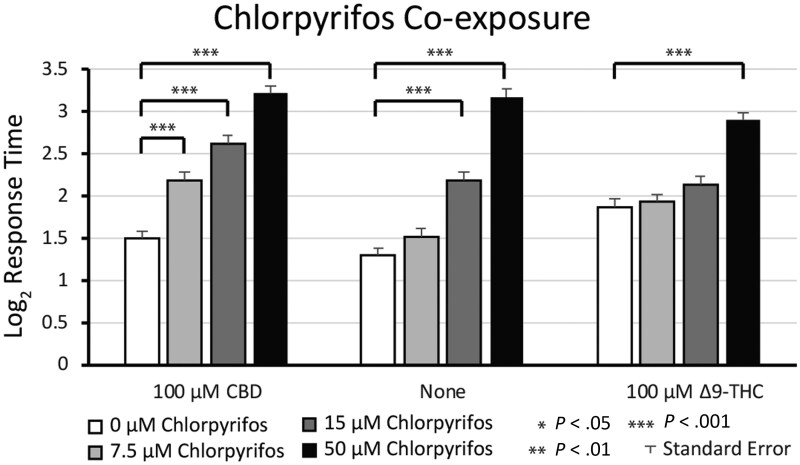
Organophosphate and pyrethroid pesticides are common contaminants in cannabis. Due to the status of cannabis as an illicit Schedule I substance at the federal level, there are no unified national guidelines in the United States to mitigate the health risk of pesticide exposure in cannabis. Here, we examined the change in the state-level regulations of organophosphate and pyrethroid pesticides in cannabis. The medians of pyrethroid and organophosphate pesticides specified by each state-level jurisdiction increased from zero pesticide in 2019 to 4.5 pyrethroid and 7 organophosphate pesticides in 2023, respectively. Next, we evaluated the potential connections between pyrethroids, organophosphates, cannabinoids, and Parkinson's disease using the Comparative Toxicogenomics Database (CTD). Eleven pyrethroids, 30 organophosphates, and 14 cannabinoids were associated with 95 genes to form 3,237 inferred and curated Chemical-Gene-Phenotype-Disease tetramers. Using a behavioral repulsion assay with the whole organism model Caenorhabditis elegans, we examined the effect of cannabinoids and insecticides on depleting dopamine synthesis. Exposure to chlorpyrifos and permethrin, but not Δ9-tetrahydrocannabinol (THC) and cannabidiol (CBD), results in dose-dependent effects on 1-nonanol repulsive behaviors in C. elegans, indicating dopaminergic neurotoxicity (P < 0.01). Dose-dependent effects of chlorpyrifos are different in the presence of Δ9-THC and CBD (P < 0.001). As a proof of concept, this study demonstrated how to use new approach methodologies such as C. elegans and the CTD to inform further testing and pesticide regulations in cannabis by chemical class.
Keywords: Caenorhabditis elegans; cannabis; new approach methodology; pesticide; regulatory policy; systems biology.
© The Author(s) 2025. Published by Oxford University Press on behalf of the Society of Toxicology.
Figures
References
-
- Arizona Department of Health Services (AZDHS), Compiled State Pesticides/Fungicides/Herbicides/Growth Regulators Review. 2019. Medical Marijuana Testing Advisory Council. Phoenix (AZ). [accessed 2024 August 9]. https://www.azdhs.gov/licensing/medical-marijuana/index.php#testing-advi...
-
- Arvidson KB. 2012. QSAR and Read-Across Approaches using in silico Tools in Food Ingredient/Contaminant Safety Assessments at the U.S. Food & Drug Administration. Cosmetic Ingredient Review. Silver Spring (MD): U.S. Food & Drug Administration. [accessed 2024 August 9]. https://www.cir-safety.org/supplementaldoc/qsar-and-read-across-approach...
-
- Bastian M, Heymann S, Jacomy M. 2009. Gephi: an open source software for exploring and manipulating networks. ICWSM. 3:361–362. 10.1609/icwsm.v3i1.13937 - DOI
MeSH terms
Substances
Grants and funding
LinkOut - more resources
Full Text Sources
Medical
Research Materials
