


Differences between the normal and perceived appropriate portion sizes of discretionary foods
- PMID: 39838085
- PMCID: PMC12069090
- DOI: 10.1038/s41430-025-01569-2
Differences between the normal and perceived appropriate portion sizes of discretionary foods
Abstract
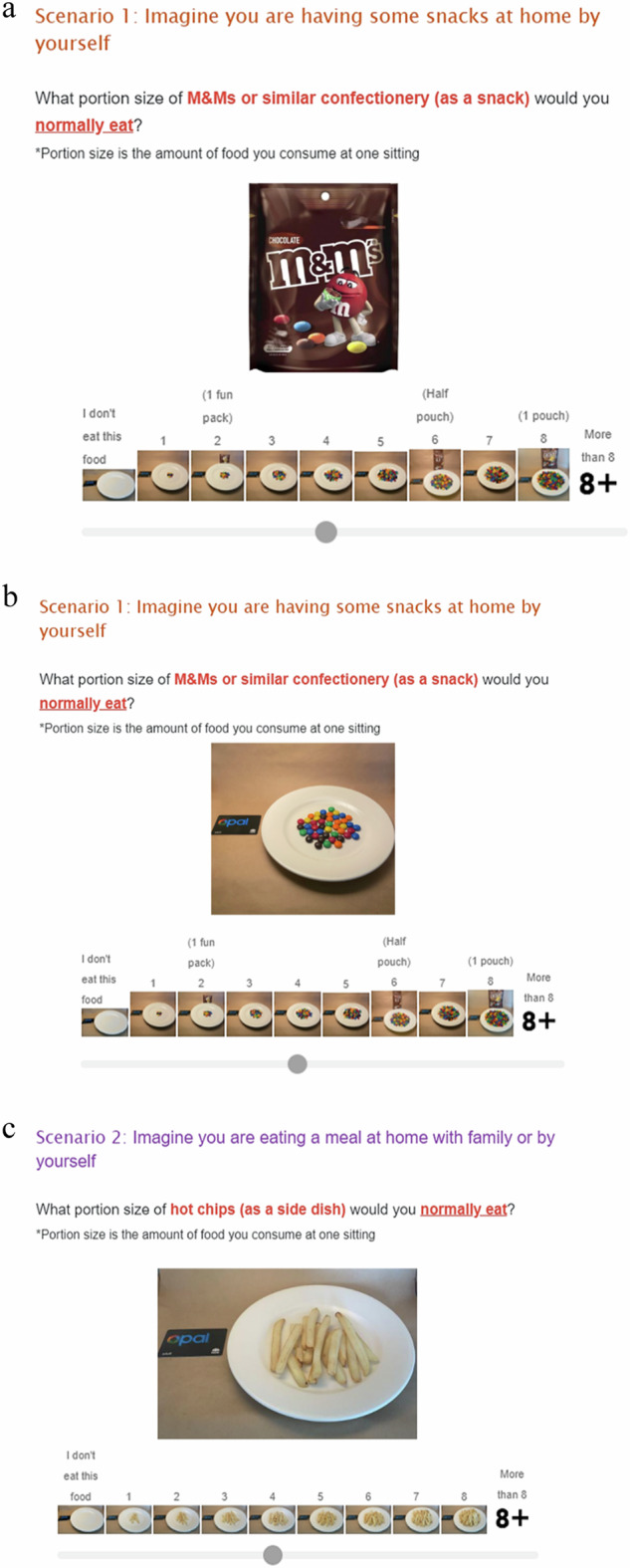
Background: There are limited data on the amount of discretionary foods that people normally consume and consider as appropriate at one eating occasion. This study aimed to provide an overview of the range and assess differences of the 'normal portion size' and 'perceived appropriate portion size' of energy-dense nutrient-poor discretionary foods among consumers aged 18-65 years.
Methods: To measure normal and perceived appropriate portion sizes, a validated online image-series questionnaire consisting of eight successive portion size options for 15 discretionary foods was completed at two timepoints. Quantile regression models were used to estimate the ranges (lower boundary at 17th percentile, upper boundary at 83rd percentile) of normal and perceived appropriate portion sizes selected by two thirds of the study population. Models were adjusted for the effects of potential influencing factors including biological sex, age, usual physical activity level, cooking confidence, socio-economic status, body mass index, and baseline hunger levels.
Results: A final sample of 295 participants were included in the analysis (51% females, mean age 39.5 ± 14.1 years). The normal portion sizes were significantly higher than the perceived appropriate portion sizes across all test foods, with the effects of sex, age, and BMI being significant for some foods.
Conclusion: The finding suggests that consumers would normally consume a portion size that was larger than what they perceive to be appropriate for discretionary foods. The estimated lower and upper boundaries would be valuable for the development of pragmatic public health messages to empower consumers towards better portion control.
© 2025. The Author(s).
Conflict of interest statement
Competing interests: The authors declare no competing interests. Ethics approval and consent to participate: This study was conducted in accordance with the Declaration of Helsinki. The study approved by the Human Ethics Committee of the University of Sydney (ethics approval number 2022/147). Informed consent was obtained from all participants.
Figures
References
-
- McCrory MA, Harbaugh AG, Appeadu S, Roberts SB. Fast-Food Offerings in the United States in 1986, 1991, and 2016 Show Large Increases in Food Variety, Portion Size, Dietary Energy, and Selected Micronutrients. J Acad Nutr Diet. 2019;119:923–33. - PubMed
-
- Watson WL, Kury A, Wellard L, Hughes C, Dunford E, Chapman K. Variations in serving sizes of Australian snack foods and confectionery. Appetite. 2016;96:32–7. - PubMed
-
- Mattes RD. Evidence on the “normalizing” effect of reducing food-portion sizes. Am J Clin Nutr. 2018;107:501–3. - PubMed
MeSH terms
LinkOut - more resources
Full Text Sources
Miscellaneous
