


Provocation of brachial plexus and systemic symptoms during the elevated arm stress test in individuals with myalgic encephalomyelitis/chronic fatigue syndrome or idiopathic chronic fatigue
- PMID: 39844172
- PMCID: PMC11752803
- DOI: 10.1186/s12967-025-06137-7
Provocation of brachial plexus and systemic symptoms during the elevated arm stress test in individuals with myalgic encephalomyelitis/chronic fatigue syndrome or idiopathic chronic fatigue
Abstract
Background: We have noted that some adolescents and young adults with myalgic encephalomyelitis/chronic fatigue syndrome (ME/CFS) report difficulty with arms-overhead activities, suggestive of brachial plexus dysfunction or thoracic outlet syndrome (TOS). In the TOS literature, diagnostic maneuvers focus on the provocation of upper limb symptoms (arm fatigue and heaviness, paresthesias, neck and upper back pain), but not on elicitation of systemic symptoms.
Objectives: To estimate the proportion of patients with fatiguing illness who experience local and systemic symptoms during a common maneuver used in evaluating TOS-the elevated arm stress test (EAST).
Methods: Patients were eligible for this retrospective study if they had been referred to the Johns Hopkins Chronic Fatigue Clinic between January 2020 and July 2023 and (a) reported difficulty maintaining arms-overhead postures, (b) were evaluated with an abbreviated one-minute EAST, and (c) had not undergone surgery in the upper limb, neck, or skull base. Modified EAST procedure: patients sat with their arms in a "hands up" or "candlestick" position while opening and closing their hands every 2-3 s repeatedly for 1 min, rather than the customary 3 min. The test was considered abnormal for local symptoms if the participant experienced pain, fatigue, heaviness, paresthesias, warmth or tremulousness in the upper limb, shoulder, neck, head, or upper back. The test was considered abnormal for systemic symptoms if the participant experienced overall fatigue, cognitive fogginess, lightheadedness, racing heart, diaphoresis, dyspnea, overall warmth, or nausea.
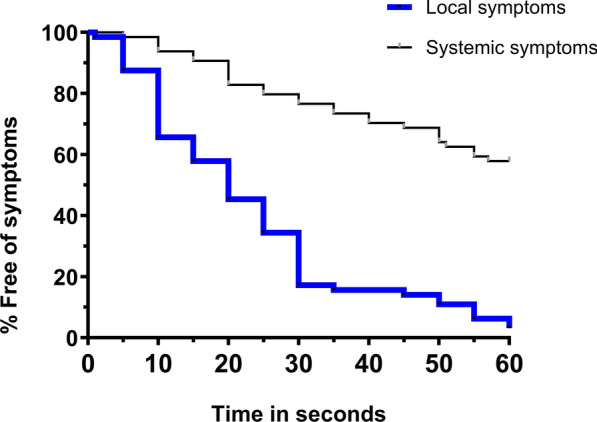
Results: Of 154 patients evaluated during the study period, 64 (42%) met the eligibility criteria (61/64 female, median age 18 years [range, 13 to 50]). Of the 64, 50 (78%) had ME/CFS, 13 (20%) had idiopathic chronic fatigue with associated orthostatic intolerance (OI), and one had idiopathic chronic fatigue without OI. Of the 64, 58% had evidence of joint hypermobility. Local symptoms were provoked by EAST in 62/64 (97%) within a median of 20 s. During EAST, 26/64 (41%) reported systemic symptoms (1 had only systemic but no upper limb symptoms), most commonly lightheadedness (19%) and generalized fatigue (11%).
Conclusions: Even with an abbreviated test duration, the EAST maneuver provoked local and systemic symptoms in a substantial proportion of patients with chronic fatigue, OI, and ME/CFS who had reported difficulty with arms-overhead postures. Further studies are needed to explore the prevalence of brachial plexus or TOS symptoms in unselected individuals with ME/CFS or OI, and the proportion with systemic symptoms during and after EAST.
Keywords: Ehlers-Danlos syndrome; Elevated arm stress test; Joint hypermobility; Myalgic encephalomyelitis/chronic fatigue syndrome; Orthostatic intolerance; Thoracic outlet syndrome.
© 2025. The Author(s).
Conflict of interest statement
Declarations. Ethics approval and consent to participate: The study was approved by the Institutional Review Board of the Johns Hopkins Medical Institutes. Informed consent was waived for a retrospective study using data collected as part of routine care. Consent for publication: No participant’s individual data is included. Competing interests: The authors declare that they have no competing interests.
Figures
References
-
- Beyond myalgic encephalomyelitis/chronic fatigue syndrome: redefining an illness, In: Committee on the Diagnostic Criteria for Myalgic Encephalomyelitis/Chronic Fatigue Syndrome. Institute of Medicine. Washington, D.C: The National Academies Press; February 10, 2015.
-
- Rowe PC, Barron DF, Calkins H, Maumenee IH, Tong PY, Geraghty MT. Orthostatic intolerance and chronic fatigue syndrome associated with Ehlers-Danlos syndrome. J Pediatr. 1999;135:494–9. - PubMed
-
- Barron DF, Cohen BA, Geraghty MT, Violand R, Rowe PC. Joint hypermobility is more common in children with chronic fatigue syndrome than in healthy controls. J Pediatr. 2002;141:421–5. - PubMed
MeSH terms
LinkOut - more resources
Full Text Sources
Medical
Research Materials
Miscellaneous
