


Obesity and recurrent spontaneous abortion: the crucial role of weight management in pregnancy
- PMID: 39844265
- PMCID: PMC11752768
- DOI: 10.1186/s12958-024-01326-3
Obesity and recurrent spontaneous abortion: the crucial role of weight management in pregnancy
Abstract
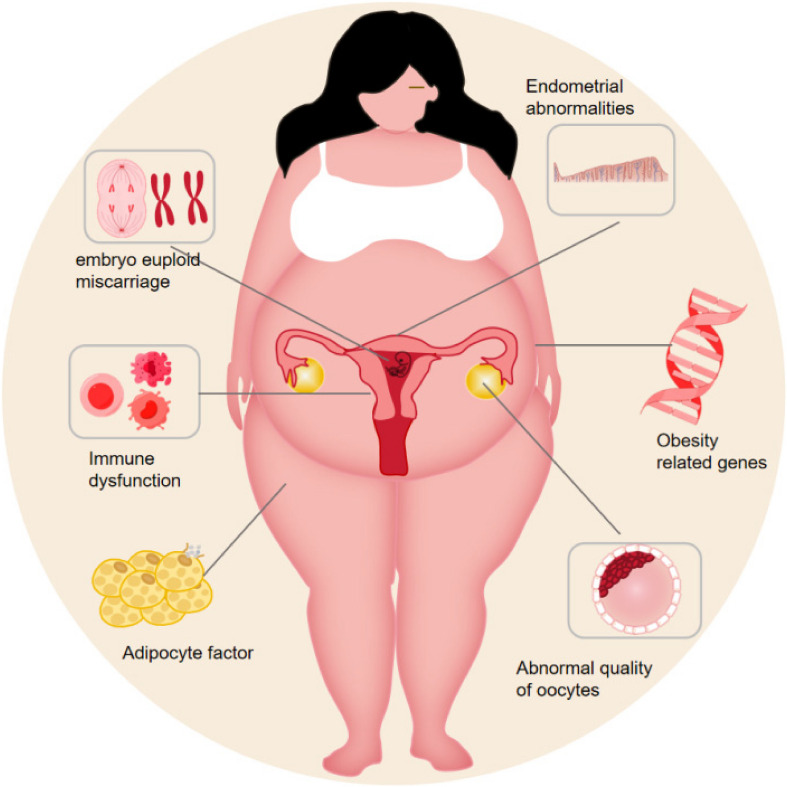
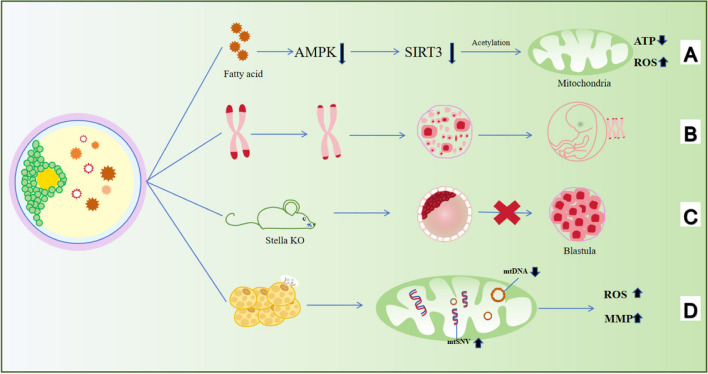
Recurrent spontaneous abortion (RSA), characterized by the loss of two or more pregnancies, impacts approximately 1-2% of couples and poses a significant challenge for individuals of childbearing age. The precise mechanisms underlying RSA remain incompletely understood. Concurrently, the global prevalence of obesity is on the rise, with obesity being closely associated with female reproductive disorders and infertility. This study initially examines the pathways through which obesity contributes to RSA, encompassing factors such as embryonic euploid miscarriage, endometrial development, immune function, among others. Furthermore, adipokines and the fat mass and obesity-related (FTO) are identified as potential contributors to RSA. The study also explores the enhancement of pregnancy outcomes through various weight management strategies, with a particular focus on the roles of dietary interventions, physical activity, and weight control during pregnancy. Obesity is closely related to RSA in multiple aspects. Additional clinical prospective and experimental studies are required to explore its precise pathogenesis. Through this review, we aim to provide strategies for improvement and treatment approaches for RSA related to obesity. Through this review, we suggest potential clinical management strategies and research avenues aimed at offering enhancements and therapeutic insights for miscarriages linked to obesity and its associated risk factors.
Keywords: Body mass index; Endometrium; Immune imbalance; Obesity; Oocytes; Recurrent spontaneous abortion; Weight management.
© 2025. The Author(s).
Conflict of interest statement
Declarations. Ethics approval and consent to participate: Not applicable. Consent for publication: Not applicable. Competing interests: The authors declare no competing interests.
Figures
References
-
- Cavalcante MB, Sarno M, Peixoto AB, Araujo Júnior E, Barini R. Obesity and recurrent miscarriage: a systematic review and meta-analysis. J Obstet Gynaecol Res. 2019;45:30–8. - PubMed
-
- Stefan N, Schick F, Häring HU. Causes, characteristics, and consequences of metabolically unhealthy normal weight in humans. Cell Metab. 2017;26:292–300. - PubMed
-
- Kelly T, Yang W, Chen CS, Reynolds K, He J. Global burden of obesity in 2005 and projections to 2030. Int J Obes (Lond). 2008;32:1431–7. - PubMed
-
- Elagizi A, Kachur S, Lavie CJ, Carbone S, Pandey A, Ortega FB, Milani RV. An overview and update on obesity and the obesity Paradox in Cardiovascular diseases. Prog Cardiovasc Dis. 2018;61:142–50. - PubMed
Publication types
MeSH terms
Grants and funding
LinkOut - more resources
Full Text Sources
Medical
