


Multisport-Integrated Training for Rugby Instructors: Success and Effects on Minirugby Players
- PMID: 39846652
- PMCID: PMC11755658
- DOI: 10.3390/jfmk10010011
Multisport-Integrated Training for Rugby Instructors: Success and Effects on Minirugby Players
Abstract
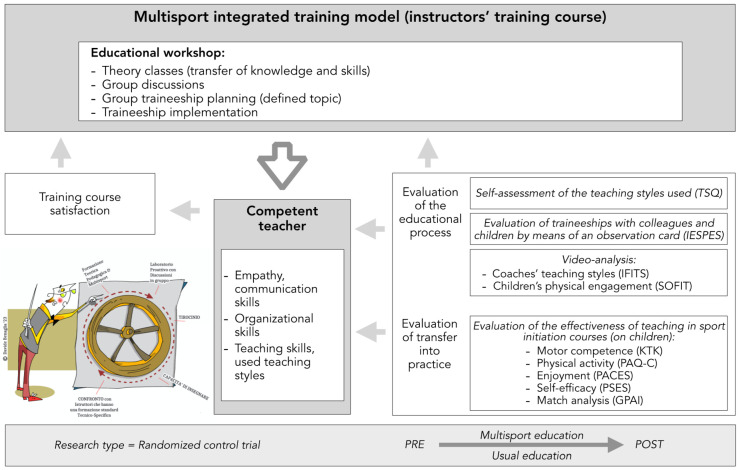
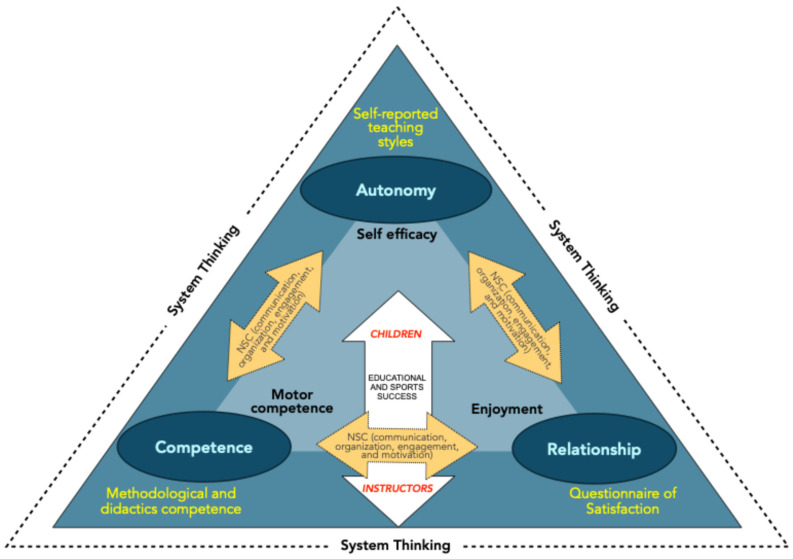
Background/objectives: The educational system thinking approach (ST) takes a holistic vision of instructors/teachers and learners' relationships, making sports pivotal for reflection on education. This study evaluated the efficacy of a multisport ST-based course on minirugby instructors' teaching competence and children players' motor conduct.
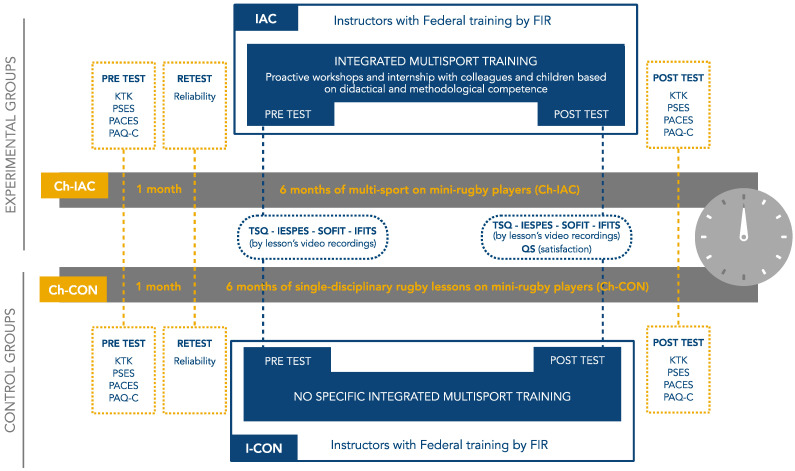
Methods: The twenty-five rugby instructors (IAC) attended the 25 h course and the children of their teams (n = 109, Ch-IAC) participated in this study as experimental groups. Twenty-five rugby instructors who were not attending the course (I-CON) and their pupils (n = 111, Ch-CON) acted as control groups. Changes in instructors' teaching competence (by the Instrument for Identifying the Teaching Style and the System for Observing Fitness Instruction Time) and children's motor conduct (by the Körperkoordinationtest für Kinder test, the Game Performance Assessment Instrument, the Physical Activity Enjoyment Scale, and the physical self-efficacy scale for children) were assessed.
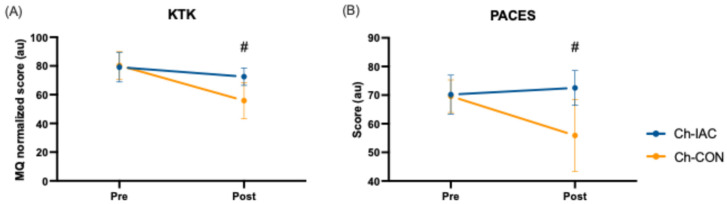
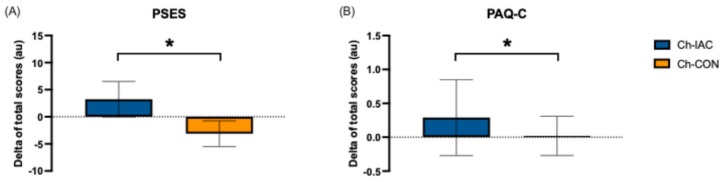
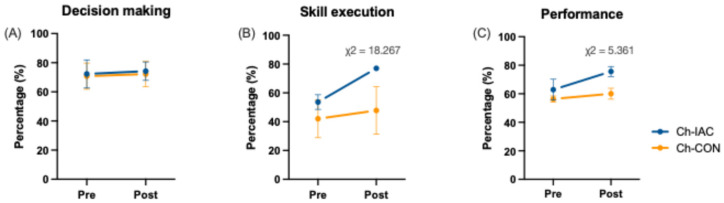
Results: Thanks to the education received, IAC improved in didactics and methodological competence. They learned to use more production teaching styles than CON (10.5 ± 9.3% vs. 0% of the lesson time, p < 0.05), reduce children's inactive lesson time for management (-5.1 ± 3.3% vs. 1.1 ± 3.1%, p < 0.05) and promote more outside lesson topics (4.4 ± 3.2% vs. 0%, p < 0.05). In addition, compared to Ch-CON, Ch-IAC significantly improved motor coordination, game performance, enjoyment, and self-efficacy (p < 0.05).
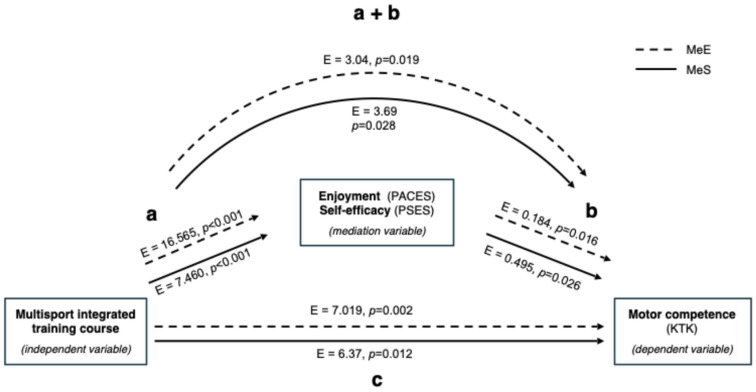
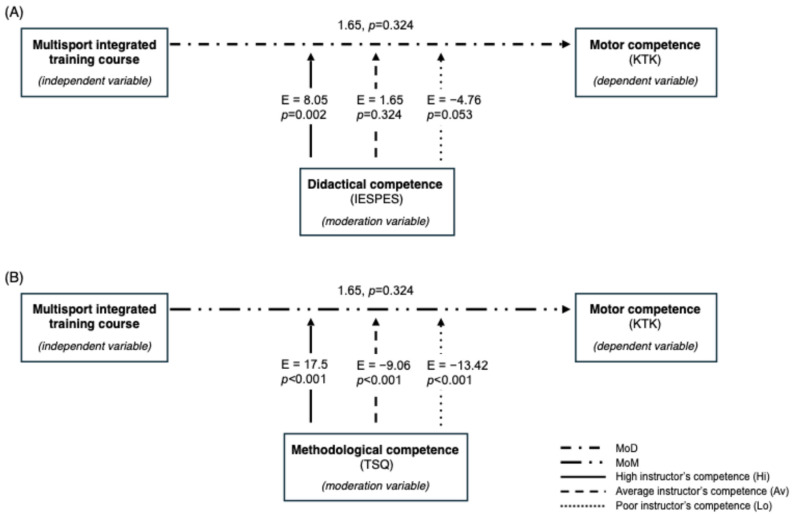
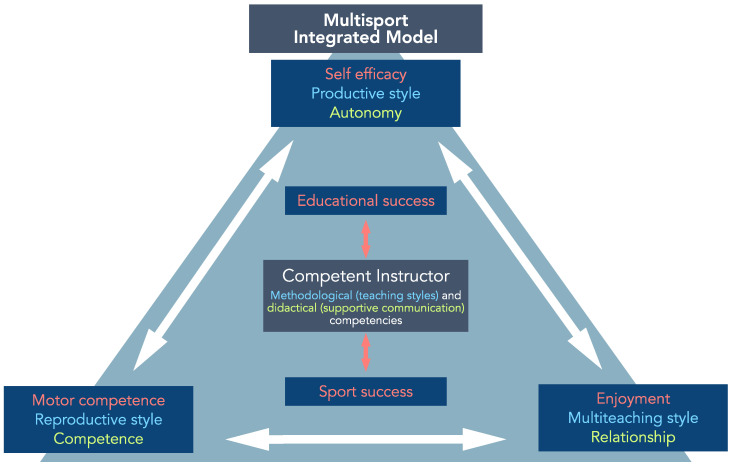
Conclusions: Children's enjoyment and self-efficacy acted as mediators that amplified the effects of the multisport training course. At the same time, the instructor's didactical and methodological competence were moderators directly favoring or worsening children's motor competence. Such an integrated multisport model is applicable and suggested for improving sports performance and education processes.
Keywords: motor competence; sports education; system thinking; teaching competence; teaching styles.
Conflict of interest statement
The authors declare no conflicts of interest.
Figures
References
-
- Arango-Paternina C.M., Watts-Fernández W.J., Brownson R. Pensamiento complejo y sistémico en educación física y promoción de actividad física. Educ. Física Deporte. 2022;41:81–105. doi: 10.17533/udea.efyd.e344232. - DOI
-
- Bronfenbrenner U. Toward an Experimental Ecology of Human Development. Am. Psychol. 1977;32:513–531. doi: 10.1037/0003-066X.32.7.513. - DOI
-
- Coté J., Turnnidge J., Murata A., Mcguire C.S., Martin L.J. Youth sport research: Describing the integrated dynamic elements of the personal assets framework. Int. J. Sport Psychol. 2020;51:562–578. doi: 10.7352/IJSP.2020.51.562. - DOI
-
- Coté J., Strachan L., Fraser-Thomas J. Positive Youth Development Through Sport. Routledge; London, UK: 2008. Participation, personal development, and performance through youth sport.
-
- Rigon M., Signorini G., Scurati R., Trecroci A., Colella D., Formenti D., Merati G., Cherubini D., Invernizzi P.L. Relationship Between Multi-Teaching Styles and Didactics Effectiveness on Rugby Instructors and Minirugby Players. Children. 2024;11:1319. doi: 10.3390/children11111319. - DOI - PMC - PubMed
LinkOut - more resources
Full Text Sources
