


Why Is the Association Between Mediterranean Diet and Physical Performance in Athletes Inconclusive? Implications for Future Studies
- PMID: 39846657
- PMCID: PMC11755438
- DOI: 10.3390/jfmk10010016
Why Is the Association Between Mediterranean Diet and Physical Performance in Athletes Inconclusive? Implications for Future Studies
Abstract
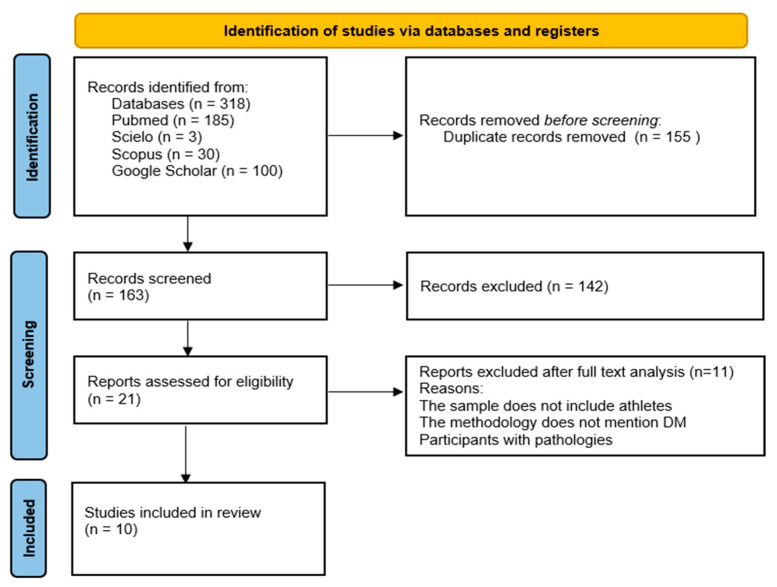
Background/Objectives: Athletes increasingly turn to nutrition and supplements to enhance performance, yet the evidence surrounding the efficacy of the Mediterranean diet (MD) remains inconclusive. This scoping review aims to evaluate identify gaps in the existing literature and provide implications for future research on the MD's potential to improve athletic performance across various demographics, sport types, and performance measures. Methods: We conducted a systematic search of peer-reviewed studies published across four databases (PubMed, Scopus, Scielo, and Google Scholar) using the following terms and their combinations: "mediterranean diet", "performance", "athlete", "sport". The search placed no restrictions on the experimental design or the time period of the publication and focused on athletes regardless of competitive level. We examined targeted studies about the MD's effects on key performance metrics, such as endurance, strength, and speed, while also evaluating possible confounding factors like dietary intake, body composition, and training status. We further aimed to identify gaps in the literature by investigating the consistency of dosing protocols, supplementation duration, and methodologies used. Results: The preliminary findings suggest that while some studies report benefits of the MD for recovery and endurance, only 40% show statistically significant improvements in performance outcomes, often with methodological limitations. The studies also lacked homogeneity in participant demographics, dosage, and performance assessments, hindering comparability. Our review highlights the need for future research that incorporates standardized dosing, homogeneous athlete populations, and controlled dietary conditions. Conclusions: This review provides a framework to guide further research and offers insights into the potential role of the MD in sports nutrition.
Keywords: gaps; nutrition; sports.
Conflict of interest statement
The authors declare no conflicts of interest.
Figures
References
-
- Bizzozero-Peroni B., Brazo-Sayavera J., Martínez-Vizcaíno V., Fernández-Rodríguez R., López-Gil J.F., Díaz-Goñi V., Cavero-Redondo I., Mesas A.E. High Adherence to the Mediterranean Diet is Associated with Higher Physical Fitness in Adults: A Systematic Review and Meta-Analysis. Adv. Nutr. 2022;13:2195–2206. doi: 10.1093/advances/nmac104. - DOI - PMC - PubMed
-
- Laffond A., Rivera-Picón C., Rodríguez-Muñoz P.M., Juárez-Vela R., de Viñaspre-Hernández R.R., Navas-Echazarreta N., Sánchez-González J.L. Mediterranean Diet for Primary and Secondary Prevention of Cardiovascular Disease and Mortality: An Updated Systematic Review. Nutrients. 2023;15:3356. doi: 10.3390/nu15153356. - DOI - PMC - PubMed
-
- Tsartsapakis I., Papadopoulos P., Stavrousis D., Dalamitros A.A., Chatzipanteli A., Chalatzoglidis G., Gerou M., Zafeiroudi A. Recreational Physical Activity and the Mediterranean Diet: Their Effects on Obesity-Related Body Image Dissatisfaction and Eating Disorders. Healthcare. 2024;12:1579. doi: 10.3390/healthcare12161579. - DOI - PMC - PubMed
Publication types
LinkOut - more resources
Full Text Sources
Research Materials
Miscellaneous
