


Targeting LMO2-induced autocrine FLT3 signaling to overcome chemoresistance in early T-cell precursor acute lymphoblastic leukemia
- PMID: 39849166
- PMCID: PMC11879882
- DOI: 10.1038/s41375-024-02491-5
Targeting LMO2-induced autocrine FLT3 signaling to overcome chemoresistance in early T-cell precursor acute lymphoblastic leukemia
Abstract
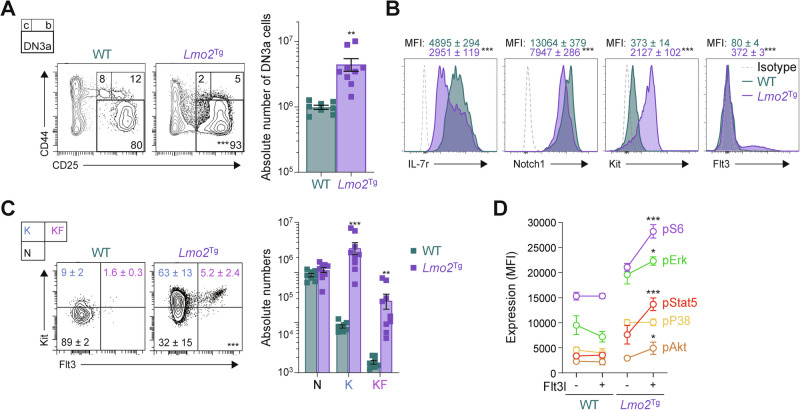
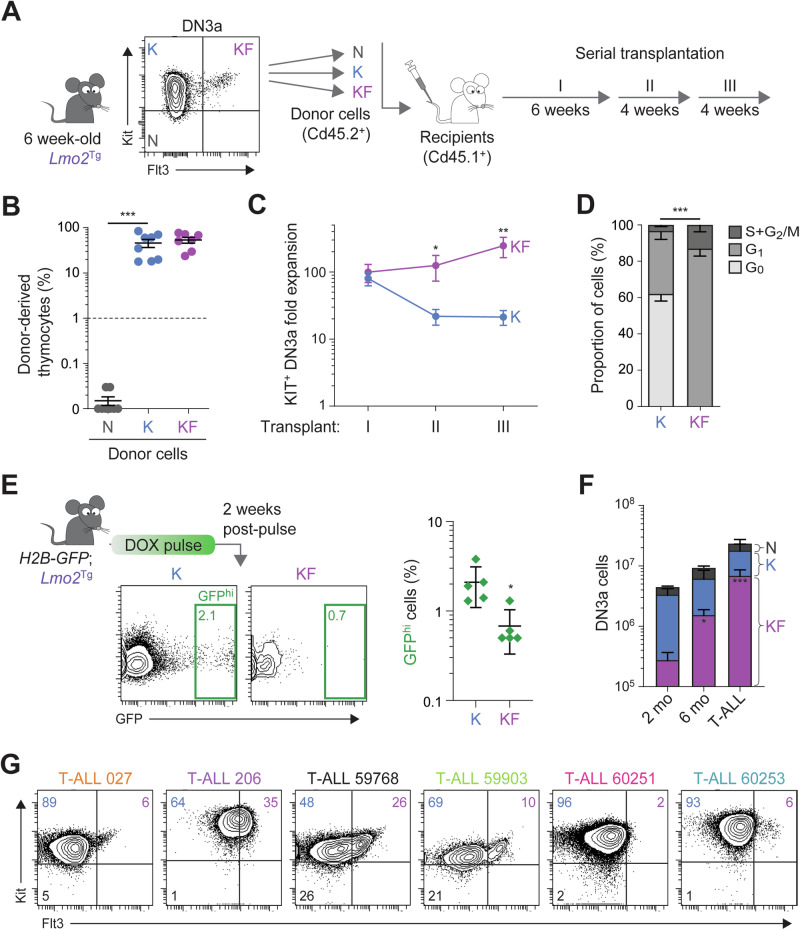
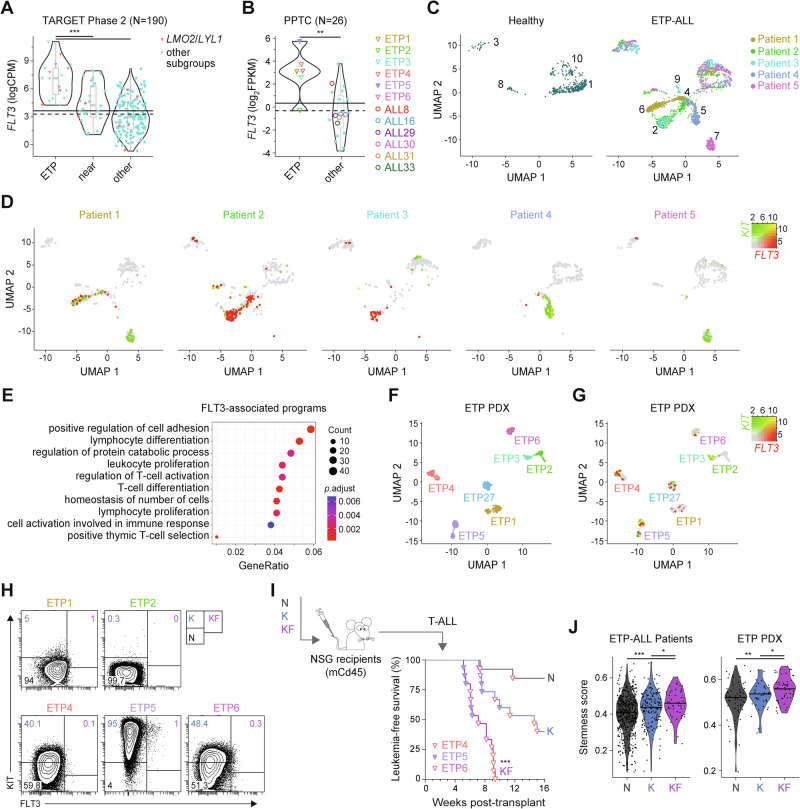
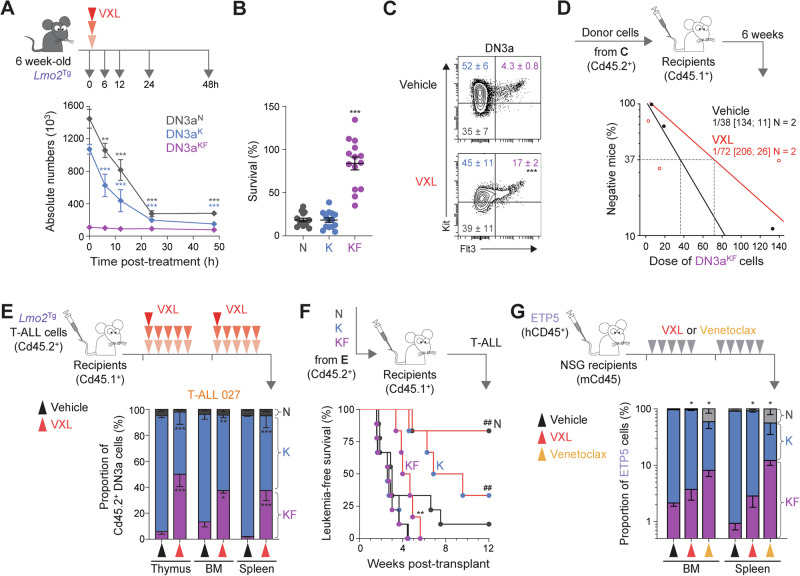
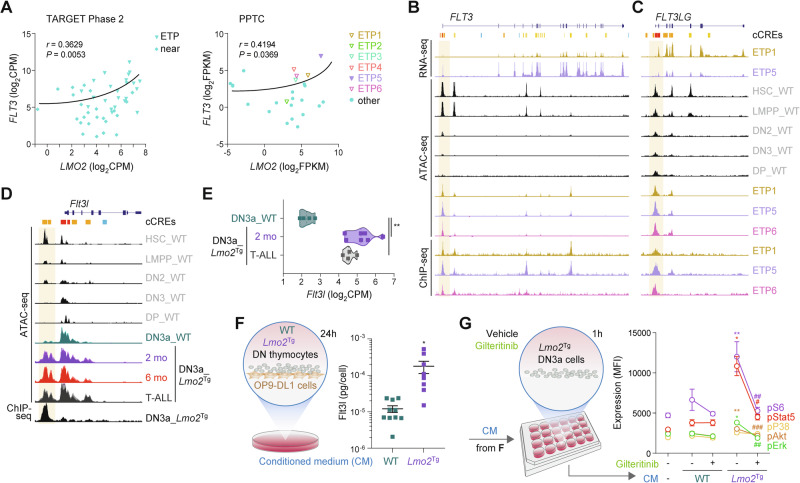
Early T-cell Precursor Acute Lymphoblastic Leukemia (ETP-ALL) is an immature subtype of T-cell acute lymphoblastic leukemia (T-ALL) commonly show deregulation of the LMO2-LYL1 stem cell transcription factors, activating mutations of cytokine receptor signaling, and poor early response to intensive chemotherapy. Previously, studies of the Lmo2 transgenic mouse model of ETP-ALL identified a population of stem-like T-cell progenitors with long-term self-renewal capacity and intrinsic chemotherapy resistance linked to cellular quiescence. Here, analyses of Lmo2 transgenic mice, patient-derived xenografts, and single-cell RNA-sequencing data from primary ETP-ALL identified a rare subpopulation of leukemic stem cells expressing high levels of the cytokine receptor FLT3. Despite a highly proliferative state, these FLT3-overexpressing cells had long-term self-renewal capacity and almost complete resistance to chemotherapy. Chromatin immunoprecipitation and assay for transposase-accessible chromatin sequencing demonstrated FLT3 and its ligand may be direct targets of the LMO2 stem-cell complex. Media conditioned by Lmo2 transgenic thymocytes revealed an autocrine FLT3-dependent signaling loop that could be targeted by the FLT3 inhibitor gilteritinib. Consequently, gilteritinib impaired in vivo growth of ETP-ALL and improved the sensitivity to chemotherapy. Furthermore, gilteritinib enhanced response to the BCL2 inhibitor venetoclax, which may enable "chemo-free" treatment of ETP-ALL. Together, these data provide a cellular and molecular explanation for enhanced cytokine signaling in LMO2-driven ETP-ALL beyond activating mutations and a rationale for clinical trials of FLT3 inhibitors in ETP-ALL.
© 2025. The Author(s).
Conflict of interest statement
Competing interests: The authors declare no competing interests.
Figures

References
-
- Bonnet D, Dick JE. Human acute myeloid leukemia is organized as a hierarchy that originates from a primitive hematopoietic cell. Nat Med. 1997;3:730–7. - PubMed
-
- Lapidot T, Sirard C, Vormoor J, Murdoch B, Hoang T, Caceres-Cortes J, et al. A cell initiating human acute myeloid leukaemia after transplantation into SCID mice. Nature. 1994;367:645–8. - PubMed
-
- Chiu PP, Jiang H, Dick JE. Leukemia-initiating cells in human T-lymphoblastic leukemia exhibit glucocorticoid resistance. Blood. 2010;116:5268–79. - PubMed
MeSH terms
Substances
Grants and funding
LinkOut - more resources
Full Text Sources
Miscellaneous
