


Contribution of Phosphorylation Modification to Stability and Antibacterial Activity of Egg White Protein Nanogels Loaded with Cinnamon Bark Essential Oil
- PMID: 39851982
- PMCID: PMC11765320
- DOI: 10.3390/gels11010012
Contribution of Phosphorylation Modification to Stability and Antibacterial Activity of Egg White Protein Nanogels Loaded with Cinnamon Bark Essential Oil
Abstract
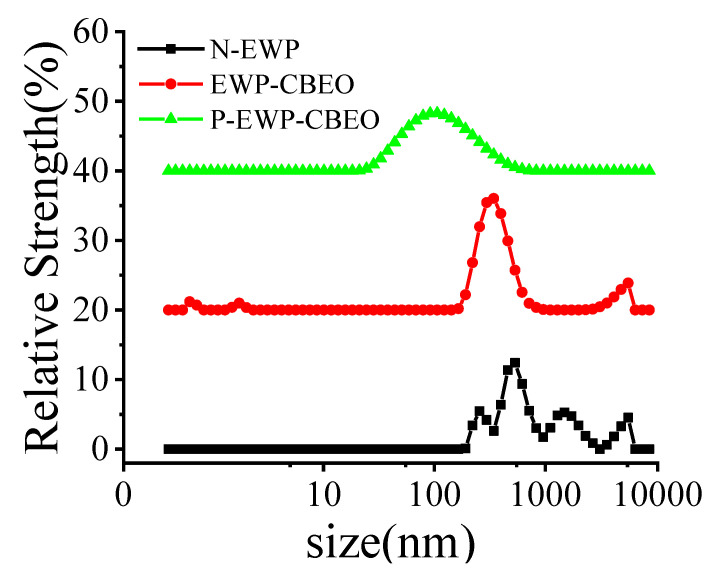
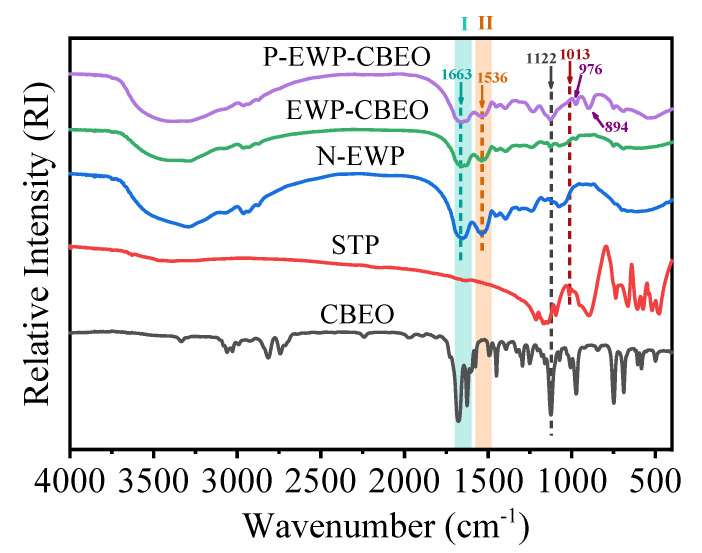
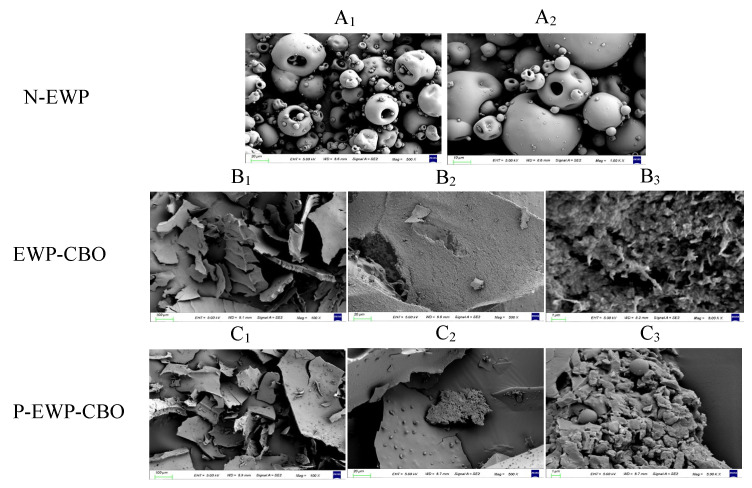
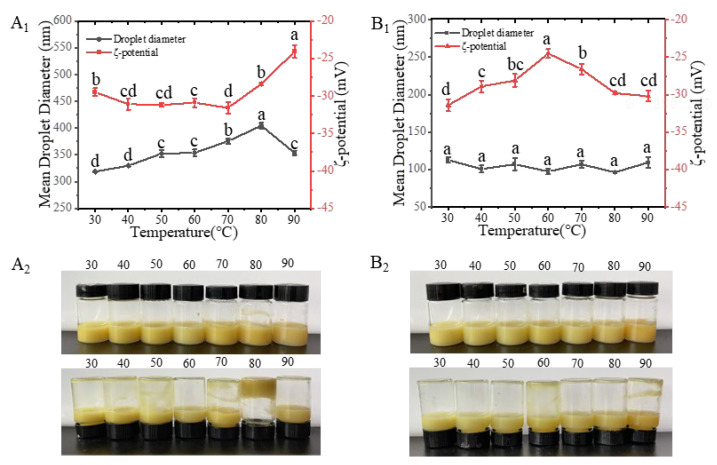
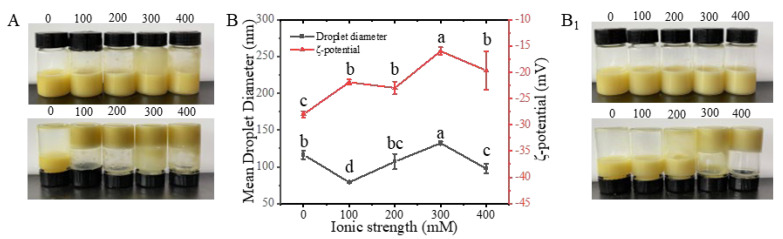
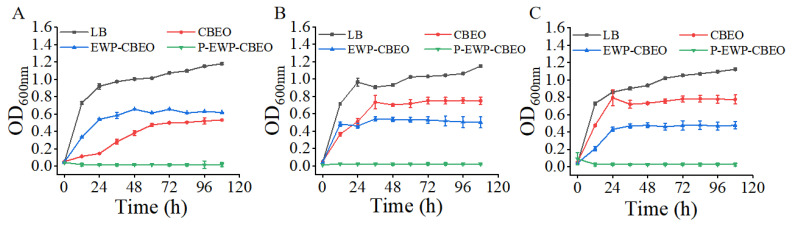
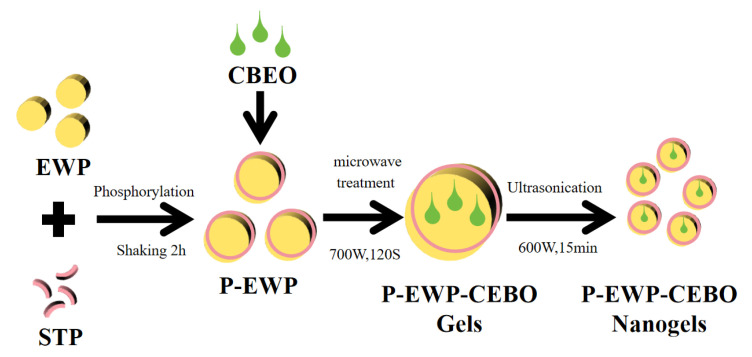
This study evaluated the potential usage of phosphorylated egg white protein (P-EWP) nanogels fabricated via microwave-induced phosphorylation modification and gel process and further ultrasonic nanometrization as novel delivery systems for cinnamon bark essential oil (CBEO). Compared to EWP-CBEO nanogels without chemical phosphorylation, the obtained P-EWP-CBEO nanogels have shown smaller average hydrodynamic diameter (133.6 nm), relatively uniform size distribution (polydispersity index around 0.265), enhanced negative surface charge (-35.4 mV), and improved stability under the conditions of high temperature (up to 90 °C) and ionic strength (up to 200 mM NaCl). Moreover, P-EWP-CBEO nanogels, with hydrophobic interactions and disulfide bonds as the main intermolecular forces, exhibited a remarkable conformational change in microstructures. In addition, the results of the antibacterial experiments on Escherichia coli, Staphylococcus aureus, and Listeria monocytogenes showed that the MIC values of P-EWP-CBEO nanogels were two times lower than those of EWP-CBEO nanogels and could completely inhibit the growth of pathogenic bacteria within 108 h. Hence, we have suggested that P-EWP-CBEO nanogels are successfully fabricated with improved physicochemical properties as novel potential natural preservatives in the food industry.
Keywords: antibacterial properties; cinnamon bark essential oil; egg white protein; nanogels; phosphorylation.
Conflict of interest statement
The authors declare that they have no known competing financial interests or personal relationships that could have appeared to influence the work reported in this paper.
Figures
References
-
- Benjemaa M., Neves M.A., Falleh H., Isoda H., Ksouri R., Nakajima M. Nanoencapsulation of Thymus capitatus essential oil: Formulation process, physical stability characterization and antibacterial efficiency monitoring. Ind. Crop Prod. 2018;113:414–421. doi: 10.1016/j.indcrop.2018.01.062. - DOI
-
- Benelli G., Pavela R. Beyond mosquitoes-essential oil toxicity and repellency against bloodsucking insects. Ind. Crop Prod. 2018;117:382–392. doi: 10.1016/j.indcrop.2018.02.072. - DOI
-
- Ghabraie M., Vu K.D., Tata L., Salmieri S., Lacroix M. Antimicrobial effect of essential oils in combinations against five bacteria and their effect on sensorial quality of ground meat. LWT-Food Sci. Technol. 2016;66:332–339. doi: 10.1016/j.lwt.2015.10.055. - DOI
Grants and funding
LinkOut - more resources
Full Text Sources
