


SPR Biosensor Based on Bilayer MoS2 for SARS-CoV-2 Sensing
- PMID: 39852072
- PMCID: PMC11763928
- DOI: 10.3390/bios15010021
SPR Biosensor Based on Bilayer MoS2 for SARS-CoV-2 Sensing
Abstract
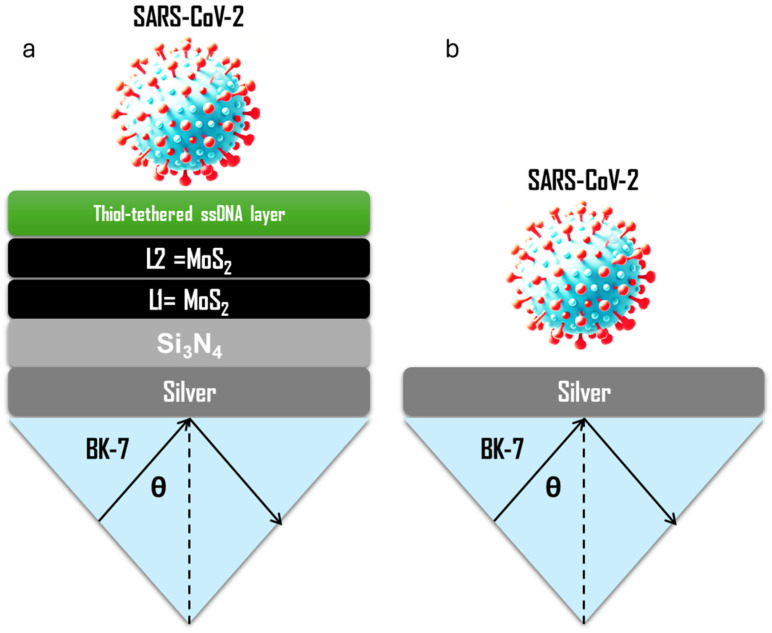
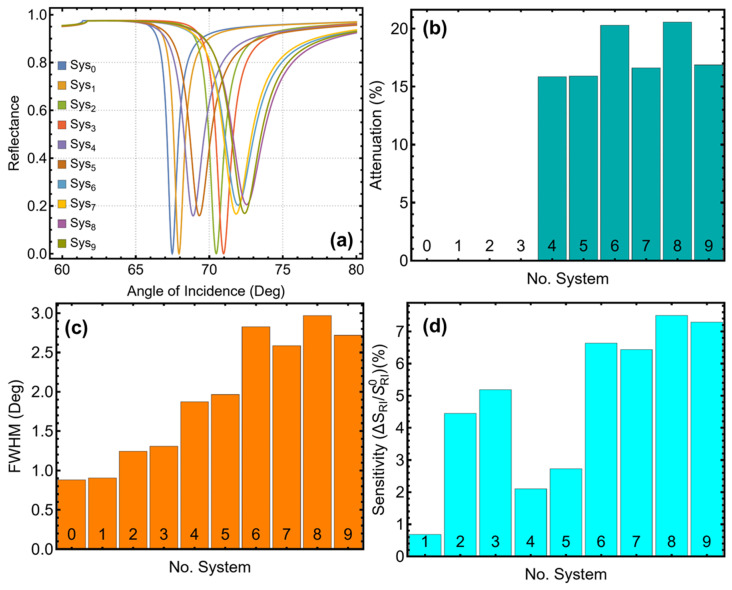
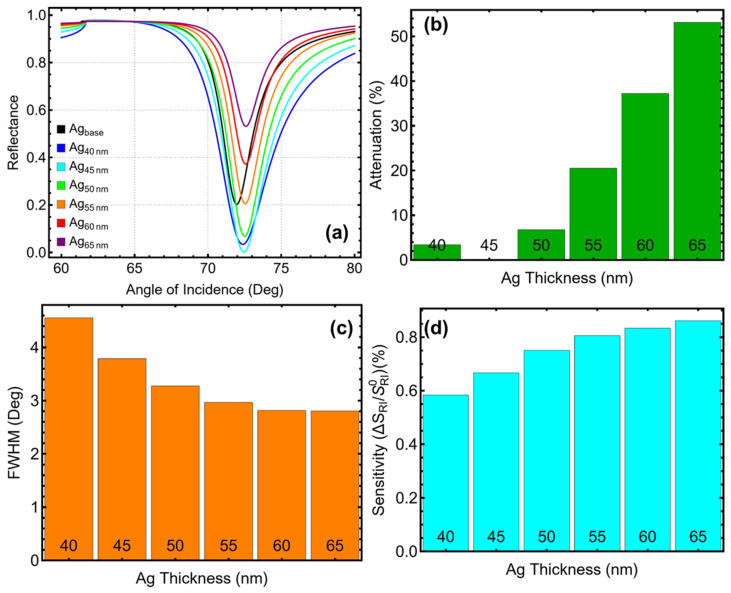
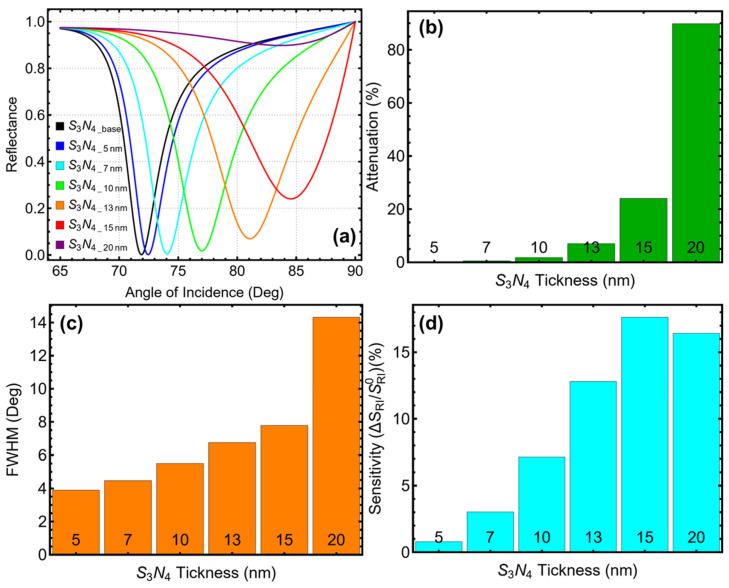
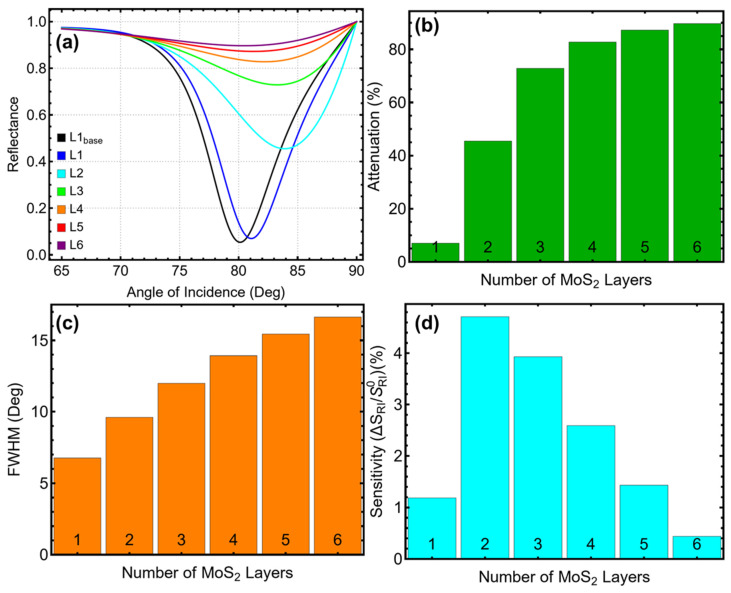
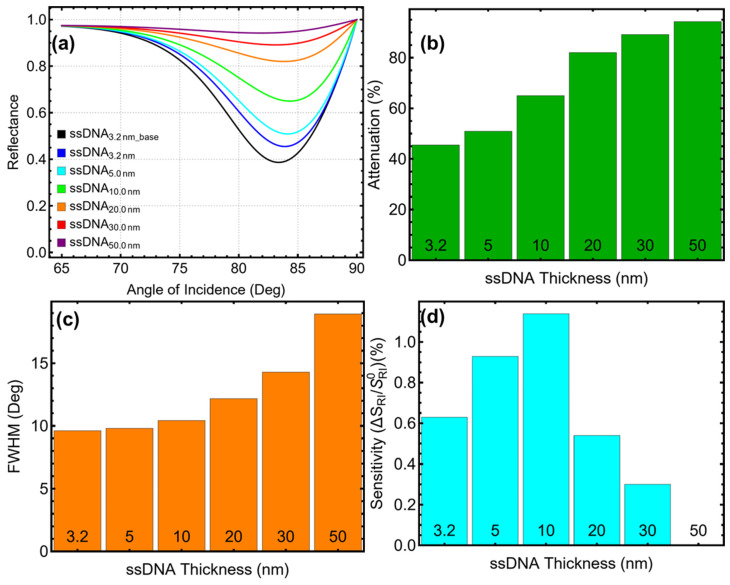
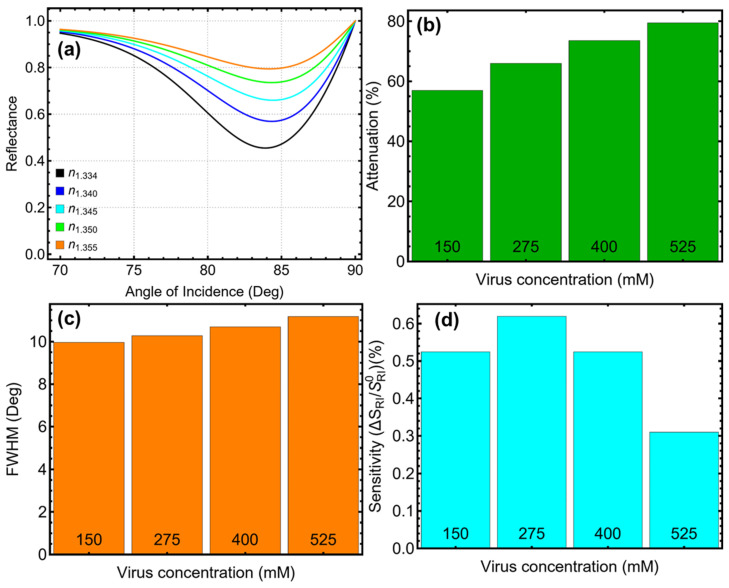
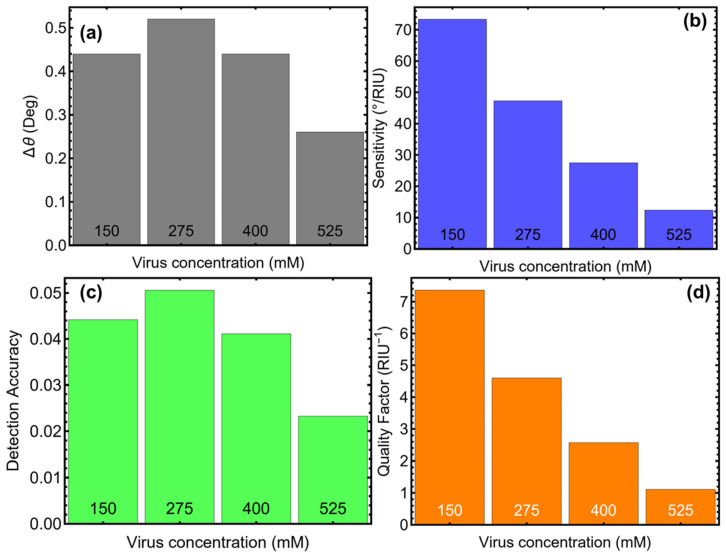
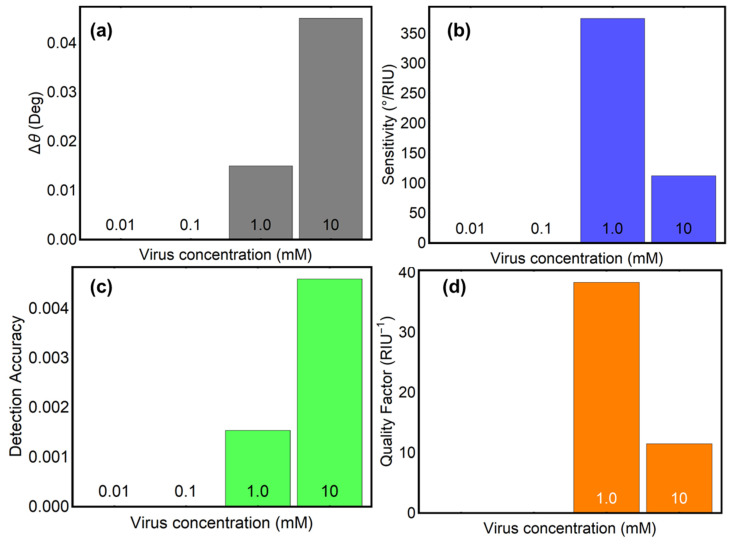
The COVID-19 pandemic has highlighted the urgent need for rapid, sensitive, and reliable diagnostic tools for detecting SARS-CoV-2. In this study, we developed and optimized a surface plasmon resonance (SPR) biosensor incorporating advanced materials to enhance its sensitivity and specificity. Key parameters, including the thickness of the silver layer, silicon nitride dielectric layer, molybdenum disulfide (MoS2) layers, and ssDNA recognition layer, were systematically optimized to achieve the best balance between sensitivity, resolution, and attenuation. The optimized configuration, consisting of a 45 nm silver layer, a 13 nm silicon nitride layer, 2 MoS2 layers, and a 5 nm ssDNA layer, demonstrated superior performance for detecting SARS-CoV-2 in PBS solution. The biosensor exhibited high sensitivity at low viral concentrations, achieving a sensitivity of 375.01°/RIU, a detection accuracy of 0.002, and a quality factor of 38.34 at 1.0 mM SARS-CoV-2 concentration. Performance metrics validated the sensor's capability for reliable detection, particularly in early-stage diagnostics where timely intervention is critical. Moreover, the biosensor's linear response to refractive index changes confirmed its potential for quantitative viral concentration analysis. This study underlines the significance of integrating advanced materials, such as MoS2 and silicon nitride, to enhance SPR biosensor performance. The findings establish the proposed biosensor as a robust and precise diagnostic tool for SARS-CoV-2 detection, with potential applications in clinical diagnostics and epidemiological monitoring.
Keywords: MoS2; SARS-CoV-2; biosensor; silicon nitride; surface plasmon resonance.
Conflict of interest statement
The authors declare no conflicts of interest.
Figures
References
-
- Giovanetti M., Branda F., Cella E., Scarpa F., Bazzani L., Ciccozzi A., Slavov S.N., Benvenuto D., Sanna D., Casu M., et al. Epidemic history and evolution of an emerging threat of international concern, the severe acute respiratory syndrome coronavirus 2. J. Med. Virol. 2023;95:e29012. doi: 10.1002/jmv.29012. - DOI - PubMed
-
- Miteva D., Kitanova M., Batselova H., Lazova S., Chervenkov L., Peshevska-Sekulovska M., Sekulovski M., Gulinac M., Vasilev G.V., Tomov L., et al. The end or a New Era of development of SARS-CoV-2 virus: Genetic variants responsible for severe COVID-19 and clinical efficacy of the most commonly used vaccines in clinical practice. Vaccines. 2023;11:1181. doi: 10.3390/vaccines11071181. - DOI - PMC - PubMed
-
- Cirit O.S., Mutlu E., Sancak B., Kocagöz T., Can Ö., Çicek C., Arzu Sayiner A., Appak Ö., Uyar N.Y., Külah C., et al. Comparison of a novel antigen detection test with reverse transcription polymerase chain reaction assay for laboratory diagnosis of SARS-CoV-2 infection. Infection. 2023;51:91–96. doi: 10.1007/s15010-022-01832-9. - DOI - PMC - PubMed
MeSH terms
Substances
Grants and funding
LinkOut - more resources
Full Text Sources
Medical
Miscellaneous
