


Recent Progress in Self-Healing Triboelectric Nanogenerators for Artificial Skins
- PMID: 39852088
- PMCID: PMC11764172
- DOI: 10.3390/bios15010037
Recent Progress in Self-Healing Triboelectric Nanogenerators for Artificial Skins
Abstract
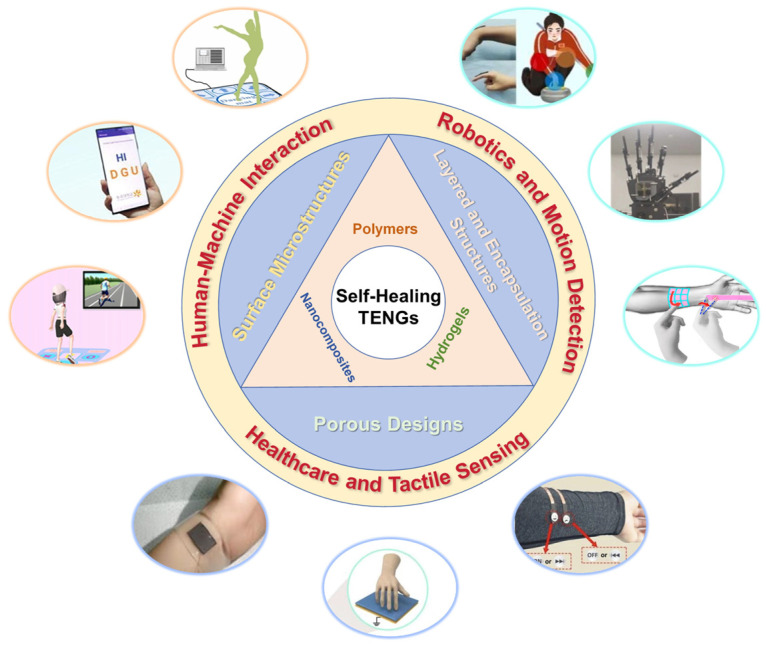
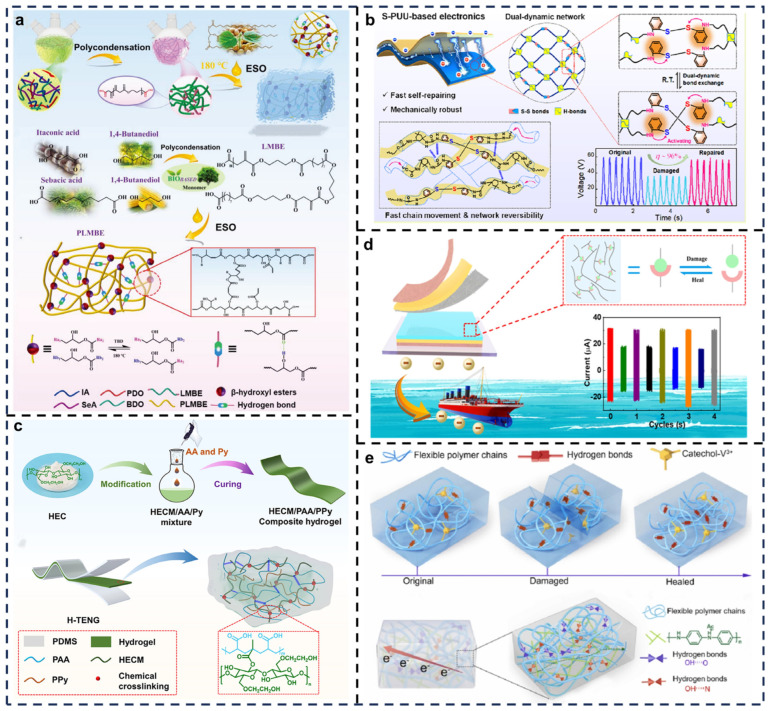
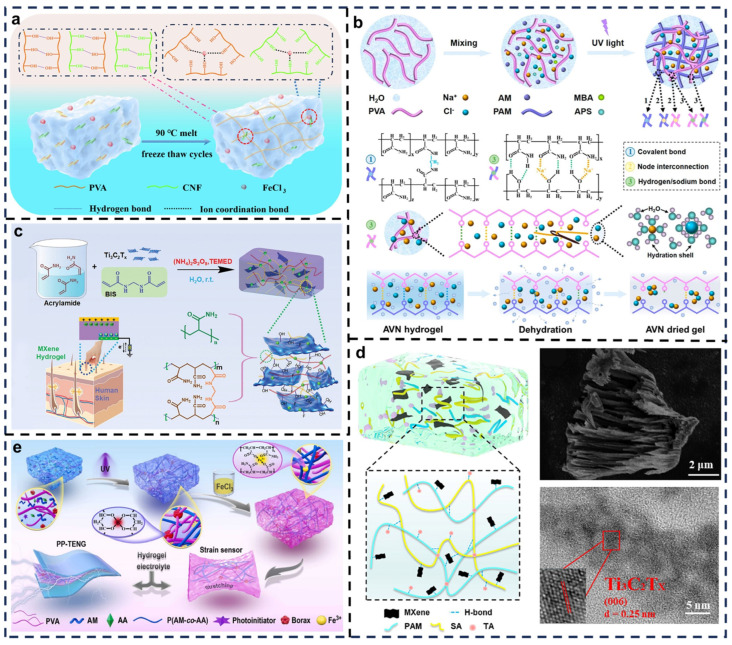
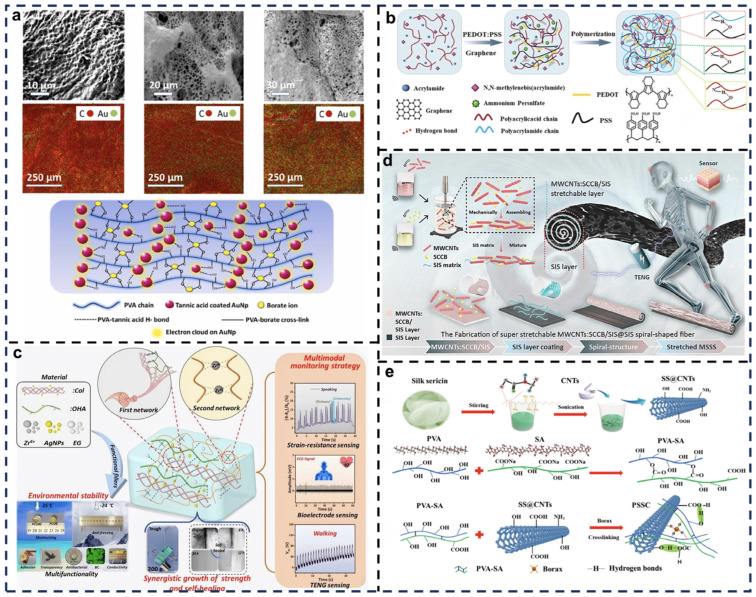
Self-healing triboelectric nanogenerators (TENGs), which incorporate self-healing materials capable of recovering their structural and functional properties after damage, are transforming the field of artificial skin by effectively addressing challenges associated with mechanical damage and functional degradation. This review explores the latest advancements in self-healing TENGs, emphasizing material innovations, structural designs, and practical applications. Key materials include dynamic covalent polymers, supramolecular elastomers, and ion-conductive hydrogels, which provide rapid damage recovery, superior mechanical strength, and stable electrical performance. Innovative structural configurations, such as layered and encapsulated designs, optimize triboelectric efficiency and enhance environmental adaptability. Applications span healthcare, human-machine interfaces, and wearable electronics, demonstrating the immense potential for tactile sensing and energy harvesting. Despite significant progress, challenges remain in scalability, long-term durability, and multifunctional integration. Future research should focus on advanced material development, scalable fabrication, and intelligent system integration to unlock the full potential of self-healing TENGs. This review provides a comprehensive overview of current achievements and future directions, underscoring the pivotal role of self-healing TENGs in artificial skin technology.
Keywords: artificial skin; human–machine interface; self-healing; tactile sensing; triboelectric nanogenerator.
Conflict of interest statement
The authors declare no conflicts of interest.
Figures
References
-
- Huang M.-Y., Veeramuthu L., Kuo C.-C., Liao Y.-C., Jiang D.-H., Liang F.-C., Yan Z.-L., Borsali R., Chueh C.-C. Improving performance of Cs-based perovskite light-emitting diodes by dual additives consisting of polar polymer and n-type small molecule. Org. Electron. 2019;67:294–301. doi: 10.1016/j.orgel.2018.12.042. - DOI
Publication types
MeSH terms
Substances
Grants and funding
- No. 242102110344/the Programs for Tackling Key Problems in Science and Technology of Henan Province
- No. 202411517013, No. 202411517014/National-Level Projects of the 2024 Henan Students' Innovation and Entrepreneurship Training Program
- No. 232301420033/Henan Province Science and Technology Research and Development Program Joint Fund Advantageous Discipline Cultivation Project
LinkOut - more resources
Full Text Sources
