


Groundbreaking Technologies and the Biocontrol of Fungal Vascular Plant Pathogens
- PMID: 39852495
- PMCID: PMC11766565
- DOI: 10.3390/jof11010077
Groundbreaking Technologies and the Biocontrol of Fungal Vascular Plant Pathogens
Abstract
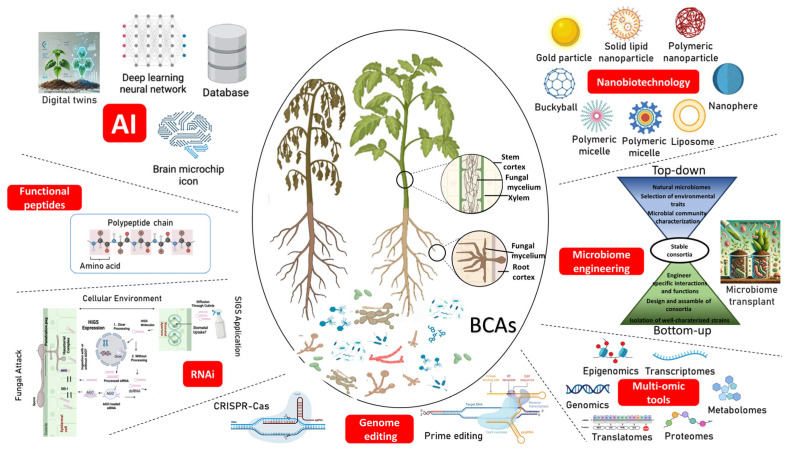
This review delves into innovative technologies to improve the control of vascular fungal plant pathogens. It also briefly summarizes traditional biocontrol approaches to manage them, addressing their limitations and emphasizing the need to develop more sustainable and precise solutions. Powerful tools such as next-generation sequencing, meta-omics, and microbiome engineering allow for the targeted manipulation of microbial communities to enhance pathogen suppression. Microbiome-based approaches include the design of synthetic microbial consortia and the transplant of entire or customized soil/plant microbiomes, potentially offering more resilient and adaptable biocontrol strategies. Nanotechnology has also advanced significantly, providing methods for the targeted delivery of biological control agents (BCAs) or compounds derived from them through different nanoparticles (NPs), including bacteriogenic, mycogenic, phytogenic, phycogenic, and debris-derived ones acting as carriers. The use of biodegradable polymeric and non-polymeric eco-friendly NPs, which enable the controlled release of antifungal agents while minimizing environmental impact, is also explored. Furthermore, artificial intelligence and machine learning can revolutionize crop protection through early disease detection, the prediction of disease outbreaks, and precision in BCA treatments. Other technologies such as genome editing, RNA interference (RNAi), and functional peptides can enhance BCA efficacy against pathogenic fungi. Altogether, these technologies provide a comprehensive framework for sustainable and precise management of fungal vascular diseases, redefining pathogen biocontrol in modern agriculture.
Keywords: Fusarium oxysporum; RNA interference; Verticillium dahliae; artificial intelligence (AI); biological control; functional peptides; genome editing; integrated disease management; microbiome engineering; nanotechnology.
Conflict of interest statement
The authors declare no conflicts of interest.
Figures
References
-
- United Nations . World Population Prospects 2019: Highlights. United Nations, Department of Economic and Social Affairs, Population Division; New York, NY, USA: 2019.
-
- FAO . The Future of Food and Agriculture: Trends and Challenges. Food and Agriculture Organization of the United Nations; Rome, Italy: 2017.
Publication types
Grants and funding
LinkOut - more resources
Full Text Sources
