Chlamydia muridarum Causes Persistent Subclinical Infection and Elicits Innate and Adaptive Immune Responses in C57BL/6J, BALB/cJ, and J:ARC(S) Mice Following Exposure to Shedding Mice
- PMID: 39853328
- PMCID: PMC11707594
- DOI: 10.30802/AALAS-CM-24-057
Chlamydia muridarum Causes Persistent Subclinical Infection and Elicits Innate and Adaptive Immune Responses in C57BL/6J, BALB/cJ, and J:ARC(S) Mice Following Exposure to Shedding Mice
Abstract
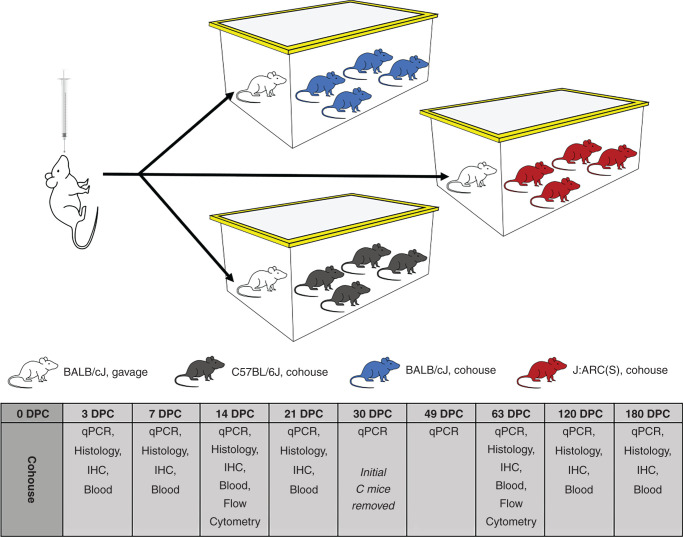
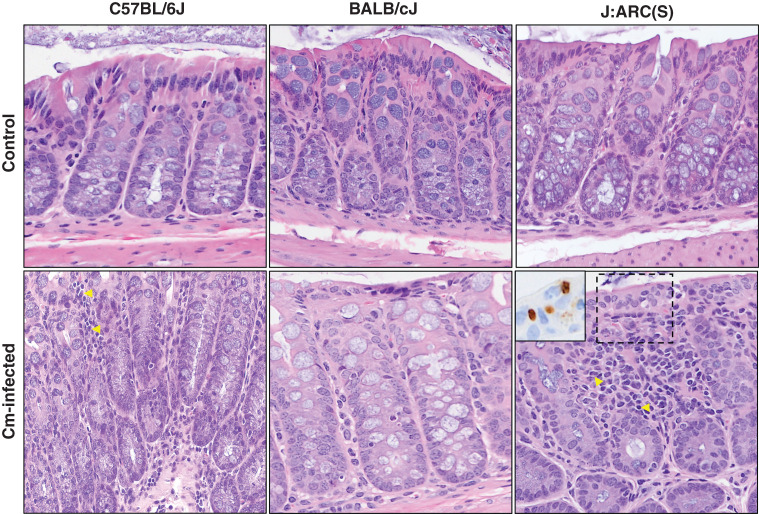
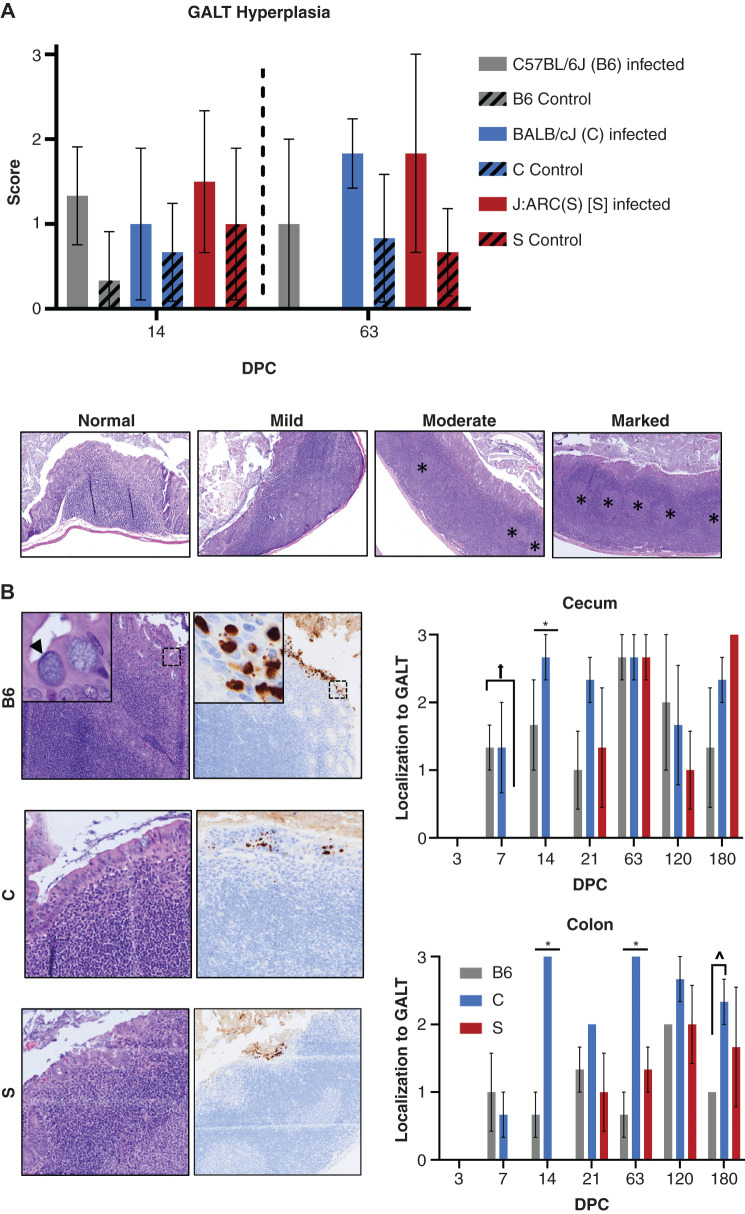
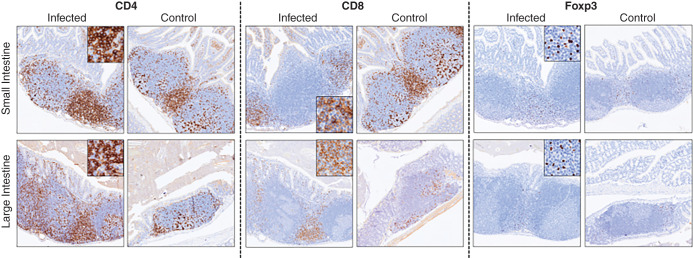
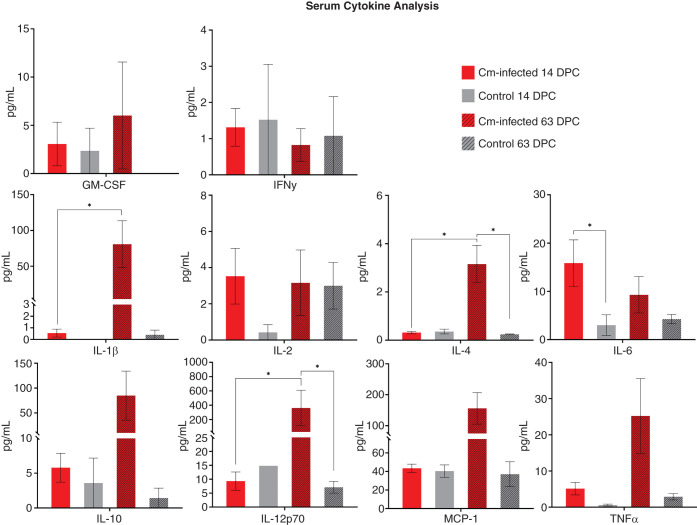
Chlamydia muridarum (Cm) has reemerged as a moderately prevalent infectious agent in research mouse colonies. Despite its experimental use, few studies evaluate Cm's effects on immunocompetent mice following its natural route of infection. A Cm field isolate was administered (orogastric gavage) to 8-wk-old female BALB/cJ (C) mice. After shedding was confirmed (through 95 d), these mice were cohoused with naïve C57BL/6J (B6), C, and Swiss (J:ARC[S]) mice (n = 28/strain) for 30 d. Cohoused mice (n = 3 to 6 exposed and 1 to 6 control/strain) were evaluated 7, 14, 21, 63, 120, and 180 d post-cohousing (DPC) via hemograms, serum biochemistry analysis, fecal quantitative PCR, histopathology, and Cm major outer membrane protein immunohistochemistry. Immunophenotyping was performed on spleen (B6, C, and S; n = 6/strain) and intestines (B6; n = 6) at 14 and 63 DPC. Serum cytokine concentrations were measured (B6; n = 6 exposed and 2 control) at 14 and 63 DPC. All B6 mice were shedding Cm by 3 through 180 DPI. One of 3 C and 1 of 6 S mice began shedding Cm at 3 and 14 DPC, respectively, with the remaining shedding thereafter. Clinical pathology was nonremarkable. Minimal-to-moderate enterotyphlocolitis and gastrointestinal-associated lymphoid tissue (GALT) hyperplasia were observed in 15 and 47 of 76 Cm-infected mice, respectively. Cm antigen was frequently detected in GALT-associated surface intestinal epithelial cells. Splenic immunophenotyping revealed increased monocytes and shifts in T-cell population subsets in all strains/time points. Gastrointestinal immunophenotyping (B6) revealed sustained increases in total inflammatory cells and elevated cytokine expression in innate lymphoid and effector T cells (large intestine). Elevated concentrations of proinflammatory cytokines were detected in the serum (B6). Results demonstrate that while clinical disease was not appreciated, 3 commonly used strains of mice are susceptible to chronic enteric Cm infection which may alter various immune responses. Considering the widespread use of mice to model gastrointestinal disease, institutions should consider excluding Cm from their colonies.
Keywords: B6, C57Bl/6J; BCS, body condition score; C, BALB/cJ; Cm, Chlamydia muridarum; DPC, days post-cohousing; DPI, days post-infection; EB, elementary body; GALT, gastrointestinal-associated lymphoid tissue; GEM, genetically engineered mouse; GM-CSF, granulocyte macrophage colony stimulating factor; IB, inclusion body; IFU, inclusion forming units; IHC, immunohistochemistry; ILC, innate lymphoid cell; ISH, in situ hybridization; MCP-1, monocyte chemoattractant protein 1; MOMP, major outer membrane protein; NSG, NOD.Cg-Prkdcscid Il2rgtm1Wjl/SzJ; RB, reticulate body; RORγ, retinoid-related orphan receptor; S, J:ARC(S); T-bet, T-box transcription factor; TLR, Toll-like receptor.
Conflict of interest statement
Kenneth Henderson, Cheryl Woods, and Panagiota Momtsios are employees of Charles River Laboratories, a company that produces and distributes research models and provides diagnostic services. The other authors have no competing interest to declare.
Figures



Update of
-
Chlamydia muridarum Causes Persistent Subclinical Infection and Elicits Innate and Adaptive Immune Responses in C57BL/6J, BALB/cJ and J:ARC(S) Mice Following Exposure to Shedding Mice.bioRxiv [Preprint]. 2024 Sep 6:2024.07.16.603732. doi: 10.1101/2024.07.16.603732. bioRxiv. 2024. Update in: Comp Med. 2024 Dec 01;74(6):373-391. doi: 10.30802/AALAS-CM-24-057. PMID: 39071441 Free PMC article. Updated. Preprint.
References
-
- American Association for Laboratory Animal Services. [Internet]. 2021. Alleviating pain and distress in laboratory animals. [Cited 11 July 2024]. Available at https://www.aalas.org/about-aalas/position-papers/alleviating-pain-and-d....
-
- American Association for Laboratory Animal Sciences. [Internet]. 2021. Humane care and use of laboratory animals. [Cited 11 July 2024]. Available at https://www.aalas.org/about-aalas/positionpapers/humane-care-and-use.
-
- Brunham RC, Rey-Ladino J. 2005. Immunology of Chlamydia infection: Implications for a Chlamydia trachomatis vaccine. Nat Rev Immunol 5:149–161. - PubMed
MeSH terms
Grants and funding
LinkOut - more resources
Full Text Sources
Medical
Research Materials
Miscellaneous