


Exploring the potential of Mon-Pu (Glochidion wallichianum) leaf extract as a natural antioxidant for Ligor chicken meat gel: Impact on gelation functionality and oxidative stability
- PMID: 39854964
- PMCID: PMC11803850
- DOI: 10.1016/j.psj.2025.104839
Exploring the potential of Mon-Pu (Glochidion wallichianum) leaf extract as a natural antioxidant for Ligor chicken meat gel: Impact on gelation functionality and oxidative stability
Abstract
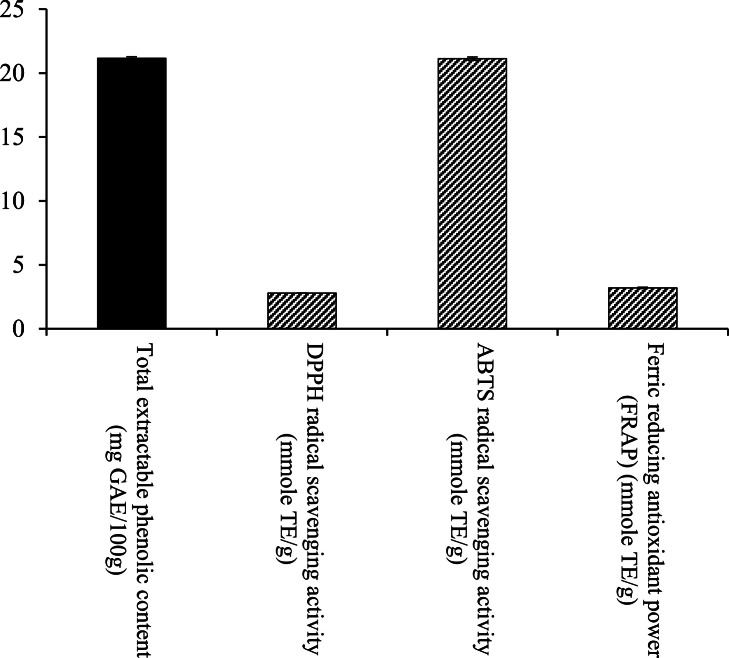
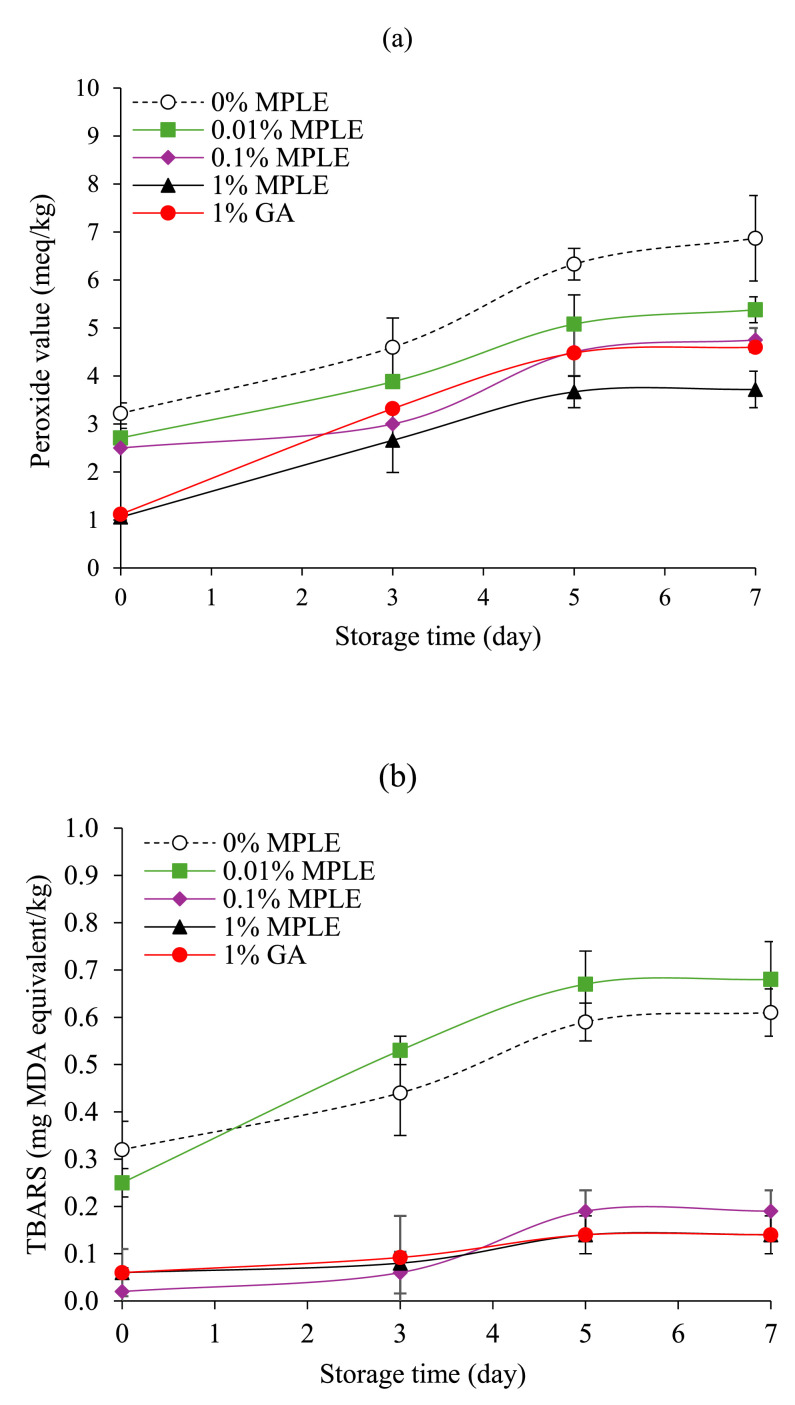
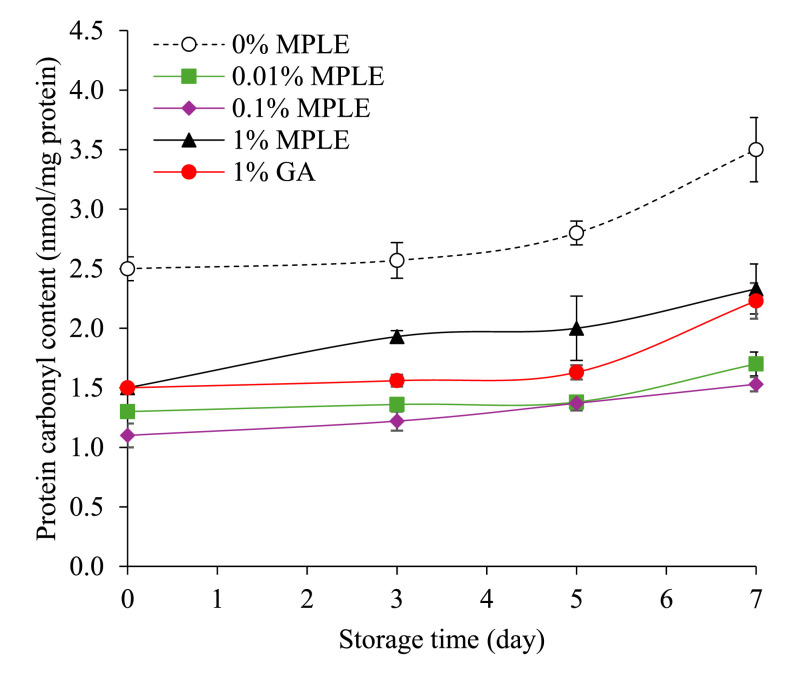
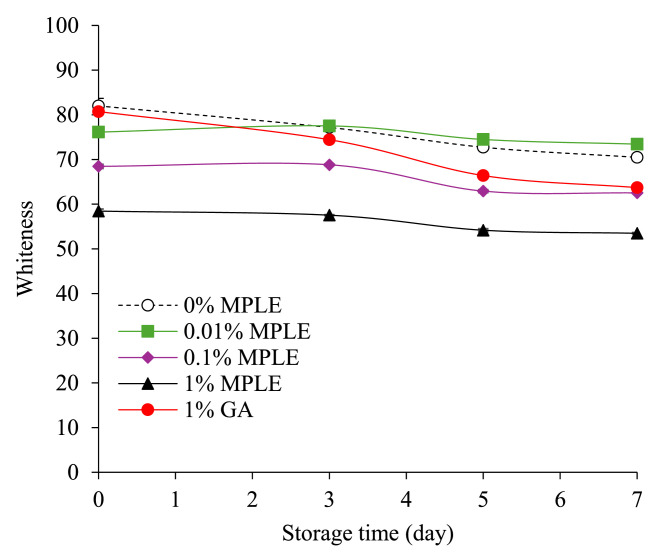
This study evaluated the antioxidant potential of Mon-Pu (Glochidion wallichianum Mull. Arg.) leaf extract (MPLE) as a natural antioxidant in Ligor chicken meat gels. The investigation focused on the impacts on gelation functionality and oxidative stability during refrigerated storage. MPLE with 21.16 mg/100 g of extractable phenolic compounds and antioxidant potency (DPPH• scavenging activity, ABTS•+scavenging activity, and ferric reducing antioxidant power (FRAP) at 2.79, 21.13, and 3.20 mmole TE/g, respectively) was applied during thermal-induced gel preparation at different concentrations (0 %, 0.01 %, 0.1 %, and 1 %) in comparison with 1 % gallic acid, a reported key phenolic compound in MPLE, based on the total weight of the meat sample. MPLE at concentrations of 0.1-1 % effectively reduced lipid oxidation in Ligor meat gel during storage. Additionally, MPLE at 0.1 % inhibited protein oxidation, preserving the physical and textural qualities of meat gels during processing and refrigerated storage. Notably, MPLE at 0.1 % proved to be the most beneficial, retaining gel properties, enhancing water-holding capacity, stabilizing color, and reducing oxidative degradation. These findings indicate that MPLE, at an optimal concentration of 0.1 %, has significant potential as a natural preservative, providing a safer and more effective alternative to synthetic additives for maintaining gel properties and preserving oxidative stability of chicken meat products, particularly Ligor chicken meat gel.
Keywords: Chicken; Gel; Meat preservation; Natural antioxidant; Oxidative stability.
Copyright © 2025. Published by Elsevier Inc.
Conflict of interest statement
Declaration of competing interest The authors declare that they have no known competing financial interests or personal relationships that could have appeared to influence the work reported in this paper.
Figures
References
-
- Ahmad S.R., Gokulakrishnan P., Giriprasad R., Yatoo M.A. Fruit-based natural antioxidants in meat and meat products: a review. Crit. Rev. Food Sci. Nutr. 2013;55:1503–1513. - PubMed
-
- Alamed J., Chaiyasit W., McClements D.J., Decker E.A. Relationships between free radical scavenging and antioxidant activity in foods. J. Agric. Food Chem. 2009;57:2969–2976. - PubMed
-
- Alessandroni L., Scortichini S., Caprioli G., Fiorini D., Huang X., Silvi S., Galli R., Sagratini G. Assessing chemical, microbiological and sensorial shelf-life markers to study chicken meat quality within divergent production systems (organic vs. conventional) Eur. Food Res. Technol. 2024;250:771–783.
-
- Aliakbarlu J., Mohammadi S. Effect of sumac (Rhus coriaria L.) and barberry (Berberis vulgaris L.) water extracts on microbial growth and chemical changes in ground sheep meat. J. Food Process. Preserv. 2015;39:1859–1866.
-
- Alirezalu K., Hesari J., Nemati Z., Munekata P.E.S., Barba F.J., Lorenzo J.M. Combined effect of natural antioxidants and antimicrobial compounds during refrigerated storage of nitrite-free frankfurter-type sausage. Food Res. Int. 2019;120:839–850. - PubMed
MeSH terms
Substances
LinkOut - more resources
Full Text Sources
Medical
Miscellaneous
