


The Interplay Between Gut Microbiota, Adipose Tissue, and Migraine: A Narrative Review
- PMID: 39861467
- PMCID: PMC11768392
- DOI: 10.3390/nu17020337
The Interplay Between Gut Microbiota, Adipose Tissue, and Migraine: A Narrative Review
Abstract
Background: Migraine, a prevalent neurovascular disorder, affects millions globally and is associated with significant morbidity. Emerging evidence suggests a crucial role of the gut microbiota and adipose tissue in the modulation of migraine pathophysiology, particularly through mechanisms involving neuroinflammation and metabolic regulation.
Material and methods: A narrative review of the literature from 2000 to 2024 was conducted using the PubMed database. Studies addressing the relationships between microbiota, adipose tissue, and migraine-including dietary interventions and their impact-were analyzed.
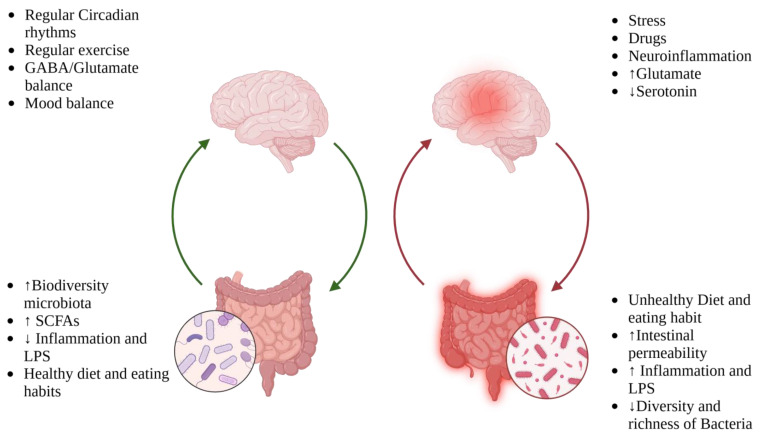
Results: The findings highlight a bidirectional gut-brain axis, with gut microbiota influencing neuroinflammation via metabolites such as short-chain fatty acids (SCFAs). Obesity exacerbates migraine severity through chronic inflammation and the dysregulation of adipocytokines like leptin and adiponectin. Dietary patterns, such as low glycemic index diets and Mediterranean diets, and the use of prebiotics, probiotics, and postbiotics show potential in migraine management.
Conclusions: This review underscores the need for integrative approaches targeting the microbiota-gut-brain axis and adipose tissue in migraine therapy. Future studies should explore longitudinal effects and personalized interventions to optimize outcomes.
Keywords: adipose tissue; diet; microbiota–gut–brain axis; migraine; neuroinflammation.
Conflict of interest statement
The authors declare no conflicts of interest.
Figures

References
Publication types
MeSH terms
Substances
Grants and funding
LinkOut - more resources
Full Text Sources
Medical
