


One- or two-step? New insights into two-step hypothesis and rainbow-like theory for pitch class-color synesthesia
- PMID: 39868013
- PMCID: PMC11758358
- DOI: 10.3389/fpsyg.2024.1482714
One- or two-step? New insights into two-step hypothesis and rainbow-like theory for pitch class-color synesthesia
Abstract
Introduction: This study investigates the mechanisms underlying pitch class-color synesthesia, a cognitive trait in which musical pitches evoke color perceptions. Synesthesia in music particularly involves the association of pitch classes (e.g., do, re, and mi) with specific colors. A previous study introduced the two-step hypothesis, which suggests that pitch class identification precedes color association, and proposed a rainbow-like theory based on color gradients selected by synesthetes. The primary objective is to retest these theories to evaluate their generalizability in explaining pitch class-color synesthesia.
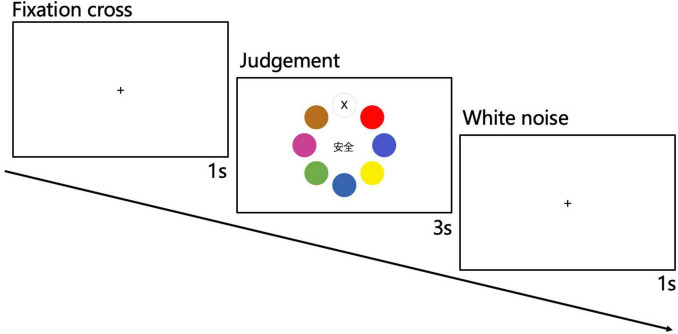
Methods: We employed a dual-task paradigm to assess the robustness of the two-step hypothesis and conducted qualitative interviews to explore the nature of synesthetic experiences.
Results: The results indicated that the two-step hypothesis may not be always applicable, because it effectively accounts for only a subset of synesthetes. The presence of one-step synesthetes, who experience direct pitch-to-color associations without intermediate steps, implied a more varied synesthetic mechanism. Moreover, rainbow-like theory predominantly characterized two-step synesthetes, while one-step synesthetes exhibited distinct color perceptions. Furthermore, we found that the differentiation between two- and one-step synesthesia may be associated with the methods through which participants develop synesthetic associations.
Discussion: The findings highlighted the diversity of synesthetic experiences in pitch class-color synesthesia, which challenges the generalizability of the current theories and poses the need for a further nuanced understanding of this phenomenon.
Keywords: absolute pitch; dual task; pitch class–color synesthesia; rainbow-like theory; synesthesia.
Copyright © 2025 Cao and Ueda.
Conflict of interest statement
The authors declare that the research was conducted in the absence of any commercial or financial relationships that could be construed as a potential conflict of interest.
Figures




References
-
- Asher J. E., Lamb J. A., Brocklebank D., Cazier J. B., Maestrini E., Addis L., et al. (2009). A whole-genome scan and fine-mapping linkage study of auditory-visual synesthesia reveals evidence of linkage to chromosomes 2q24, 5q33, 6p12, and 12p12. Am. J. Hum. Genet. 84 279–285. 10.1016/j.ajhg.2009.01.012 - DOI - PMC - PubMed
-
- Bargary G., Mitchell K. J. (2008). Synaesthesia and cortical connectivity. Trends Neurosci. 31 335–342. - PubMed
-
- Burns E. M., Ward W. D. (1999). Intervals, scales, and tuning. Psychol. Music 2 215–264.
LinkOut - more resources
Full Text Sources
