


Continuous cropping of Patchouli alters soil physiochemical properties and rhizosphere microecology revealed by metagenomic sequencing
- PMID: 39872816
- PMCID: PMC11769982
- DOI: 10.3389/fmicb.2024.1482904
Continuous cropping of Patchouli alters soil physiochemical properties and rhizosphere microecology revealed by metagenomic sequencing
Abstract
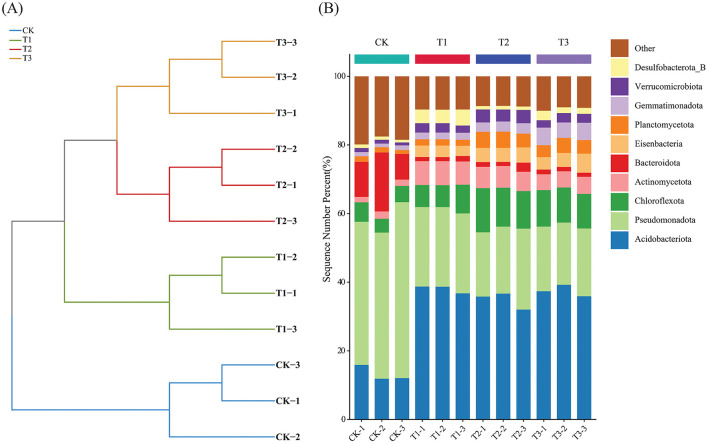
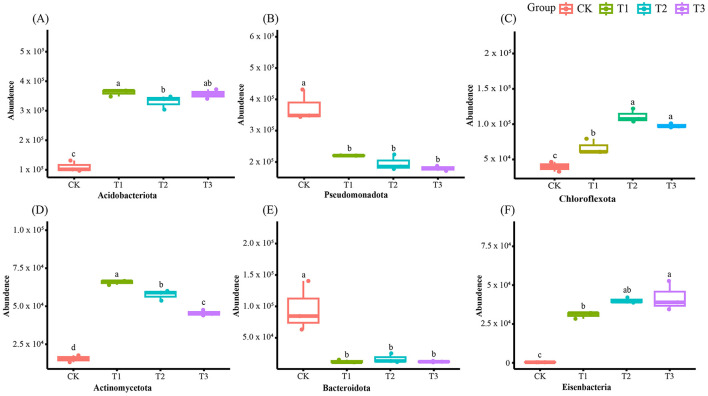
Continuous cropping (CC) profoundly impacts soil ecosystems, including changes in soil factors and the structure and stability of microbial communities. These factors are interrelated and together affect soil health and plant growth. In this research, metagenomic sequencing was used to explore the effects of CC on physicochemical properties, enzyme activities, microbial community composition, and functional genes of the rhizosphere soil of patchouli. We found that this can lead to changes in various soil factors, including the continuous reduction of pH and -N and the unstable changes of many factors. In addition, S-PPO enzyme activity increased significantly with the cropping years, but S-NAG increased in the first 2 years and decreased in the third cropping year. Metagenomic sequencing results showed that CC significantly changed the diversity and composition of rhizosphere microbial communities. The relative abundance of Pseudomonas and Bacteroides decreased substantially from the phylum level. At the genus level, the number of microbial genera specific to the zero-year cropping (CK) and first (T1), second (T2), and third (T3) years decreased significantly, to 1798, 172, 42, and 44, respectively. The abundance of many functional genes changed, among which COG0823, a gene with the cellular process and signaling functions, significantly increased after CC. In addition, -N, S-CAT, S-LAP, and SOC were the main environmental factors affecting rhizosphere-dominant microbial communities at the phylum level, while pH, SOC, and AK were the key environmental factors affecting rhizosphere functional genes of Pogostemon cablin. In summary, this study showed the dynamic changes of soil factors and rhizosphere microorganisms during CC, providing a theoretical basis for understanding the formation mechanism and prevention of CC obstacles and contributing to the formulation of scientific soil management and fertilization strategies.
Keywords: Pogostemon cablin; continuous cropping; metagenomic; microbial community diversity; rhizosphere soil.
Copyright © 2025 Gu, Zeeshan Ul Haq, Sun, Zhou, Liu, Yu, Yang, Yang and Wu.
Conflict of interest statement
The authors declare that the research was conducted in the absence of any commercial or financial relationships that could be construed as a potential conflict of interest.
Figures



References
-
- Alami M. M., Pang Q., Gong Z., Yang T., Tu D., Zhen O., et al. (2021). Continuous cropping changes the composition and diversity of bacterial communities: A meta-analysis in nine different fields with different plant cultivation. Agriculture 11:1224. 10.3390/agriculture11121224 - DOI
-
- Barth G., Otto R., Almeida R. F., Cardoso E. J. B. N., Cantarella H., Vitti G. C. (2019). Conversion of ammonium to nitrate and abundance of ammonium-oxidizing-microorganism in Tropical soils with nitrification inhibitor. Sci. Agric. 77:e20180370. 10.1590/1678-992x-2018-0370 - DOI
-
- Cao Y., Ou Y., Lv N., Zhang H. (2024). Soil nutrient levels associated with suppression of banana Fusarium wilt disease. Soil Ecol. Lett. 6, 1–6. 10.1007/s42832-024-0247-1 - DOI
-
- Chakrapani P., Venkatesh K., Singh B. C. S., Jyothi B. A., Kumar P., Amareshwari P., et al. (2013). Phytochemical, pharmacological importance of Patchouli (Pogostemon cablin (Blanco) Benth) an aromatic medicinal plant. Int. J. Pharm. Sci. Rev. Res. 21, 7−15.
LinkOut - more resources
Full Text Sources
Research Materials
Miscellaneous
