


Sex-specific transcriptomic profiling reveals key players in bone loss associated with Alzheimer's disease
- PMID: 39875754
- PMCID: PMC12397463
- DOI: 10.1007/s11357-025-01535-7
Sex-specific transcriptomic profiling reveals key players in bone loss associated with Alzheimer's disease
Abstract
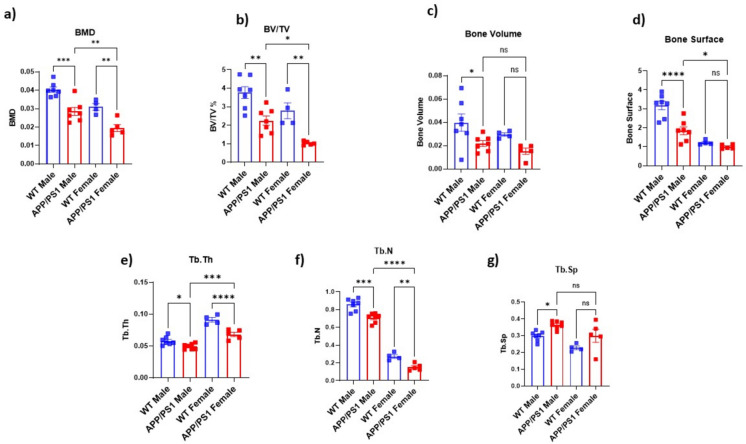
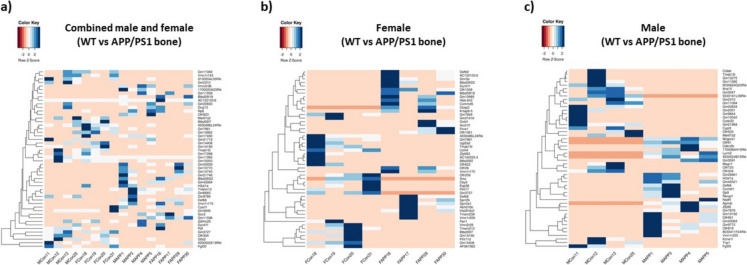
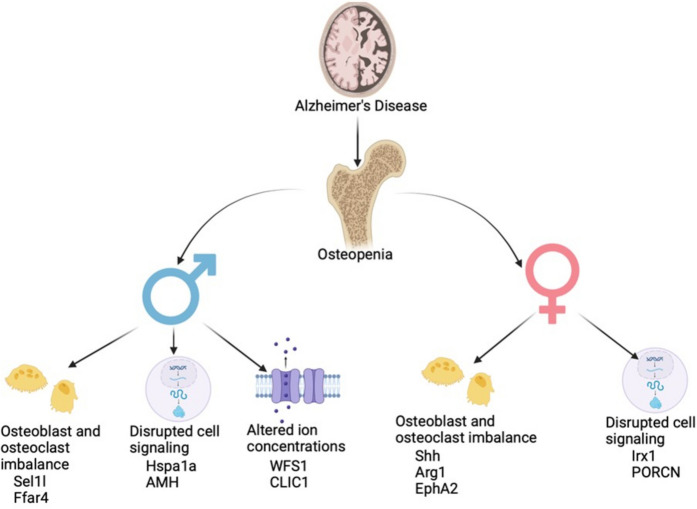
Alzheimer's disease (AD), a progressive neurodegenerative disorder, is frequently associated with musculoskeletal complications, including sarcopenia and osteoporosis, which substantially impair patient quality of life. Despite these clinical observations, the molecular mechanisms linking AD to bone loss remain insufficiently explored. In this study, we examined the femoral bone microarchitecture and transcriptomic profiles of APP/PS1 transgenic mouse models of AD to elucidate the disease's impact on bone pathology and identify potential gene candidates associated with bone deterioration. We performed micro-computed tomography (microCT) and RNA transcriptome analysis on the femoral bone of these mice. We observed a significant reduction in bone microstructure in both male and female APP/PS1 mice compared to their wild-type counterparts. Transcriptomic analysis of femoral bone tissue revealed substantial differential gene expression between AD mice and controls. Specifically, APP/PS1 mice exhibited differential expression in 289 protein-coding genes across both sexes. Notably, in female APP/PS1 mice, 664 genes were differentially expressed, with key genes such as Shh, Efemp1, Arg1, EphA2, Irx1, and PORCN potentially implicated in bone loss. In male APP/PS1 mice, 787 genes were differentially expressed, with Sel1l, Ffar4, Hspa1a, AMH, WFS1, and CLIC1 emerging as notable candidates in the context of bone deterioration. Gene Ontology (GO) enrichment analysis further revealed distinct sex-specific gene pathways between male and female APP/PS1 mice, underscoring the differential molecular underpinnings of bone pathology in AD. This study identifies novel sex-specific genes in the APP/PS1 mouse model and proposes potential therapeutic targets to mitigate bone loss in AD patients.
Keywords: APP/PS1 mice; Alzheimer’s disease; Bone loss.
© 2025. This is a U.S. Government work and not under copyright protection in the US; foreign copyright protection may apply.
Conflict of interest statement
Declarations. Ethics approval and consent to participate: Not applicable. Consent for publication: Not applicable. Competing interests: The authors declare that there is no other conflict of interest regarding the publication of this manuscript. F.D declares that he is an Associate Editor of Geroscience.
Figures

References
-
- Dziechciaz M, Filip R. Biological psychological and social determinants of old age: bio-psycho-social aspects of human aging. Ann Agric Environ Med. 2014;21(4):835–8. - PubMed
-
- Mahjoob M, Stochaj U. Curcumin nanoformulations to combat aging-related diseases. Ageing Res Rev. 2021;69:101364. - PubMed
-
- Lane CA, Hardy J, Schott JM. Alzheimer’s disease. Eur J Neurol. 2018;25(1):59–70. - PubMed
MeSH terms
Grants and funding
LinkOut - more resources
Full Text Sources
Medical
Molecular Biology Databases
Research Materials
Miscellaneous
