


Association of serum magnesium and calcium with metabolic syndrome: a cross-sectional study from the Qatar-biobank
- PMID: 39885554
- PMCID: PMC11783880
- DOI: 10.1186/s12986-024-00892-y
Association of serum magnesium and calcium with metabolic syndrome: a cross-sectional study from the Qatar-biobank
Abstract
Background and objectives: Metabolic syndrome (MetS) and its constituent comorbidities, along with mineral imbalances, pose a significant health burden in the Qatari population. Although Magnesium (Mg) and Calcium (Ca) have been individually linked to MetS, the impact of the calcium-to-magnesium ratio (Ca: Mg) on MetS remains unclear, especially in the adult population of Qatar. In this study, we aim to investigate the association between the total serum concentrations of Ca, Mg and Ca: Mg ratio with the outcome of MetS.
Methods: This comprehensive cross-sectional study included data on 9693 participants collected by Qatar Biobank (QBB). The serum levels of Mg and Ca, in addition to recorded metabolic parameters for the study participants, were used in the analyses. The presence of MetS was deemed as our primary outcome and its components as secondary outcomes. Logistic regression models were run to examine these associations.
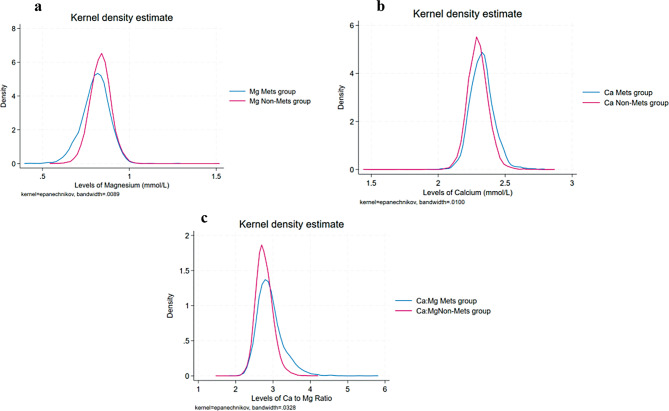
Results and conclusion: MetS was present in more than 19% of the population. The mean serum Mg was higher in the non-MetS group 0.83 ± 0.06 mmol/L compared to the MetS group 0.81 ± 0.08 mmol/L. Conversely, the mean serum Ca and Ca: Mg ratio were higher in the MetS group (2.33 ± 0.09 mmol/L, 2.92 ± 0.36 mmol/L) compared to the non-MetS group (2.30 ± 0.08 mmol/L, 2.77 ± 0.23 mmol/L) respectively. In the context of MetS, we observed a negative dose-response relationship between Mg quartiles and MetS. In contrast, we found a positive association between Ca as well as Ca: Mg ratio and MetS.
Keywords: Calcium-to-magnesium ratio; Metabolic syndrome (MetS); Qatar biobank (QBB); Serum calcium (Ca); Serum magnesium (Mg).
© 2025. The Author(s).
Conflict of interest statement
Declarations. Competing interests: The authors declare no competing interests.
Figures
References
-
- Alberti KG, Eckel RH, Grundy SM, Zimmet PZ, Cleeman JI, Donato KA et al. Harmonizing the metabolic syndrome: a joint interim statement of the International Diabetes Federation Task Force on Epidemiology and Prevention; National Heart, Lung, and Blood Institute; American Heart Association; World Heart Federation; International Atherosclerosis Society; and International Association for the Study of Obesity. Circulation. 2009;120(16):1640-5. - PubMed
LinkOut - more resources
Full Text Sources
