


The association between the health promotion levy and employment in South Africa: an interrupted time series analysis
- PMID: 39891303
- PMCID: PMC11786339
- DOI: 10.1186/s40795-025-01012-6
The association between the health promotion levy and employment in South Africa: an interrupted time series analysis
Abstract
Background: The production and consumption of sugar-sweetened beverages (SSBs) have been increasing over the past years, globally. However, there is overwhelming evidence linking SSBs to the rising prevalence in obesity and its comorbidities. In South Africa, the prevalence of overweight and obesity is high and is among the highest in Sub-Saharan Africa. In response to rising prevalence in obesity and its comorbidities, on 1 April 2018 the South African government introduced an SSB tax, known as the Health Promotion Levy (HPL). However, the levy has been opposed by the sugar industry, claiming that it leads to jobs losses. Against this backdrop, this study seeks to investigate the association between the HPL and employment in the sugar industry.
Methods: We employed single-group interrupted time series analyses using the Quarterly Labour Force Survey data from Statistics South Africa.
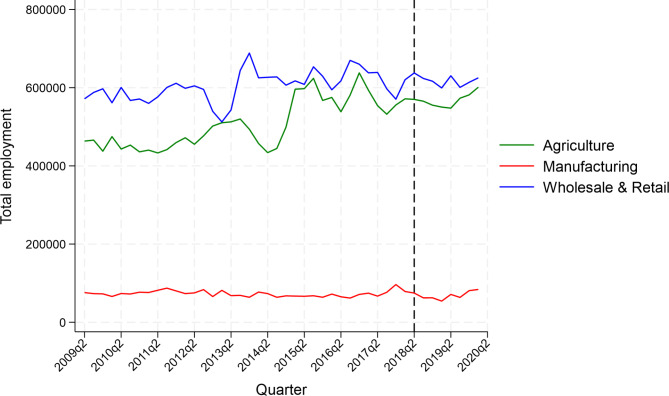
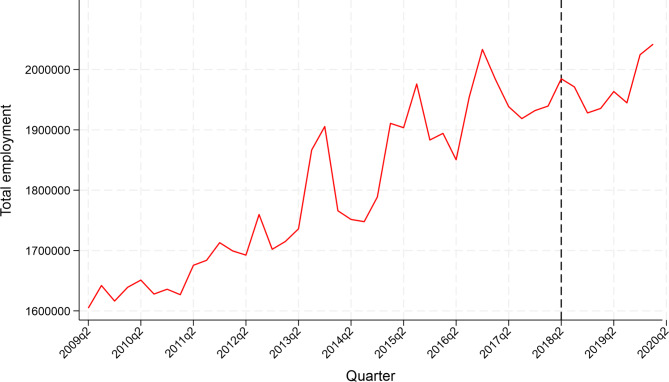
Results: Our results show that the HPL has not been associated with job losses (or generation) in the sugar-related industries in South Africa. These findings are consistent with the findings on the effects of SSB taxes on employment in other jurisdictions.
Conclusions: Considering that the HPL does not impede employment, and the overwhelming evidence on the effectiveness of SSB taxes, together with the relatively low tax burden, it is imperative that the government raises the HPL from the current 8% of the retail price to the WHO-recommended 20% threshold. The government should also consider expanding the HPL to fruit juices. Such strategies are important in encouraging people to reduce the intake of SSBs, while enabling the government to raise additional revenue for the fiscus.
Keywords: Employment; Health Promotion Levy; Non-communicable diseases; Obesity; SSB tax; South Africa; Sugar industry.
© 2025. The Author(s).
Conflict of interest statement
Declarations. Ethics approval and consent to participate: Patients and/or the public were not involved in the design, or conduct, or reporting, or dissemination plans of this research. The data used anonymised before use, and a waiver of informed consent were approved by the Human Research Ethics Committee at the University of Witwatersrand (HRECNMW24/03/04). Consent for publication: Not Applicable. Competing interests: The authors declare no competing interests.
Figures
References
-
- Stacey N, Mudara C, Ng SW, van Walbeek C, Hofman K, Edoka I. Sugar-based beverage taxes and beverage prices: Evidence from South Africa’s Health Promotion Levy. Social Science & Medicine. 2019;238:112465. - PubMed
Grants and funding
- 5106249/Bloomberg Philanthropies through the University of North Carolina, USA
- 5106249/Bloomberg Philanthropies through the University of North Carolina, USA
- 5106249/Bloomberg Philanthropies through the University of North Carolina, USA
- 5106249/Bloomberg Philanthropies through the University of North Carolina, USA
- 23108/South African Medical Research Council
LinkOut - more resources
Full Text Sources
Research Materials
Miscellaneous