


Visual and patient-reported outcomes of an enhanced versus monofocal intraocular lenses in cataract surgery: a systematic review and meta-analysis
- PMID: 39893265
- PMCID: PMC11933469
- DOI: 10.1038/s41433-025-03625-4
Visual and patient-reported outcomes of an enhanced versus monofocal intraocular lenses in cataract surgery: a systematic review and meta-analysis
Abstract
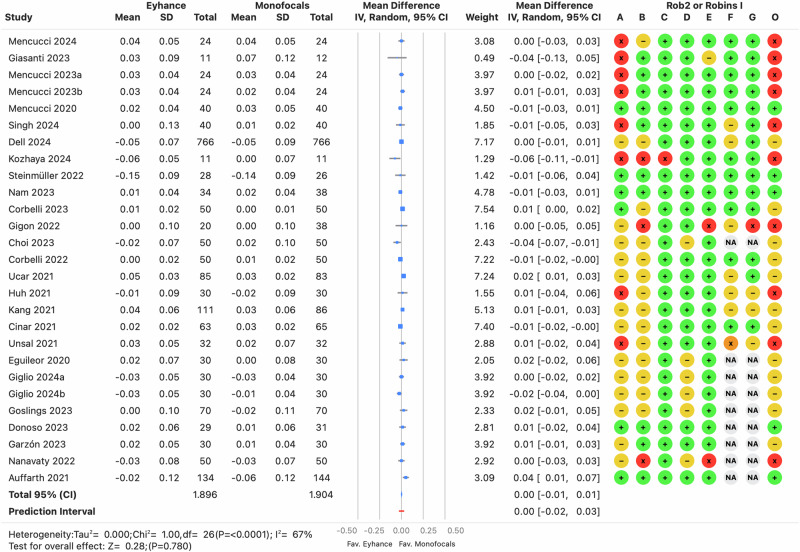
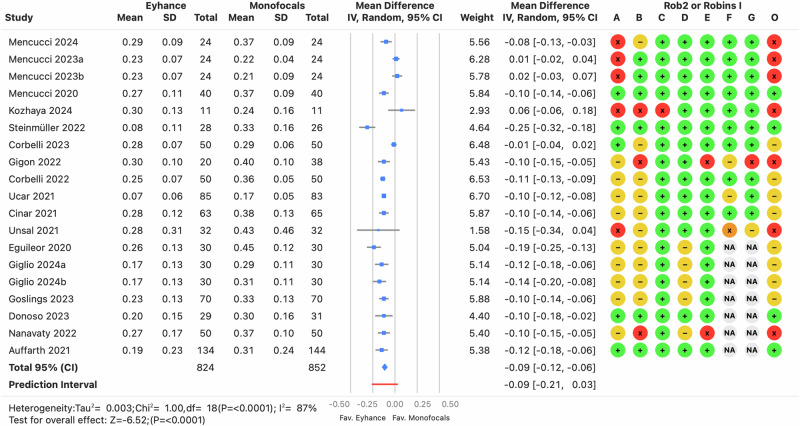
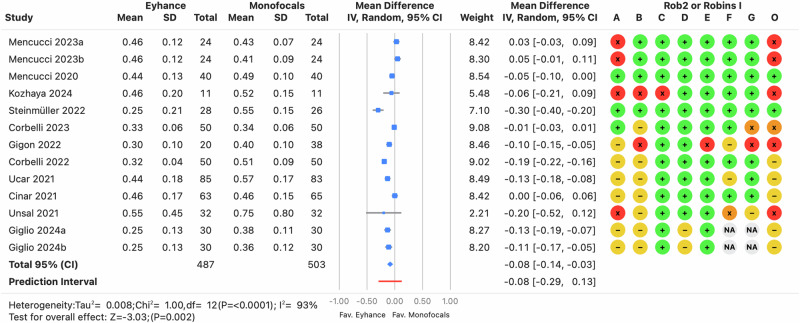
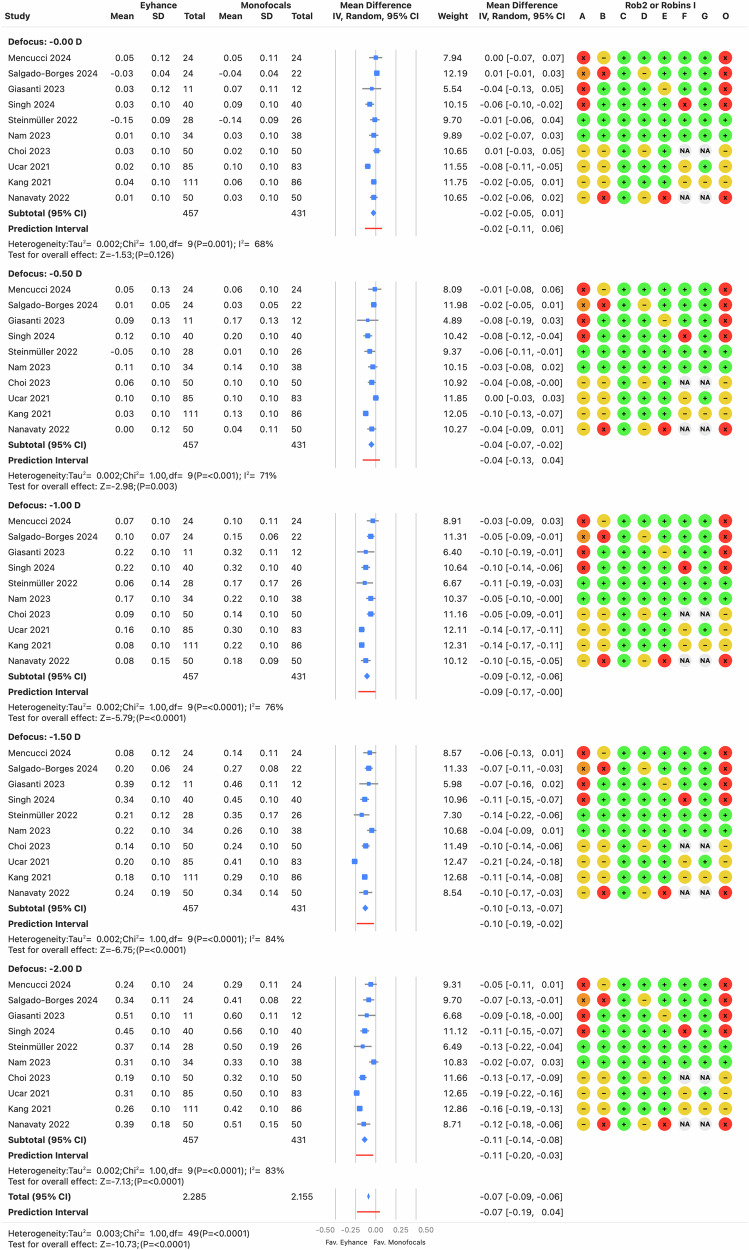
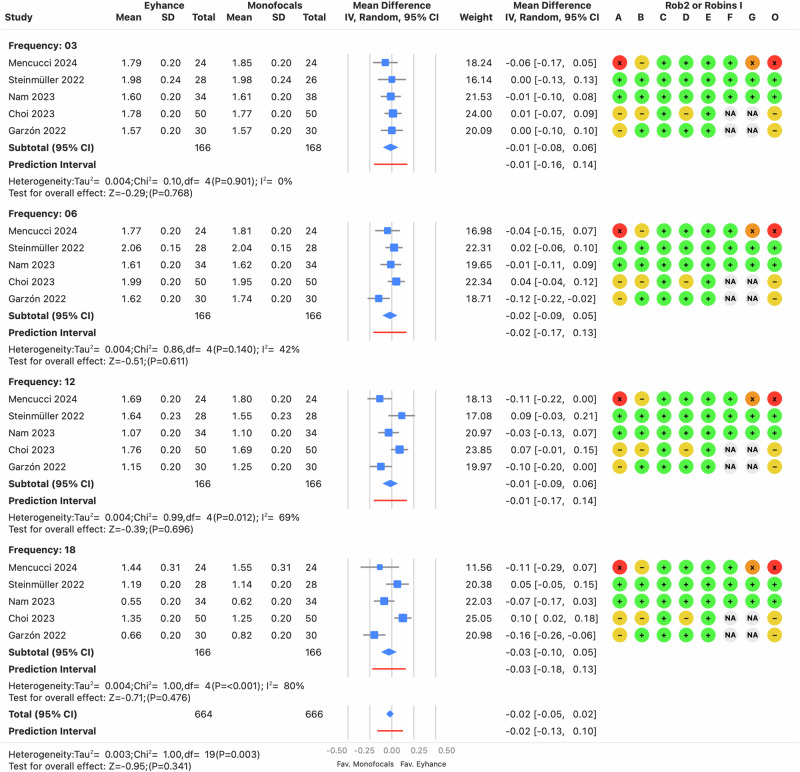
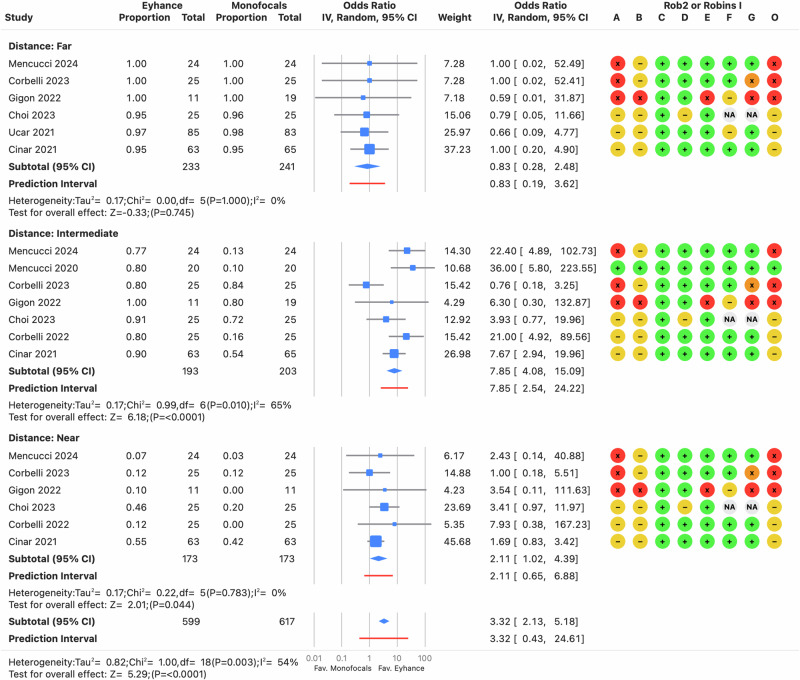
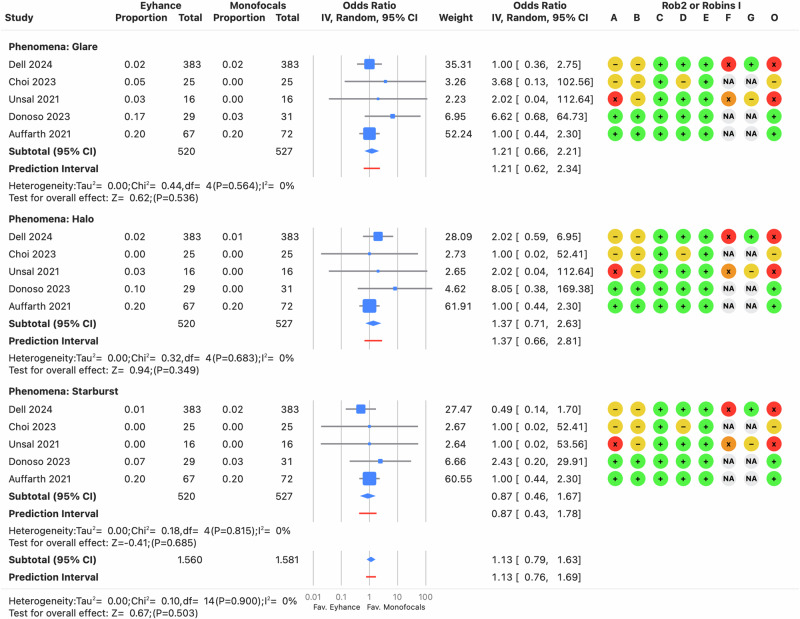
Understanding the functional outcomes achieved with new enhanced monofocal intraocular lenses (IOLs) is crucial for adequately managing patient expectations. This study evaluated visual and patient-reported outcomes of an enhanced range of field IOL versus other monofocal IOLs in cataract patients. A systematic review and meta-analysis, pre-registered on PROSPERO (CRD42024561611), included studies from Medline (PubMed), Embase (Ovid), and trial registries (2019-2024) focused on binocular cataract surgeries with various IOL models. Primary outcomes assessed were monocular distance-corrected visual acuities (CDVA, DCIVA, DCNVA), defocus curves, and contrast sensitivity; secondary measures included binocular visual acuities and patient-reported outcomes such as spectacle independence and photic phenomena. Out of 31 studies (8 randomized clinical trials, 23 case series), high-certainty evidence indicated no significant difference in CDVA between enhanced and conventional IOLs. However, enhanced IOLs demonstrated better intermediate (DCIVA: -0.11 logMAR, CI 95%: -0.13 to -0.10) and near (DCNVA: -0.12 logMAR, CI 95%: -0.17 to -0.07) visual acuities, supported by defocus curves, though with lower-certainty evidence. No significant differences were observed in contrast sensitivity or photic phenomena, and evidence for positive dysphotopsia was moderate to low. Enhanced IOLs significantly favored intermediate-distance spectacle independence, with an odds ratio of 7.85 (CI 95%: 4.08-15.09), though no differences were observed for distance spectacle independence. Near-distance spectacle independence also favored enhanced IOLs, though with low-certainty evidence. In summary, enhanced IOLs provide improved intermediate and near visual acuities compared to conventional monofocal IOLs, though further studies are needed to confirm outcomes in contrast sensitivity and patient-reported outcomes across various enhanced monofocal IOLs.
© 2025. The Author(s).
Conflict of interest statement
Competing interests: JF is a shareholder of Qvision (Indaloftal SL); consultant for Medicontur; grants from Carl Zeiss and Johnson & Johnson; speakers’ bureaus of Carl Zeiss Meditec, Inc.; Oculus, LLC; Staar Surgical; and Bausch + Lomb, Inc; expenses for congresses have been covered by SIFI and Thea. The remaining authors have nothing to disclose.
Figures

References
-
- Eyewire. New Technology, Greater Patient Awareness Will Help Drive Gains in Premium Cataract Surgery. Source: Market Scope’s “2021 Premium Cataract Surgery Market Report”. 2021. https://eyewire.news/news/new-technology-greater-patient-awareness-will-.... Accessed Dec 14 2023.
-
- Fernández J, Ribeiro F, Rocha-de-Lossada C, Rodríguez-Vallejo M. Functional classification of intraocular lenses based on defocus curves: a scoping review and cluster analysis. J Refract Surg. 2024;40:e108–16. - PubMed
-
- Mencucci R, Cennamo M, Venturi D, Vignapiano R, Favuzza E. Visual outcome, optical quality, and patient satisfaction with a new monofocal IOL, enhanced for intermediate vision: preliminary results. J Cataract Refract Surg. 2020;46:378–87. - PubMed
-
- Wan KH, Au ACK, Kua WN, Ng ALK, Cheng GPM, Lam NM, et al. Enhanced monofocal versus conventional monofocal intraocular lens in cataract surgery: a meta-analysis. J Refract Surg. 2022;38:538–46. - PubMed
Publication types
MeSH terms
LinkOut - more resources
Full Text Sources
