


Association of triglyceride-glucose related indices with mortality among individuals with MASLD combined with prediabetes or diabetes
- PMID: 39893457
- PMCID: PMC11786362
- DOI: 10.1186/s12933-025-02616-9
Association of triglyceride-glucose related indices with mortality among individuals with MASLD combined with prediabetes or diabetes
Abstract
Background: The prognostic significance of triglyceride-glucose (TyG)-related indices in individuals with metabolic dysfunction-associated steatotic liver disease (MASLD) combined with prediabetes or diabetes is not yet fully understood. In this study, we explored their predictive value for mortality in this specific population.
Methods: Patients with MASLD were identified from the National Health and Nutrition Examination Survey (NHANES III) database. TyG and its related parameters [TyG-waist circumference (TyG-WC), TyG-waist-to-height ratio (TyG-WHtR), TyG-weight-adjusted waist index (TyG-WWI), and TyG-body mass index (TyG-BMI), ] were calculated. To examine the association between TyG-related indices and mortality risk, Cox regression models were utilized. Furthermore, we employed restricted cubic spline (RCS) analysis to investigate potential dose-response relationships. The predictive ability of the TyG indices for mortality was assessed by analyzing the time-dependent area under the curve (AUC).
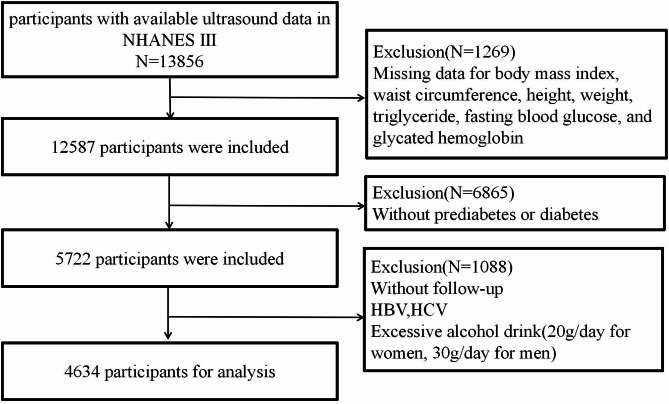
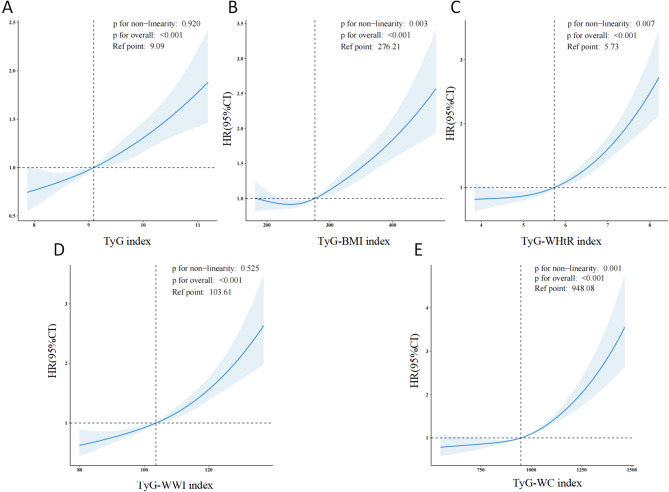
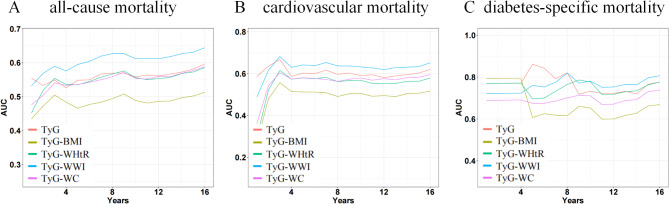
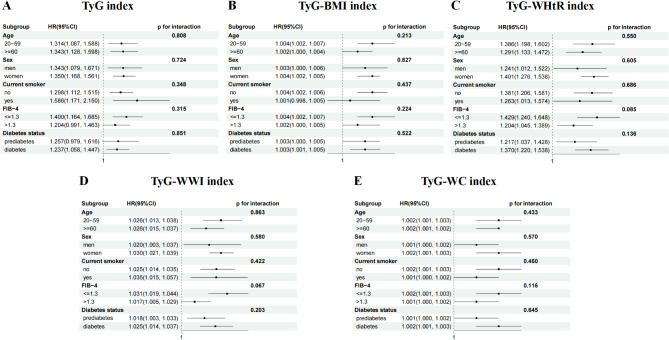
Results: In the cohort of patients with prediabetes or diabetes, 46.5% were diagnosed with MASLD. Over a median follow-up of 25.4 years, 1,163 individuals (53.9%) died, with 329 (15.3%) deaths attributed to cardiovascular causes and 78 (3.6%) to diabetes. Multivariate Cox regression models showed that TyG, TyG-BMI, TyG-WHtR, TyG-WWI, and TyG-WC were associated with all-cause and cardiovascular/diabetes-specific mortality. Furthermore, RCS analysis revealed a positive linear relationship between the TyG and TyG-WWI indices and all-cause mortality (p for nonlinear = 0.920; p = 0.525, respectively). In contrast, the TyG-WC, TyG-BMI, and TyG-WHtR indices exhibited a positive nonlinear association with all-cause mortality (p for nonlinear = 0.001; = 0.003; = 0.007, respectively). Time-dependent AUC curves demonstrated that the TyG-WWI index was the most robust predictor of both all-cause and cardiovascular mortality.
Conclusions: Elevated levels of TyG, TyG-BMI, TyG-WHtR, TyG-WWI, and TyG-WC indices were associated with a poorer prognosis in MASLD patients with prediabetes or diabetes, with TyG-WWI being the strongest predictor.
Keywords: Diabetes; MASLD; Mortality; Triglyceride-glucose related indices.
© 2025. The Author(s).
Conflict of interest statement
Declarations. Ethics approval and consent to participate: NHANES was conducted with approval by the National Center for Health Statistics Ethics Review Board, and obtained informed written consent from all the individuals involved in the study. Consent for publication: Not applicable. Competing interests: The authors declare no competing interests.
Figures
References
MeSH terms
Substances
LinkOut - more resources
Full Text Sources
Medical
