


Barriers to uptake of harm reduction techniques for GBMSM who use drugs in night-clubs and sex-on-premises venues in London and the Southeast: a mixed-methods, qualitative study
- PMID: 39893472
- PMCID: PMC11786357
- DOI: 10.1186/s12954-025-01159-2
Barriers to uptake of harm reduction techniques for GBMSM who use drugs in night-clubs and sex-on-premises venues in London and the Southeast: a mixed-methods, qualitative study
Abstract
Background: Drug-related harm is a significant public health concern in the UK, particularly among underserved groups such as gay, bisexual, and other men who have sex with men (GBMSM). This study explores the role of night-time venues (for example night clubs or sex-on-premises venues) in promoting harm reduction strategies for GBMSM who use drugs, highlighting unique challenges within these spaces.
Methods: The study used a mixed-methods approach, including an online survey (n = 53) and semi-structured interviews (n = 8). Participants included GBMSM with lived experience of substance use in night-time venues, as well as those providing support to this population. Data was collected through a Likert-scale survey and thematic analysis of qualitative responses.
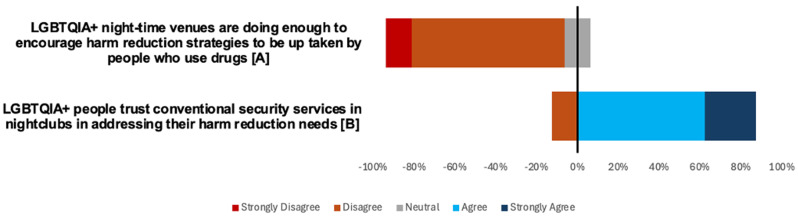
Results: Findings reveal dissatisfaction among survey respondents about the level of support for harm reduction provided by night-time venues, which are perceived as inconsistent in their approach towards substance use. The study also identifies economic and legal barriers faced by venues that prevent the endorsement of harm reduction techniques.
Conclusions: Addressing these barriers could transform night-time venues into effective sites for harm reduction, particularly by targeting "afters" culture (the phenomenon where club-goers will return to a residential setting and continue substance use for prolonged periods 'after' the night-time venue closes or the event ends) and promoting safer practices. This research suggests that coordinated efforts with local government and policy reform are crucial to fostering safer environments for GBMSM.
Keywords: Addiction; CHEMSEX; GBMSM; Harm reduction; LGBTQIA+; People who use drugs; Sexualised drug use.
© 2025. The Author(s).
Conflict of interest statement
Declarations. Competing interests: The authors declare no competing interests.
Figures


References
-
- Office for National Statistics. Deaths related to drug poisoning in England and Wales 2021 registrations. [cited 2023 Oct 26]; Available from: https://www.ons.gov.uk/peoplepopulationandcommunity/birthsdeathsandmarri...
-
- Capistrant BD, Nakash O. Lesbian, Gay, and bisexual adults have higher prevalence of Illicit Opioid Use than heterosexual adults: evidence from the National Survey on Drug Use and Health, 2015–2017. LGBT Health. 2019;6(6):326–30. - PubMed
-
- UK Drug Policy Commission. Drugs and diversity : lesbian, gay, bisexual & transgender (LGBT) communities : learning from the evidence. UK Drug Policy Comm; 2010. 4 p.
-
- Melendez-Torres GJ, Bourne A, Hickson F, Reid D, Weatherburn P. Correlates and subgroups of injecting drug use in UK gay and bisexual men: findings from the 2014 Gay men’s sex survey. Drug Alcohol Depend. 2018;187:292–5. - PubMed
MeSH terms
LinkOut - more resources
Full Text Sources
Medical
