


Scaling up access to antiretroviral treatment for HIV: lessons from a key populations program in Nigeria
- PMID: 39893486
- PMCID: PMC11787728
- DOI: 10.1186/s12981-025-00711-1
Scaling up access to antiretroviral treatment for HIV: lessons from a key populations program in Nigeria
Erratum in
-
Correction to: Scaling up access to antiretroviral treatment for HIV: lessons from a key populations program in Nigeria.AIDS Res Ther. 2025 Feb 24;22(1):23. doi: 10.1186/s12981-025-00722-y. AIDS Res Ther. 2025. PMID: 39994782 Free PMC article. No abstract available.
Abstract
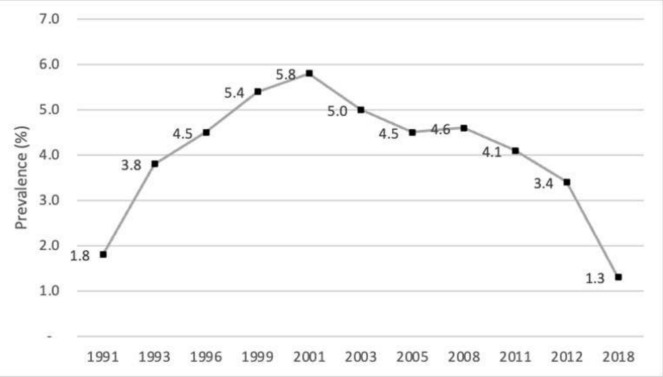
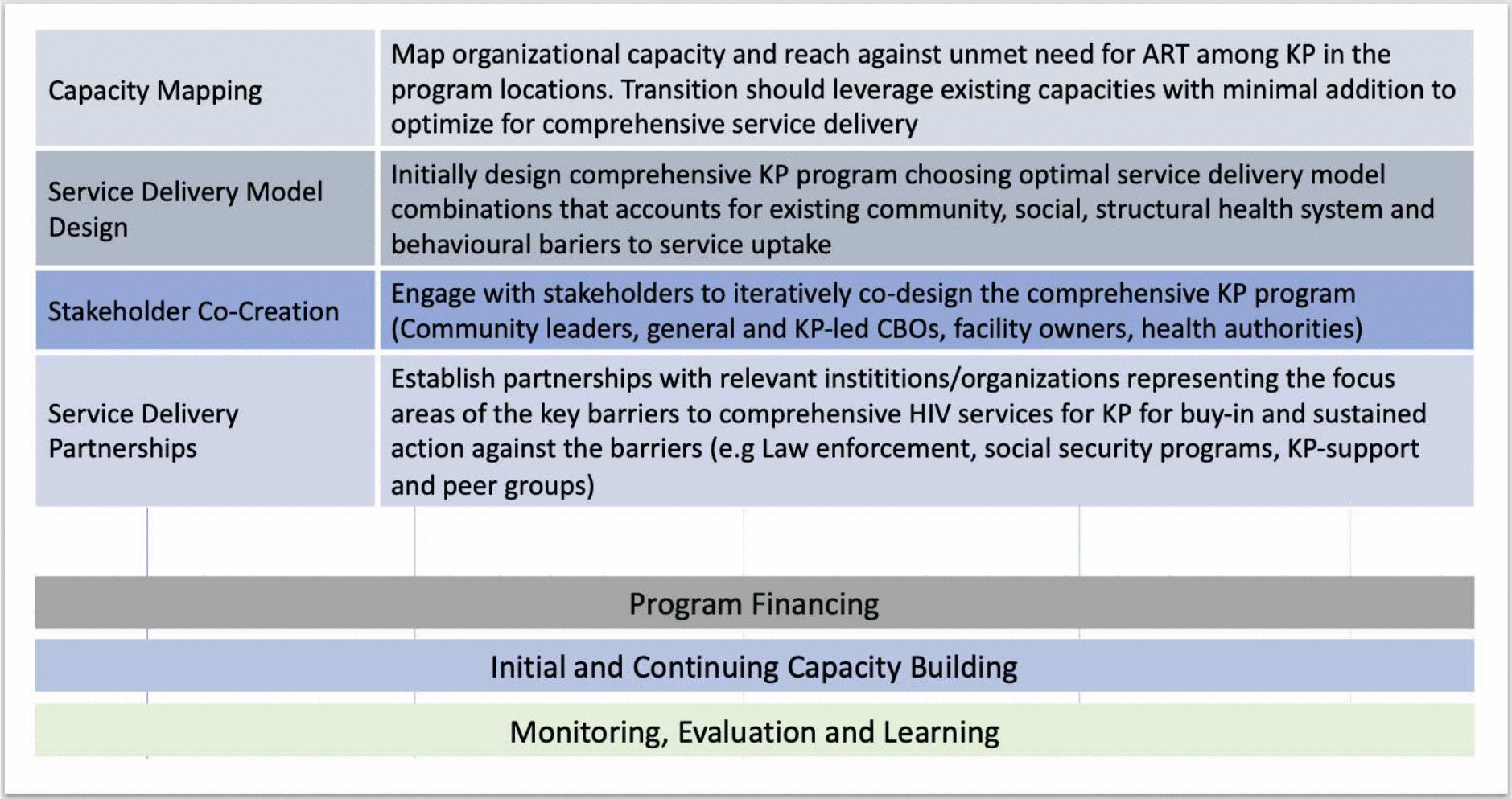
Over the years, Nigeria has recorded significant progress in controlling the HIV epidemic in the country. HIV prevalence has reduced from 4.1% in 2010 to 1.4 in 2019. The number of people acquiring new HIV infections decreased from 120,000 in 2010 to 74,000 in 2021, and HIV-related deaths decreased from 82,000 in 2010 to 51,000 in 2021. However, the country still faces challenges such as high HIV transmission among key populations (KP) who account for 11% of new HIV infections. Over the years, the government and development partners involved in HIV response efforts in Nigeria have been establishing and scaling up access to services to help address the needs of KPs. Initially, services for KPs as with the general population in Nigeria were largely preventive. Treatment of PLHIV in Nigeria commenced in 2002 and has increased from about 15,000 to more than 1.78 million PLHIVs in 2023. Despite this progress in treatment coverage, however, KPs are not equitably covered. To address this gap, the U.S. President's Emergency Plan for AIDS Relief (PEPFAR) launched an ambitious initiative-the Key Population Investment Fund (KPIF)-to target the unaddressed HIV-related needs of key populations (KPs) who are disproportionately affected by HIV. The KPIF initiative was implemented through partner organizations such as the Society for Family Health (SFH), a KP-friendly and indigenous non-governmental organization. Earlier, the program implemented by SFH was largely an HIV prevention program. SFH's transformation, transition, and growth to a comprehensive HIV prevention, care, and treatment service provider was necessary to bridge the gap in the needed expansion of HIV services to adequately meet the care needs of KPs and scale up programs. Therefore, this paper's aim is to share experiences in the transformation of SFH into a comprehensive HIV prevention, treatment, and care service provider in the hope that it may serve as a lesson for organizations with similar objectives.
© 2025. The Author(s).
Conflict of interest statement
Declarations. Competing interests: The authors declare no competing interests.
Figures
References
-
- UNAIDS. The path that ends AIDS—2023 UNAIDS Global AIDS Update. UNAIDS—Global Report 2023. Geneva: Joint United Nations Programme on HIV/AIDS; 2023. https://thepath.unaids.org/. Accessed 21 June 2024.
-
- World Health Organization. HIV statistics, globally and by WHO region. 2023.
-
- United Nations Nigeria. From the darkest of days to a new dawn: 35 years of the Nigerian response to HIV and AIDS. Abuja: Joint United Nations Programme on HIV/AIDS; 2022.
-
- UNAIDS. UNAIDS data 2022. Geneva: Joint United Nations Programme on HIV/AIDS; 2022.
Publication types
MeSH terms
Substances
LinkOut - more resources
Full Text Sources
Medical
Miscellaneous
