


Targeting secretory autophagy in solid cancers: mechanisms, immune regulation and clinical insights
- PMID: 39893499
- PMCID: PMC11786567
- DOI: 10.1186/s40164-025-00603-0
Targeting secretory autophagy in solid cancers: mechanisms, immune regulation and clinical insights
Abstract
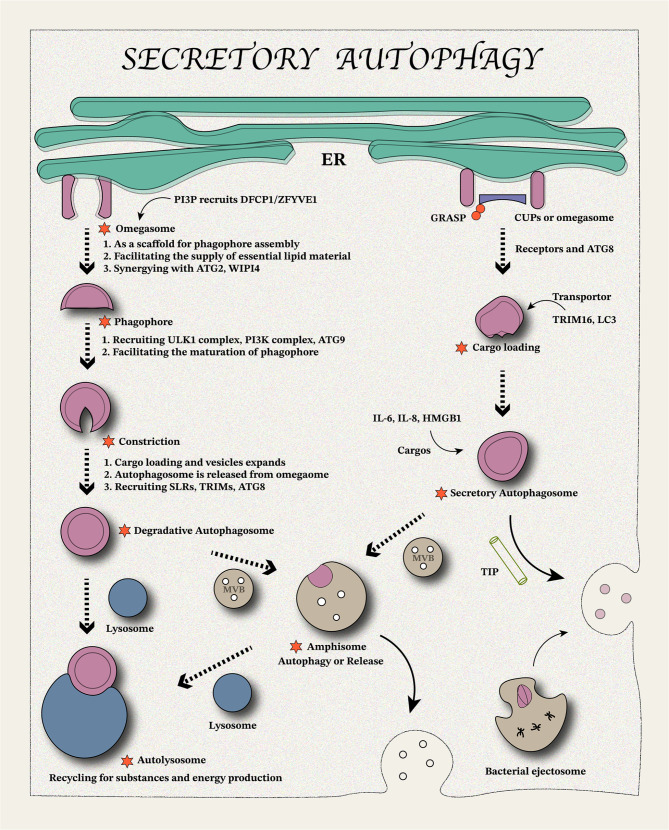
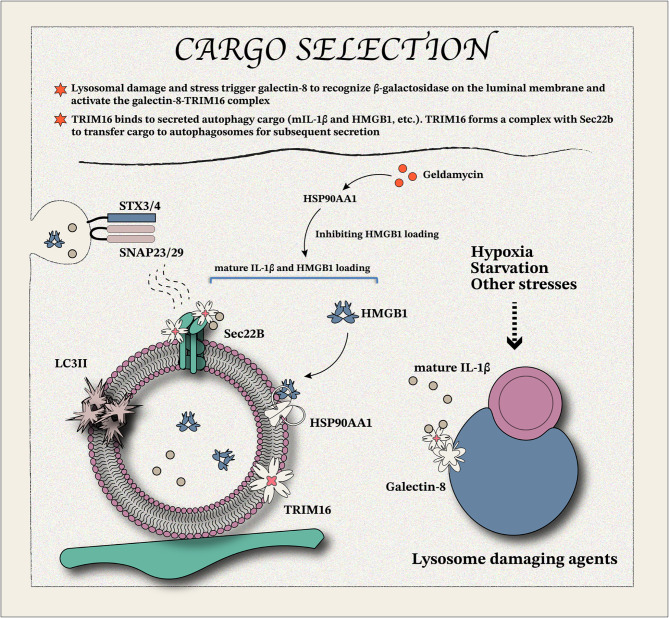
Secretory autophagy is a classical form of unconventional secretion that integrates autophagy with the secretory process, relying on highly conserved autophagy-related molecules and playing a critical role in tumor progression and treatment resistance. Traditional autophagy is responsible for degrading intracellular substances by fusing autophagosomes with lysosomes. However, secretory autophagy uses autophagy signaling to mediate the secretion of specific substances and regulate the tumor microenvironment (TME). Cytoplasmic substances are preferentially secreted rather than directed toward lysosomal degradation, involving various selective mechanisms. Moreover, substances released by secretory autophagy convey biological signals to the TME, inducing immune dysregulation and contributing to drug resistance. Therefore, elucidating the mechanisms underlying secretory autophagy is essential for improving clinical treatments. This review systematically summarizes current knowledge of secretory autophagy, from initiation to secretion, considering inter-tumor heterogeneity, explores its role across different tumor types. Furthermore, it proposes future research directions and highlights unresolved clinical challenges.
© 2025. The Author(s).
Conflict of interest statement
Declarations. Ethics approval and consent to participate: not applicable. Competing interests: The authors declare no competing interests.
Figures


References
Publication types
Grants and funding
LinkOut - more resources
Full Text Sources
