


The process of nitrogen-adaptation root endophytic bacterial rather than phosphorus-adaptation fungal subcommunities construction unveiled the tomato yield improvement under long-term fertilization
- PMID: 39895939
- PMCID: PMC11782164
- DOI: 10.3389/fmicb.2024.1487323
The process of nitrogen-adaptation root endophytic bacterial rather than phosphorus-adaptation fungal subcommunities construction unveiled the tomato yield improvement under long-term fertilization
Abstract
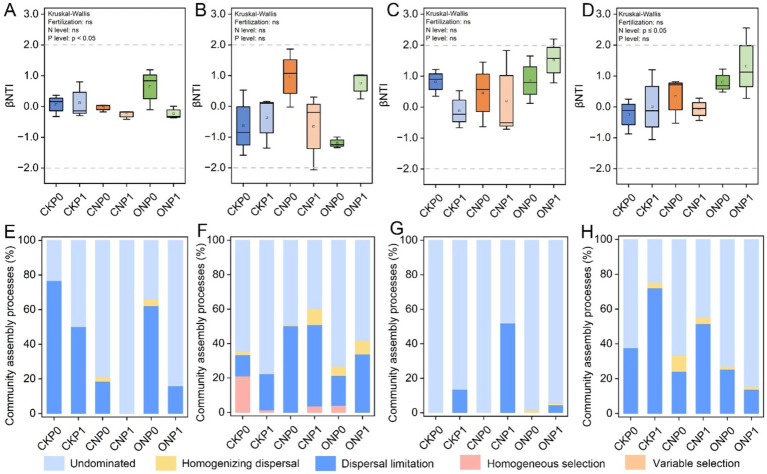
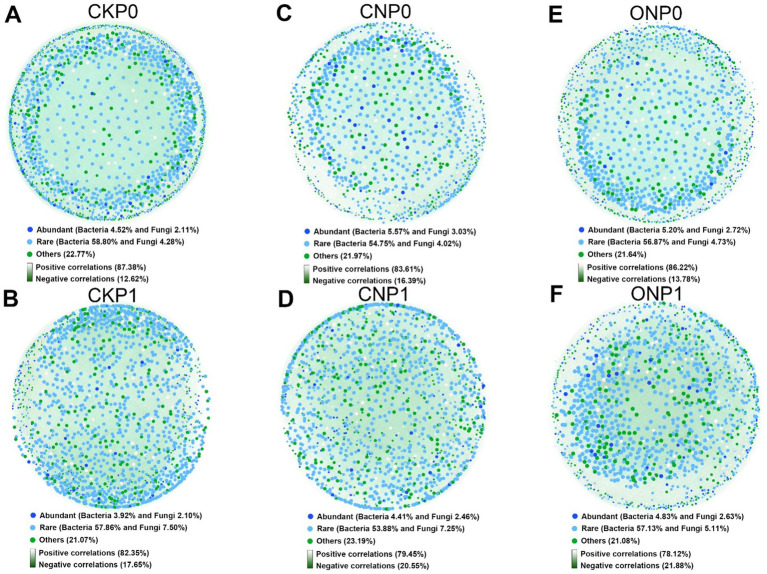
Interactions between endophytes (endophytic bacteria and fungi) and plants are crucial in maintaining crop fitness in agricultural systems, particularly in relation to abundant and rare subcommunities involved in community construction. However, the influence of long-term fertilization on heterogeneous rhizosphere nitrogen and phosphorus environments and how these conditions affect the key subcommunities of root endophytes and their community assembly mechanisms remain unclear. We studied the 26th year of a field experiment conducted in a greenhouse with varying levels of nitrogen and phosphorus (CKP0, CKP1, CNP0, CNP1, ONP0, and ONP1) to assess the composition of tomato root endophytes and their impact on yield. We employed 16S rRNA and fungal ITS region amplicon sequencing to investigate the assembly mechanisms of abundant and rare endophytic subcommunities, network correlations, core subcommunity structures, and key species that enhance crop yield. The results indicated that organic manure and phosphorus fertilizers significantly increased the rhizosphere soil nitrogen content, phosphorus content, and phosphorus availability (labile P, moderately labile P, and non-labile P). These fertilizers also significantly affected the composition (based on Bray-Curtis distance) and community assembly processes (βNTI) of endophytic microbial subcommunities. The assembly of both bacterial and fungal subcommunities was primarily governed by dispersal limitation, with community structures being significantly regulated by the content of rhizosphere soil available nitrogen (AN) and moderately labile P (MLP). Rare bacterial and fungal subcommunities complemented the ecological niches of abundant subcommunities in the co-occurrence network, supporting community functions and enhancing network stability. Nitrogen-adapting abundant and rare bacterial subcommunities provided a stronger predictive correlation for tomato yield than phosphorus-adapting fungal subcommunities. Additionally, three core genera of rare endophytic bacteria such as Arthrobacter, Microbacterium, and Sphingobium were identified as potentially involved in improving crop yield improvement. These findings revealed the distinct assembly mechanisms of endophytic microbial subcommunities affected by fertilization, enhancing our understanding of better management practices and controlling endophytes to improve crop yield in intensive agricultural ecosystems.
Keywords: abundant microbial taxa; community assembly; endophyte; rare microbial taxa; solar greenhouse.
Copyright © 2025 Li, Awais, Wang, Zhang, Zhao, Liu, Sun, Fu and Li.
Conflict of interest statement
The authors declare that the research was conducted in the absence of any commercial or financial relationships that could be construed as a potential conflict of interest.
Figures
References
-
- Adeleke B. S., Babalola O. O., Glick B. R. (2021). Plant growth-promoting root-colonizing bacterial endophytes. Rhizosphere 20:100433. doi: 10.1016/j.rhisph.2021.100433 - DOI
-
- Almario J., Jeena G., Wunder J., Langen G., Zuccaro A., Coupland G., et al. . (2017). Root-associated fungal microbiota of nonmycorrhizal Arabis alpina and its contribution to plant phosphorus nutrition. Proc. Natl. Acad. Sci. USA 114, E9403–e9412. doi: 10.1073/pnas.1710455114, PMID: - DOI - PMC - PubMed
-
- Bai L., Zhang X., Li B., Sun F., Zhao X., Wang Y., et al. . (2022). Fungal communities are more sensitive to nitrogen fertilization than bacteria in different spatial structures of silage maize under short-term nitrogen fertilization. Appl. Soil Ecol. 170:104275. doi: 10.1016/j.apsoil.2021.104275 - DOI
LinkOut - more resources
Full Text Sources
