


Prevalence and Hematological Changes in Urogenital Schistosomiasis: Infection Persistence in the Phase of Mass Drug Administration in Sempoa (Kwahu East, Ghana): A Cross-Sectional Study
- PMID: 39897461
- PMCID: PMC11779747
- DOI: 10.1002/hsr2.70404
Prevalence and Hematological Changes in Urogenital Schistosomiasis: Infection Persistence in the Phase of Mass Drug Administration in Sempoa (Kwahu East, Ghana): A Cross-Sectional Study
Abstract
Background: Schistosomiasis is a chronic neglected tropical disease and Ghana's second most prevalent helminth infection. The annual mass drug administration of praziquantel to school children is aimed at reducing disease morbidity as a public health problem.
Aim: The study aimed to assess the prevalence and hematological profile of urinary schistosomiasis in Sempoa after over a decade of consecutive Mass Drug Administration (MDA) of praziquantel.
Methods: A community-based cross-sectional study involving 126 participants was conducted. Schistosoma haematobium eggs were identified and quantified using the urine filtration-microscopy technique. The hematological profile was analyzed using a fully automated 5-part Sysmex XN-350 (Sysmex Co, Germany) analyzer.
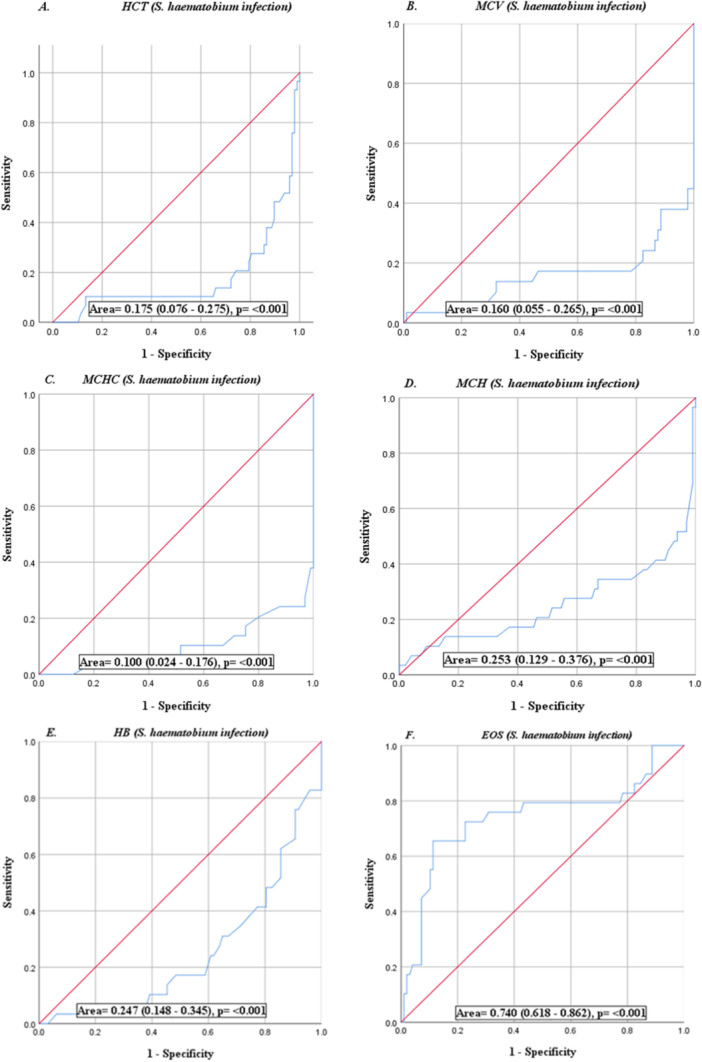
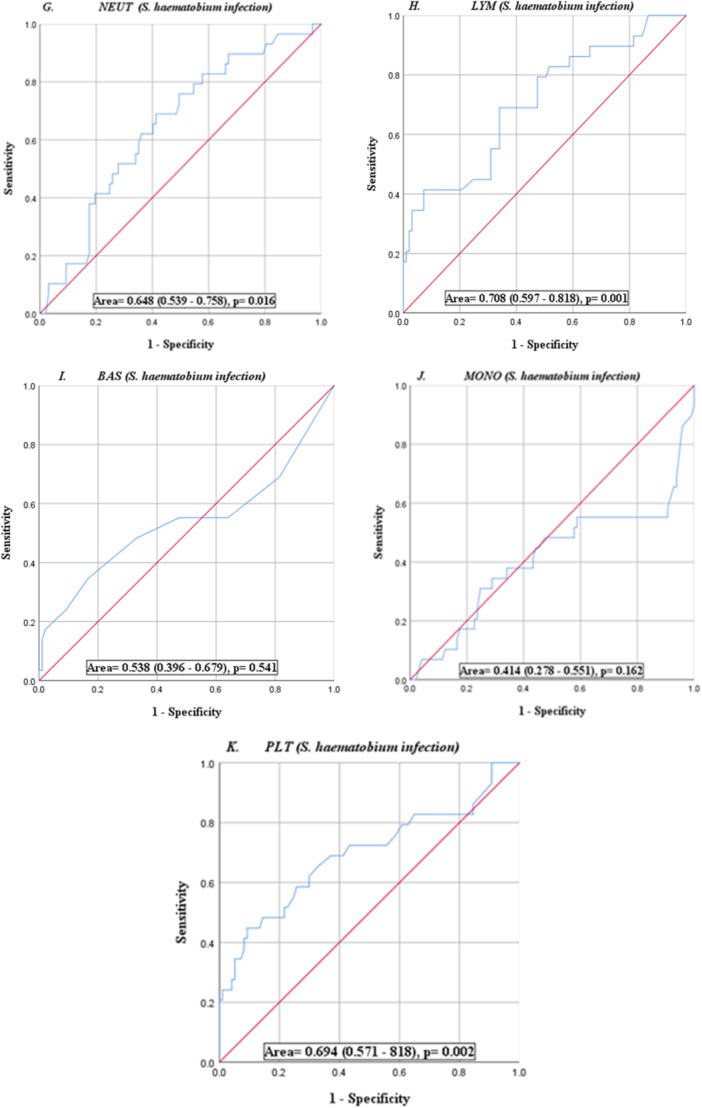
Results: The study recorded a prevalence of 21.6% that was significantly related to water contact activities. Schistosomiasis was significantly associated with lower levels of Red Blood Cell (RBC) indices; MCV (p < 0.001), MCHC (p < 0.001), and MCH (p = 0.01) with higher platelet, lymphocytes, and basophil counts compared to the uninfected. Heavy infection was significantly associated with lower hemoglobin levels. The study further reported microhaematuria as a sensitive and specific proxy diagnostic tool for field surveillance in endemic communities.
Conclusion: Urinary schistosomiasis accompanied by an altered hematological profile persists in Sempoa under preventive praziquantel. Future control interventions must consider an integrated approach of marrying behavioral change, with preventive chemotherapy and vector control.
Keywords: hematological profile; hematuria; risk factors; urogenital schistosomiasis.
© 2025 The Author(s). Health Science Reports published by Wiley Periodicals LLC.
Conflict of interest statement
The authors declare no conflicts of Interest.
Figures
References
-
- World Health Organization , accessed 16 July 2020. https://www.who.int/health-topics/schistosomiasis.
-
- Fenwick A., Webster J. P., Bosque‐Oliva E., et al., “The Schistosomiasis Control Initiative (SCI): Rationale, Development, and Implementation From 2002–2008,” Parasitology 136, no. 13 (2009): 1719–1730. - PubMed
-
- World Health Organization , Schistosomiasis Progress Report 2001–2011 and Strategic Plan 2012–2020 (Geneva: World Health Organization, 2013). 80.
LinkOut - more resources
Full Text Sources
