


Rate of cesarean section among breech deliveries in Ethiopia: a systematic review and meta-analysis
- PMID: 39897705
- PMCID: PMC11782149
- DOI: 10.3389/fsurg.2024.1283965
Rate of cesarean section among breech deliveries in Ethiopia: a systematic review and meta-analysis
Abstract
Background: Breech deliveries are a significant public health concern in developing countries. The World Health Organization (WHO) declared that the cesarean section rate should not be higher than 10%-15%. As unnecessary C-sections may be associated with an increased risk of maternal and neonatal mortality, this meta-analysis was aimed at determining the rate of caesarean sections among breech deliveries in Ethiopia.
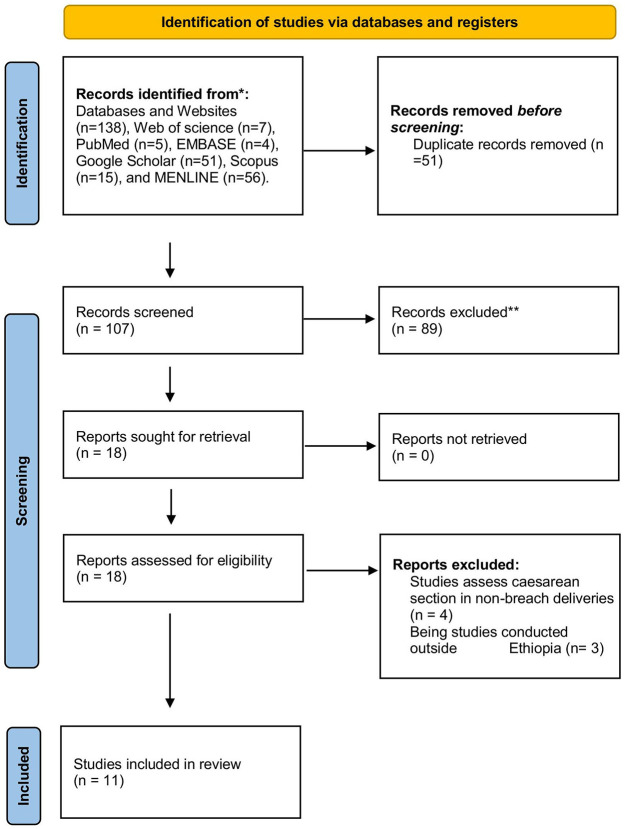
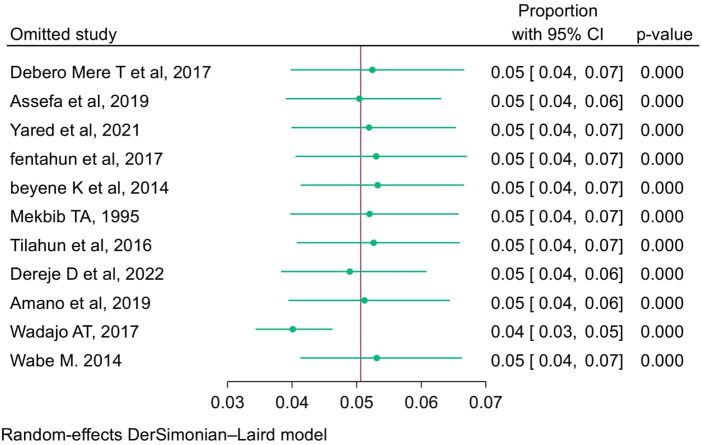
Methods: All published and unpublished articles were obtained from legitimate databases and websites. The PRISMA guidelines were used to conduct this systematic review and meta-analysis. The meta-analysis of the primary and secondary outcomes was performed using STATA version 18. The overall effect size with a 95% CI was estimated using the random effect model with the Der Simonian Liard method. A sensitivity analysis using a leave-one-out meta-analysis was computed.
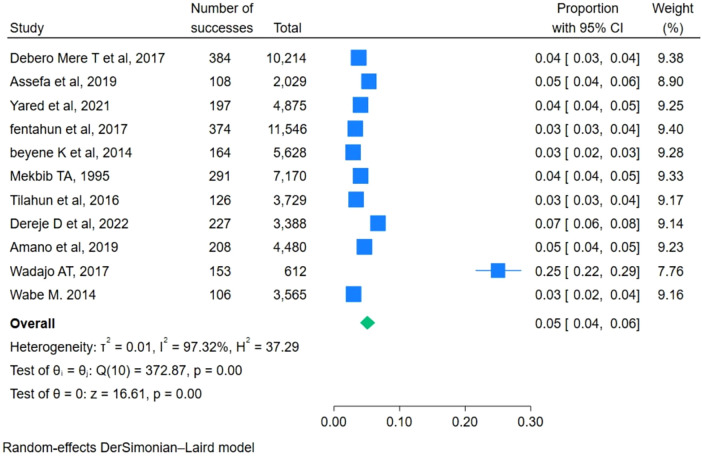
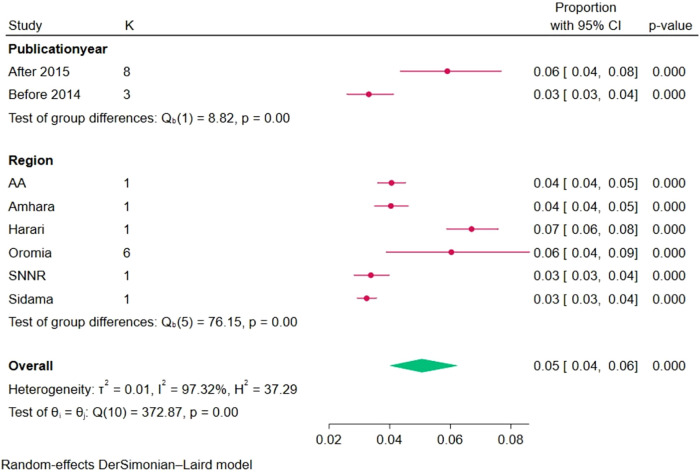
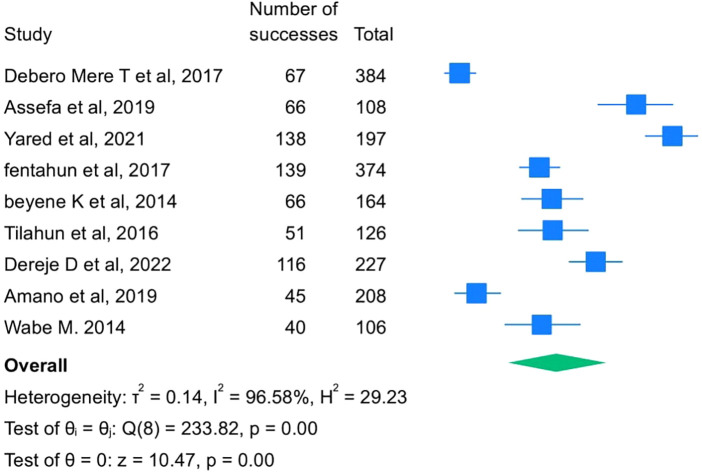
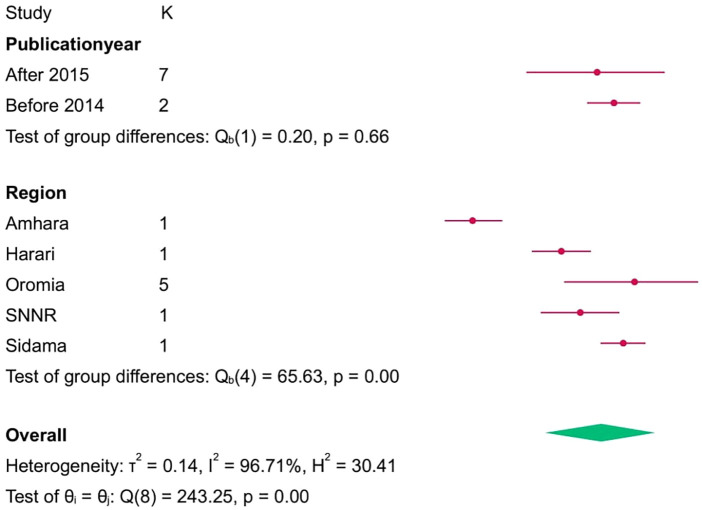
Results: This meta-analysis included a total of 57,236 mothers who had breech deliveries. The pooled prevalence of breech deliveries among women in Ethiopia was 5% [95% CI: 4, 6]. The overall pooled cesarean section rate among breech deliveries in Ethiopia was 41% (95% CI: 29-54).
Conclusions: In this review, the pooled prevalence of breech deliveries among women in Ethiopia was 5%, and the overall rate of caesarian section among the breech deliveries was 41%. This finding pointed out that two out of every five pregnant women with breech presentation gave birth by cesarean section in Ethiopia. Therefore, the finding implies that both the government and all the concerned stakeholders shall be given particular emphasis made on strengthening antenatal care services and ensure more women have access to skilled healthcare professionals during childbirth. This can help in providing appropriate interventions, support to women and reducing the need for emergency and unnecessary breech deliveries. The result of this research are a baseline data for future researchers to conduct further studies to better understand the reasons behind the high rates and identify potential interventions and solutions specific to the African context.
Keywords: Ethiopia; breech delivery; cesarean section—methods; systematic review; women.
© 2025 Mussa, Debella, Regassa, Ahamed, Jibro and Eyeberu.
Conflict of interest statement
The authors declare that the research was conducted in the absence of any commercial or financial relationships that could be construed as a potential conflict of interest.
Figures
References
-
- Simm A. Fetal malpresentation. Obstet Gynaecol Reprod Med. (2007) 17(10):283–8. 10.1016/j.ogrm.2007.07.007 - DOI
-
- Ngowa JDK, Kasia JM, Ekotarh A, Nzedjom C. Neonatal outcome of term breech births: a 15-year review at the Yaoundé general hospital, Cameroon. Clin Mother Child Health. (2012) 9:0–0.
-
- Debero Mere T, Beyene Handiso T, Mekiso AB, Selamu Jifar M, Aliye Ibrahim S, Belato DT. Prevalence and perinatal outcomes of singleton term breech delivery in Wolisso hospital, Oromia region, southern Ethiopia: a cross-sectional study. J Environ Public Health. (2017) 2017:9413717. 10.1155/2017/9413717 Erratum in: J Environ Public Health. 2018 February 26; 2018:2143031. doi: 10.1155/2018/2143031. - DOI - PMC - PubMed
-
- Fernández-Carrasco FJ, Cristóbal-Cañadas D, Gómez-Salgado J, Vázquez-Lara JM, Rodríguez-Díaz L, Parrón-Carreño T. Maternal and fetal risks of planned vaginal breech delivery vs planned caesarean section for term breech birth: a systematic review and meta-analysis. J Glob Health. (2022) 12:04055. 10.7189/jogh.12.04055 - DOI - PMC - PubMed
-
- Hannah ME, Hannah WJ, Hewson SA, Hodnett ED, Saigal S, Willan AR. Planned caesarean section versus planned vaginal birth for breech presentation at term: a randomised multicentre trial. Term breech trial collaborative group. Lancet. (2000) 356(9239):1375–83. 10.1016/S0140-6736(00)02840-3 - DOI - PubMed
Publication types
LinkOut - more resources
Full Text Sources
Research Materials
