


Optimal needle characteristics for classical inferior alveolar nerve block anesthesia: a systematic review
- PMID: 39901265
- PMCID: PMC11789294
- DOI: 10.1186/s13005-025-00481-1
Optimal needle characteristics for classical inferior alveolar nerve block anesthesia: a systematic review
Abstract
Objectives: Although frequently applied, inferior alveolar nerve block (IANB) is associated with high rate of complications, beside its unpredictable success; partly due to improper needle choice. Evidence of the ideal needle contradicts in literature. Therefore, this review aims to assess the effect of needle characteristics on the outcomes of IANB.
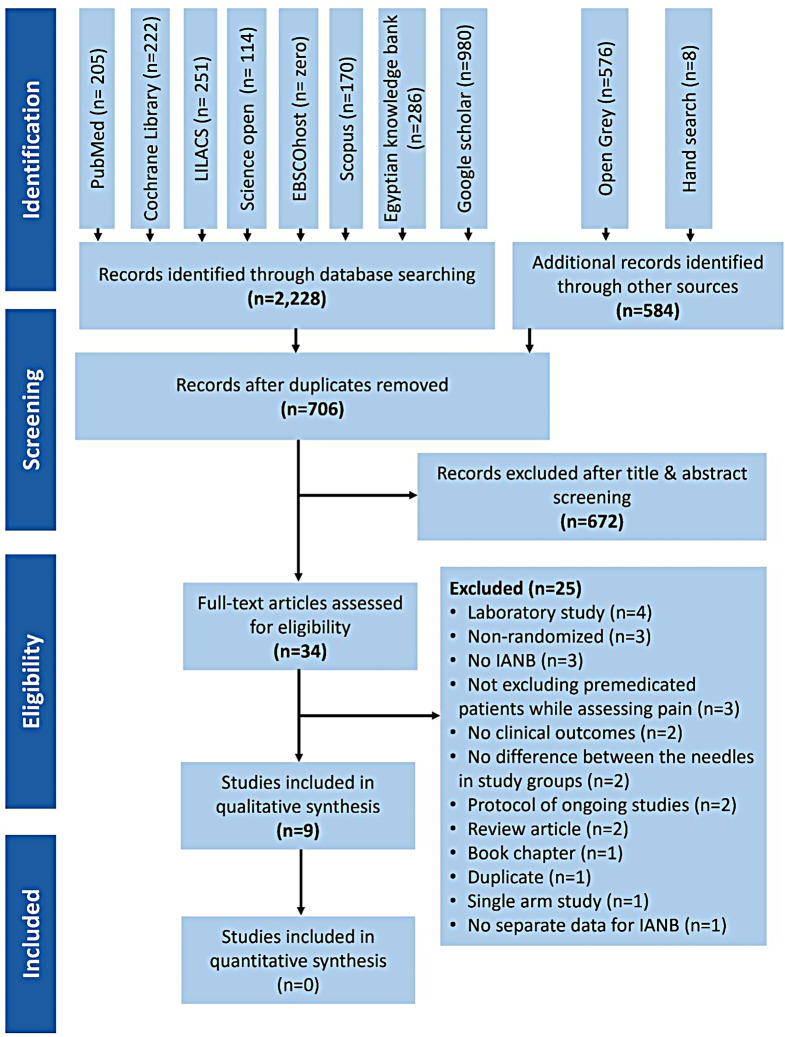
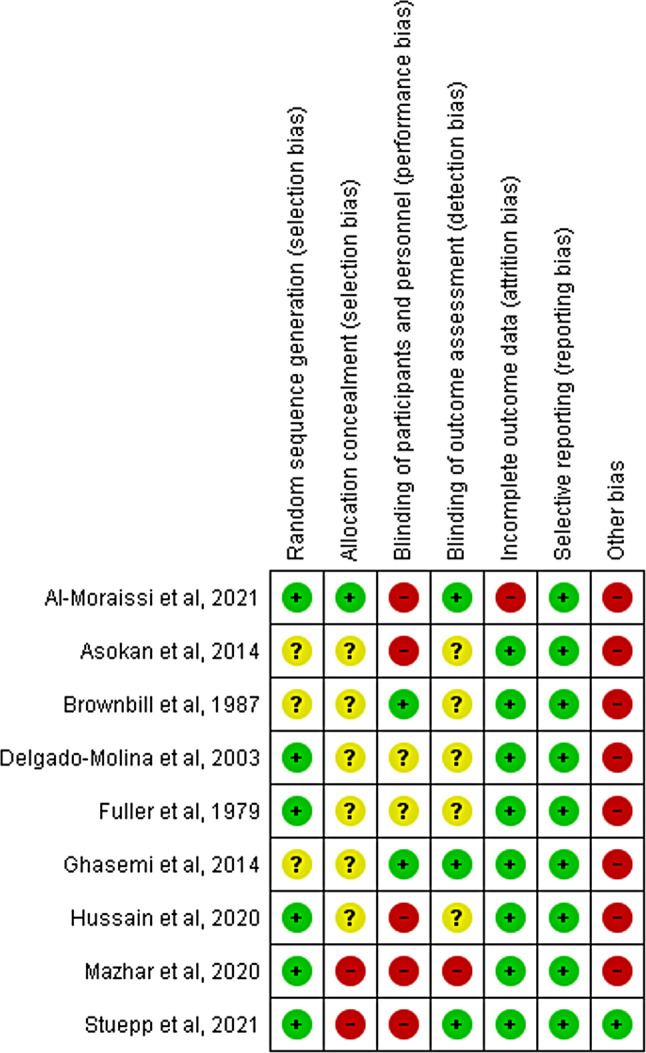
Materials and methods: A systematic search was performed on MedLine via Pubmed, Cochrane Library, LILACS, Science Open, EBSCOhost, Scopus, Egyptian Knowledge Bank (EKB), and Google scholar; beside searching grey literature and hand searching. The review included randomized controlled trials comparing needles of difference in any of the characteristics (gauge, length, bevel, alloy) used for IANB regarding their effects on pain, success of anesthesia and aspiration. The authors ran the search, selected the eligible studies, assessed the risk of bias using RoB 1 and extracted the data of the finally included studies. All the steps were performed in duplicates.
Results: The search yielded a total of 2,812 records. After de-duplication and excluding ineligible studies by title and abstract then by full text, the review included nine eligible studies. The compared needle interventions included: gauges (23G, 24G, 25G, 26G, 27G and 30G), lengths (12 mm, 25 mm, 32 mm, 35 mm, 42 mm), and internal diameters (0.265 mm, 0.215 mm, 0.3 mm and 0.4 mm). All studies had high risk of bias, adopted different assessment methods for the outcomes, and included participants with differences in baseline characteristics.
Conclusions: The level of the available evidence introduced by primary studies hinder concluding the optimal needle characteristics; keeping the research question unanswered. However, within the limitations of the heterogenous studies, available data favors thinner needles for less pain during needle insertion; otherwise, data of the other outcomes was inconclusive.
Clinical relevance: Thinner needles are favored for less pain during insertion; but standardized future studies are essentially needed for solid conclusions. A detailed standard protocol is, therefore, proposed.
Keywords: Aspiration; Conventional inferior alveolar nerve block; Dental anesthesia; Local anesthesia; Mandibular anesthesia.
© 2025. The Author(s).
Conflict of interest statement
Declarations. Ethical approval: Not applicable. Consent: Not applicable. Competing interests: The authors declare no competing interests.
Figures
References
-
- Review council. Guideline on use of local anesthesia for Pediatric Dental patients. Am Acad Pediatr Dent. 2015;40:274–80. - PubMed
Publication types
MeSH terms
LinkOut - more resources
Full Text Sources
Miscellaneous
