


Recognition and Management of Ectopic ACTH Secreting Tumors
- PMID: 39902402
- PMCID: PMC11788505
- DOI: 10.1210/jendso/bvae194
Recognition and Management of Ectopic ACTH Secreting Tumors
Abstract
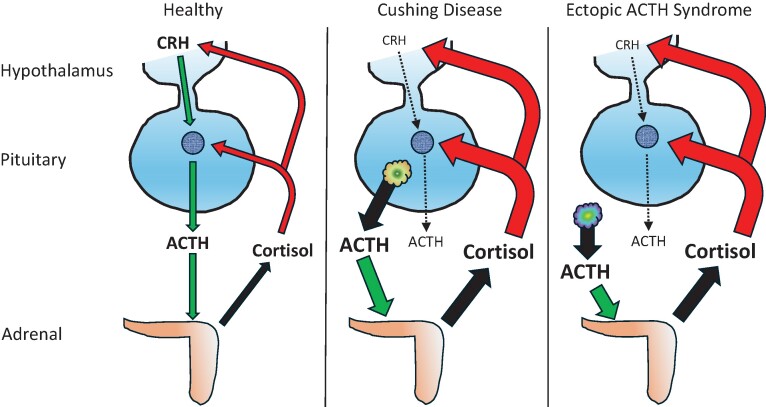
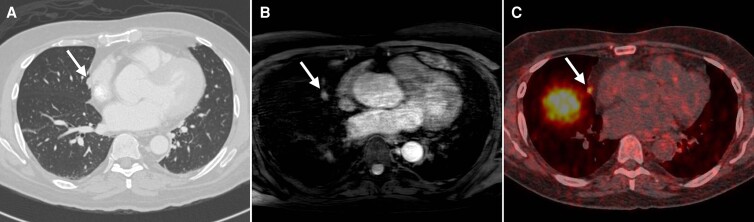
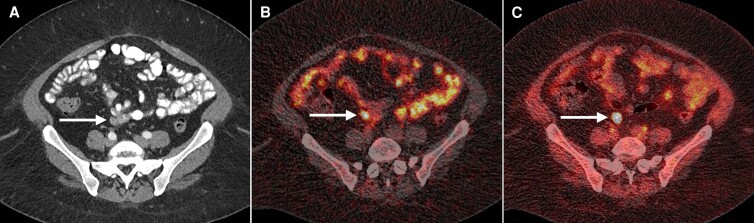
Ectopic ACTH syndrome (EAS), in which Cushing syndrome is caused by excessive ACTH secretion from a tumor located outside of the pituitary, is associated with an impaired quality of life and an increased mortality rate. Outcomes can be improved with successful tumor localization and resection, which often proves difficult. In order to distinguish EAS from Cushing disease, a significantly more common condition where excessive ACTH is secreted from a pituitary tumor, bilateral inferior petrosal sinus sampling (IPSS) is often necessary. Correct performance and interpretation of IPSS hence becomes crucial to avoid inappropriate future interventions, including surgical procedures. Once an ectopic source of ACTH is confirmed biochemically, identifying the causative tumor is often challenging since they can be located in unexpected areas and potentially be very small. Additionally, EAS carries a risk of severe hypercortisolism, which sometimes needs urgent treatment to avoid disastrous outcomes. The cases here illustrate pitfalls in diagnostic biochemical testing, describe helpful imaging strategies to improve the chances of tumor detection, and review available options to rapidly normalize severe hypercortisolism in critical situations.
Keywords: Cushing; Cushing disease; DOTATATE; IPSS; ectopic ACTH syndrome.
Published by Oxford University Press on behalf of the Endocrine Society 2025.
Figures
References
-
- Hayes AR, Grossman AB. The ectopic adrenocorticotropic hormone syndrome: rarely easy, always challenging. Endocrinol Metab Clin North Am. 2018;47(2):409‐425. - PubMed
-
- Lacroix A, Feelders RA, Stratakis CA, Nieman LK. Cushing's syndrome. Lancet. 2015;386(9996):913‐927. - PubMed
-
- Isidori AM, Kaltsas GA, Pozza C, et al. The ectopic adrenocorticotropin syndrome: clinical features, diagnosis, management, and long-term follow-up. J Clin Endocrinol Metab. 2006;91(2):371‐377. - PubMed
LinkOut - more resources
Full Text Sources