


Biofilm destruction activity of α-tocopherol against Staphylococcus aureus, Proteus mirabilis, and Pseudomonas aeruginosa
- PMID: 39904546
- PMCID: PMC11992689
- DOI: 10.1093/femsle/fnaf020
Biofilm destruction activity of α-tocopherol against Staphylococcus aureus, Proteus mirabilis, and Pseudomonas aeruginosa
Abstract
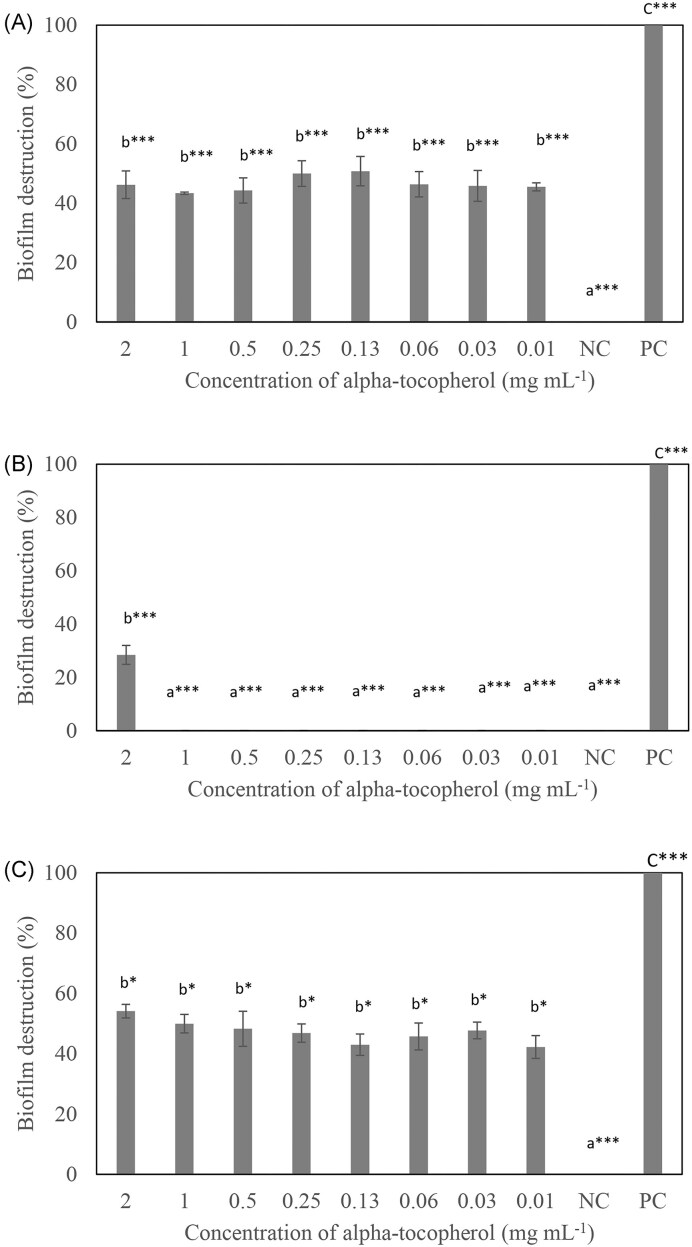
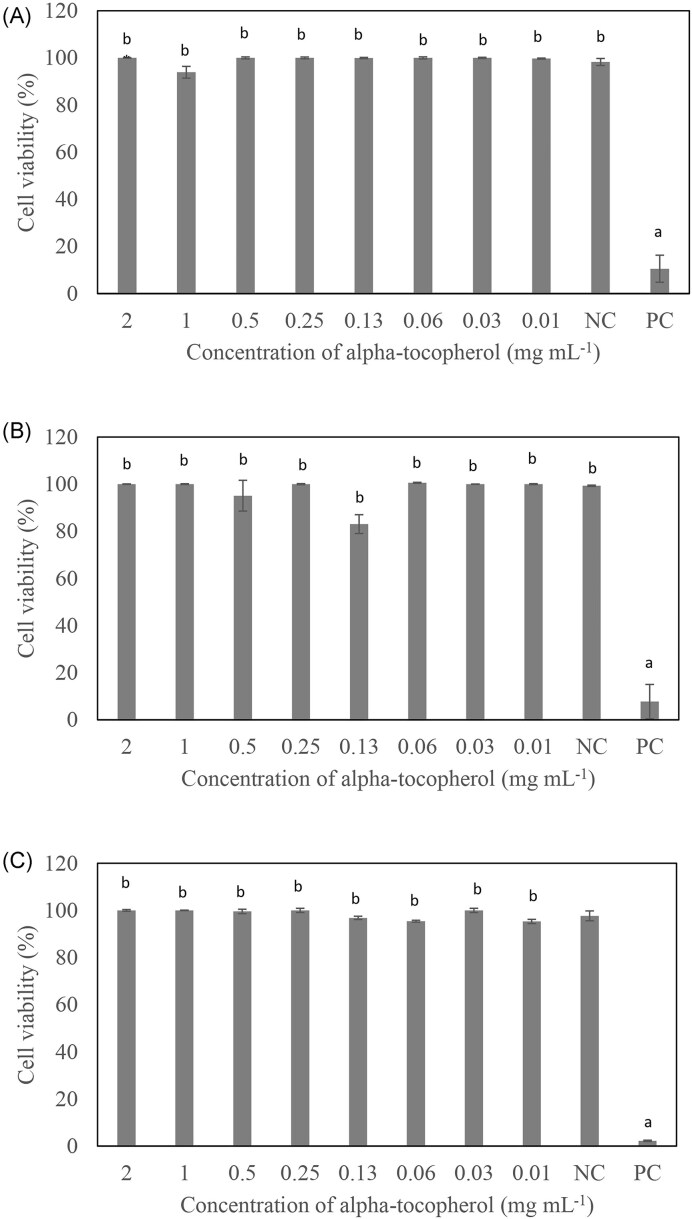
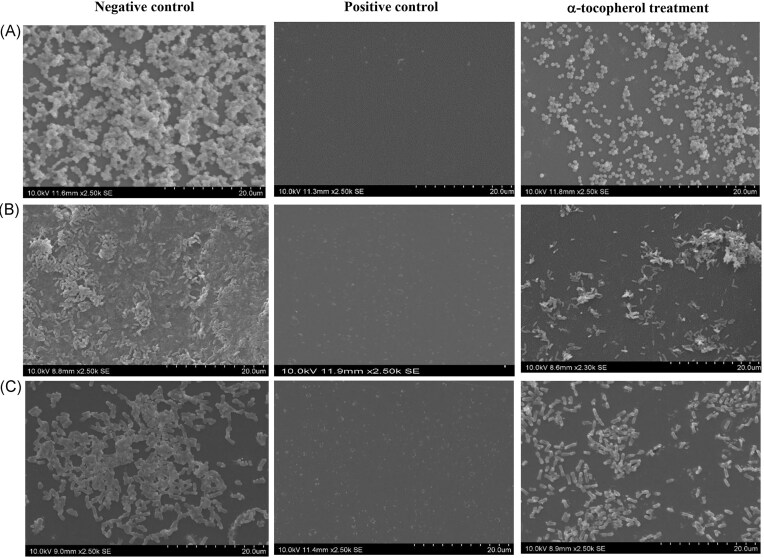
Antibiotic resistance and the persistence of sessile cells within biofilms complicate the eradication of biofilm-related infections using conventional antibiotics. This highlights the necessity for alternate therapy methods. The objective of this study was to investigate the biofilm destruction activity of α-tocopherol against Staphylococcus aureus, Proteus mirabilis, and Pseudomonas aeruginosa on polystyrene. α-Tocopherol showed significant biofilm destruction activity on the pre-formed biofilms of S. aureus (45%-46%), Pr. mirabilis (42%-54%), and Ps. aeruginosa (28%). Resazurin assay showed that α-tocopherol disrupted all bacterial biofilms without interfering with their cell viability. Scanning electron microscope images showed lower bacterial cell count and less compacted cell aggregates on polystyrene surfaces after treatment with α-tocopherol. This study demonstrated the biofilm destruction activity of α-tocopherol against S. aureus, Pr. mirabilis, and Ps. aeruginosa. α-Tocopherol could potentially be used to decrease biofilm-associated infections of these bacteria.
Keywords: Gram-negative bacteria; Gram-positive bacteria; anti-biofilm; antimicrobial; biofilm inhibition; vitamin E.
© The Author(s) 2025. Published by Oxford University Press on behalf of FEMS.
Conflict of interest statement
None declared.
Figures
References
-
- Andrade JC, Morais-Braga MFB, Guedes GMM et al. Enhancement of the antibiotic activity of aminoglycosides by alpha-tocopherol and other cholesterol derivates. Biomed Pharmacother. 2014;68:1065–9. - PubMed
-
- Andrews JM. Determination of minimum inhibitory concentrations. J Antimicrob Chemother. 2001;48:5–16. - PubMed
-
- Banche G, Allizond V, Bracco P et al. Interplay between surface properties of standard, vitamin E blended and oxidised ultra high molecular weight polyethylene used in total joint replacement and adhesion of Staphylococcus aureus and Escherichia coli. Bone Joint J. 2014;96-B:497–501. - PubMed
-
- Campoccia D, Visai L, Renò F et al. Bacterial adhesion to poly-(d,l)lactic acid blended with vitamin E: toward gentle anti-infective biomaterials. J Biomed Mater Res. 2015;103:1447–58. - PubMed
MeSH terms
Substances
Grants and funding
LinkOut - more resources
Full Text Sources
Medical
Molecular Biology Databases
Research Materials
