


Museomics and morphological analyses of historical and contemporary peninsular Italian wolf (Canis lupus italicus) samples
- PMID: 39905114
- PMCID: PMC11794570
- DOI: 10.1038/s41598-024-84319-x
Museomics and morphological analyses of historical and contemporary peninsular Italian wolf (Canis lupus italicus) samples
Abstract
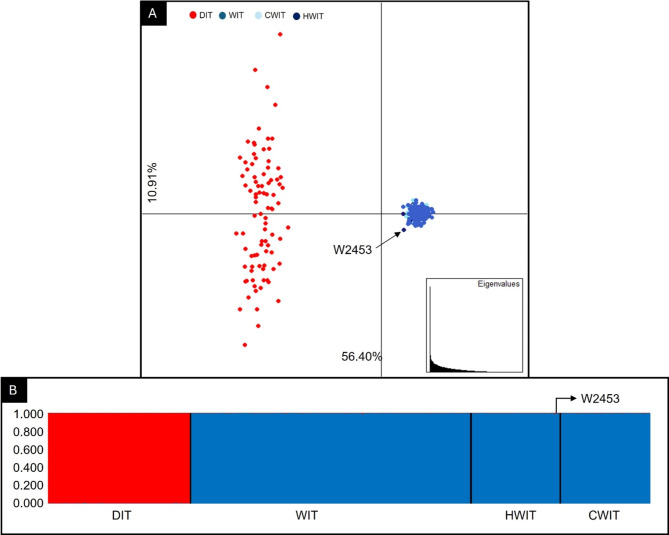
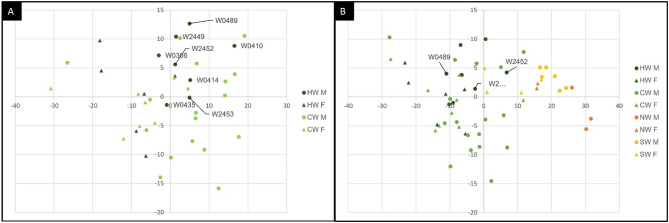
After centuries of decline and protracted bottlenecks, the peninsular Italian wolf population has naturally recovered. However, an exhaustive comprehension of the effects of such a conservation success is still limited by the reduced availability of historical data. Therefore, in this study, we morphologically and genetically analyzed historical and contemporary wolf samples, also exploiting the optimization of an innovative bone DNA extraction method, to describe the morphological variability of the subspecies and its genetic diversity during the last 30 years. We obtained high amplification and genotyping success rates for tissue, blood and also petrous bone DNA samples. Multivariate, clustering and variability analyses confirmed that the Apennine wolf population is genetically and morphologically well-distinguishable from both European wolves and dogs, with no natural immigration from other populations, while its genetic variability has remained low across the last three decades, without significant changes between historical and contemporary specimens. This study highlights the scientific value of well-maintained museum collections, demonstrates that petrous bones represent reliable DNA sources, and emphasizes the need to genetically long-term monitor the dynamics of peculiar wolf populations to ensure appropriate conservation management actions.
Keywords: Canis lupus italicus; Apennine Italian wolves; Conservation management; Genetic variability patterns; Historical biological samples; Multilocus genetic profiles; Museomics; Museum collections; Population genetics.
© 2025. The Author(s).
Conflict of interest statement
Declarations. Competing interests: The authors declare no competing interests.
Figures



References
-
- Chapron, G. et al. Recovery of large carnivores in Europe’s modern human-dominated landscapes. Science346, 1517–1519 (2014). - PubMed
-
- Doan, K. et al. Evolutionary history of the extinct wolf population from France in the context of global phylogeographic changes throughout the Holocene. Mol. Ecol.32, 4627–4647 (2023). - PubMed
-
- Angelici, F. M. et al. The sicilian wolf: genetic identity of a recently extinct insular population. Zool. Sc. 36, 189–197 (2019). - PubMed
-
- Gómez-Sánchez, D. et al. On the path to extinction: inbreeding and admixture in a declining grey wolf population. Mol. Ecol.27, 3599–3612 (2018). - PubMed
MeSH terms
Substances
LinkOut - more resources
Full Text Sources
