


Maternal media exposure and child anthropometric failures across 40 low- and middle-income countries
- PMID: 39906335
- PMCID: PMC11791352
- DOI: 10.1016/j.ssmph.2024.101746
Maternal media exposure and child anthropometric failures across 40 low- and middle-income countries
Abstract
Objective: To examine the association between maternal exposure to various types of media and child anthropometric failures, and whether this association varies by mothers' socioeconomic status (SES) in low- and middle-income countries (LMICs).
Methods: This study analyzed Demographic and Health Survey data from 40 LMICs (2010-2024). The independent variable was defined as exposure to any mass media (i.e., newspapers/magazines, radio, television) at least once a week for the primary analysis, and mobile phone ownership and internet access were considered for secondary analyses. Three types of child anthropometric failures (i.e., stunting, underweight, wasting) were constructed based on the WHO child growth standards. Multivariable logistic regression models were conducted to examine the association between maternal media exposure and child anthropometric failures, as well as the moderating effects of mothers' socioeconomic status.
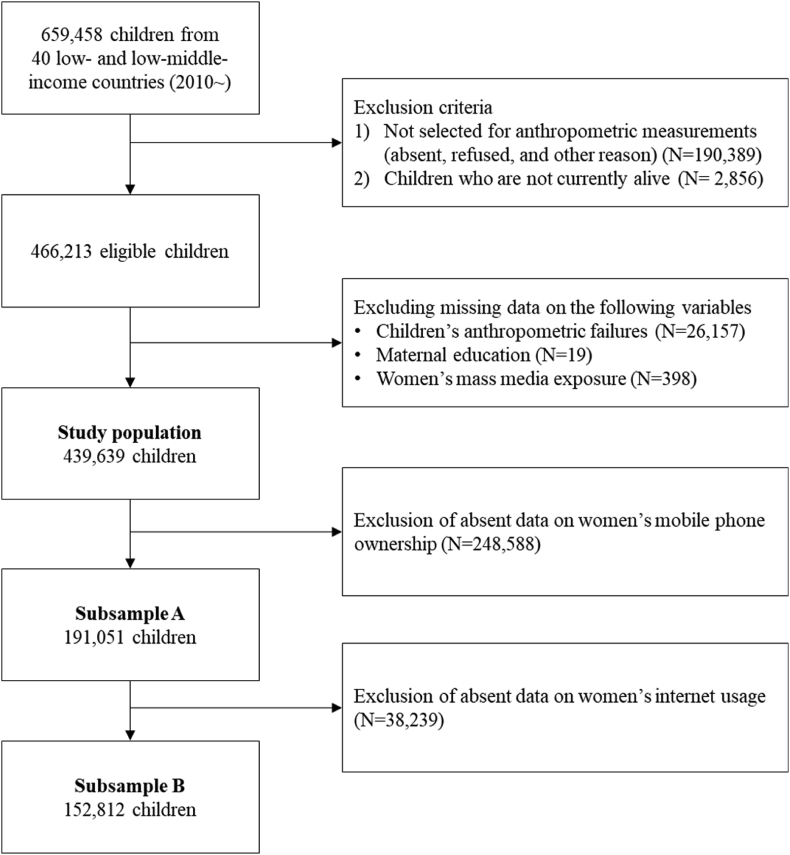
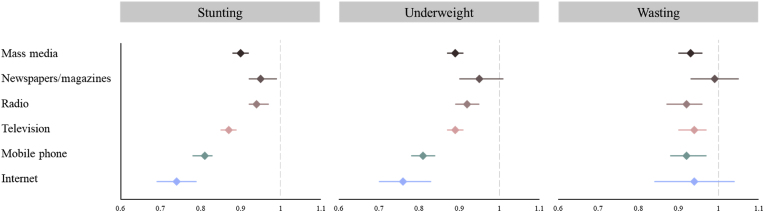
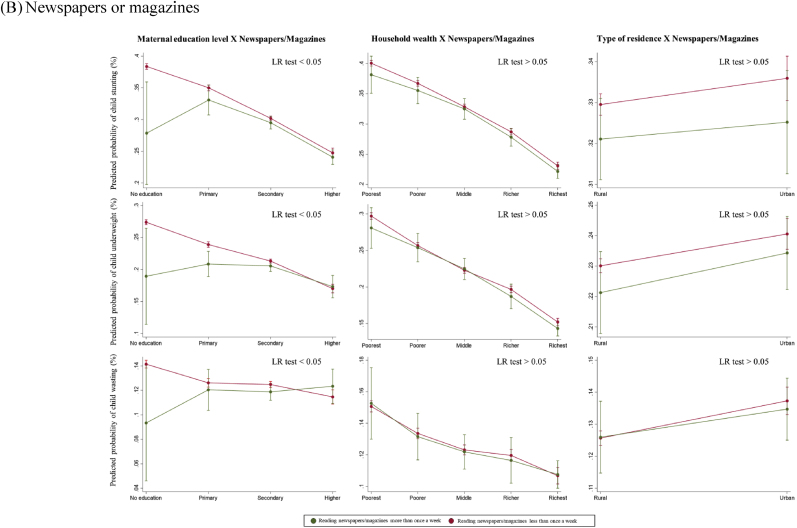
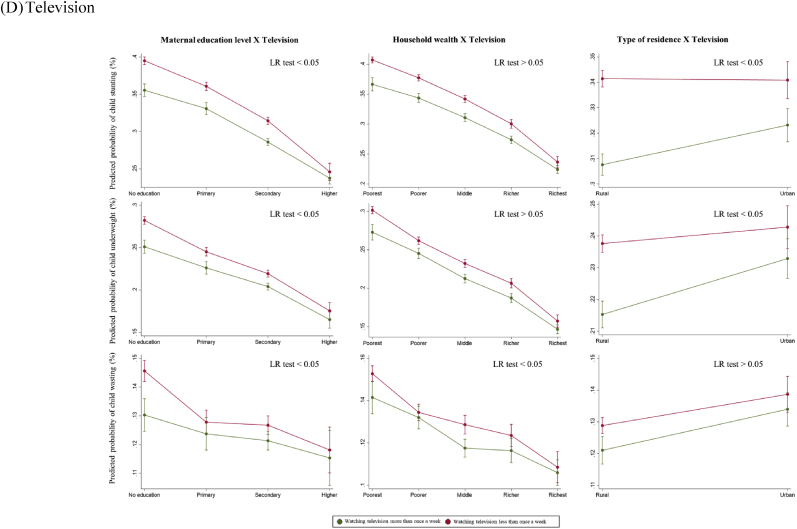
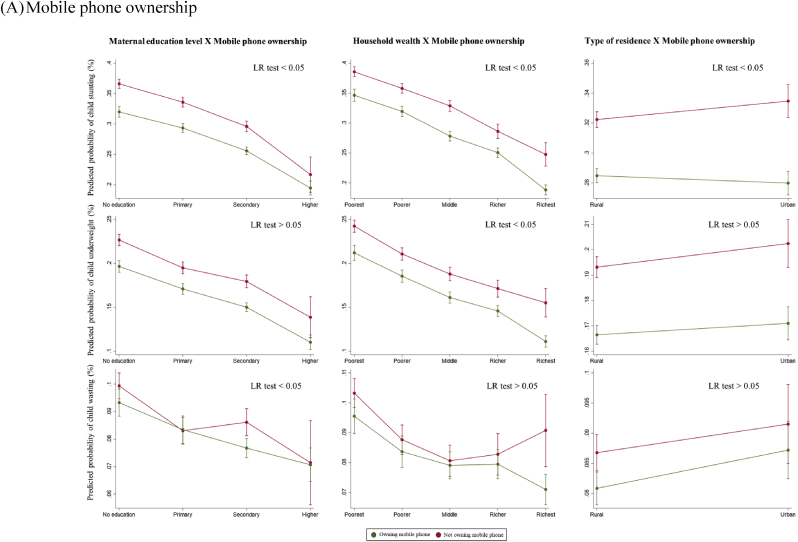
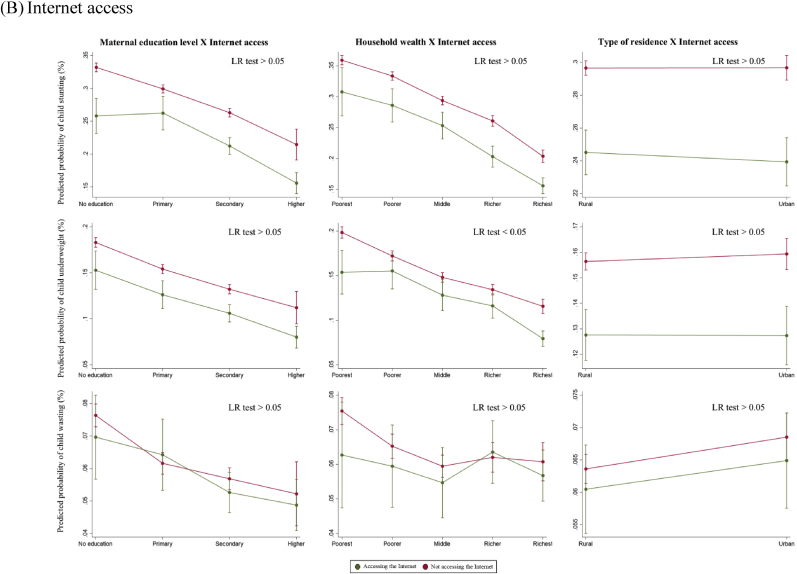
Results: Among 439,639 children aged under five, 13% were stunted, 23% were underweight, and 13% had wasting. Overall, 53% of mothers were exposed to any mass media, which was significantly associated with reduced odds of child stunting (OR = 0.90, 95% CI = 0.88-0.92), underweight (OR = 0.89, 95% CI = 0.87-0.91), and wasting (OR = 0.93, 95% CI = 0.90-0.96). The same was true for maternal mobile phone ownership and internet access. For specific types of media, the association was more pronounced among uneducated women and wealthier households.
Conclusions: This study underscores the potential importance of media-based interventions in improving child undernutrition in LMICs. Media exposure is an important channel for health information dissemination and empowerment especially for women with no education. At the same time, improvements in the overall living standards are necessary to induce and sustain healthy behaviors to ensure optimal growth among children.
Keywords: Child anthropometric failures; Demographic and health survey; Internet; Low- and middle-income countries; Media exposure; Mobile phone; Newspaper/magazines; Radio; Television.
© 2025 The Authors.
Conflict of interest statement
None.
Figures


References
-
- Alexander C.C., Shrestha S., Tounkara M.D., Cooper S., Hunt L., Hoj T.H., Dearden K., Kezakubi D., Atugonza V., West J., Crookston B., Hall C. Media access is associated with knowledge of optimal water, sanitation and hygiene practices in Tanzania. International Journal of Environmental Research and Public Health. 2019;16(11) doi: 10.3390/ijerph16111963. - DOI - PMC - PubMed
-
- Assaf S., Kothari M.T., Pullum T.W. ICF International; 2015. An assessment of the quality of DHS anthropometric data, 2005-2014.
-
- Caulfield L.E., Richard S.A., Rivera J.A., Musgrove P., Black R.E. Disease control priorities in developing countries. 2nd ed. 2006. Stunting, wasting, and micronutrient deficiency disorders. - PubMed
LinkOut - more resources
Full Text Sources
