


Inhibition of protein phosphatases attenuates A1-adenosine receptor-stimulation induced negative inotropic effects of cAMP-increasing agents in the isolated human atrium
- PMID: 39907786
- PMCID: PMC12263810
- DOI: 10.1007/s00210-025-03854-0
Inhibition of protein phosphatases attenuates A1-adenosine receptor-stimulation induced negative inotropic effects of cAMP-increasing agents in the isolated human atrium
Abstract
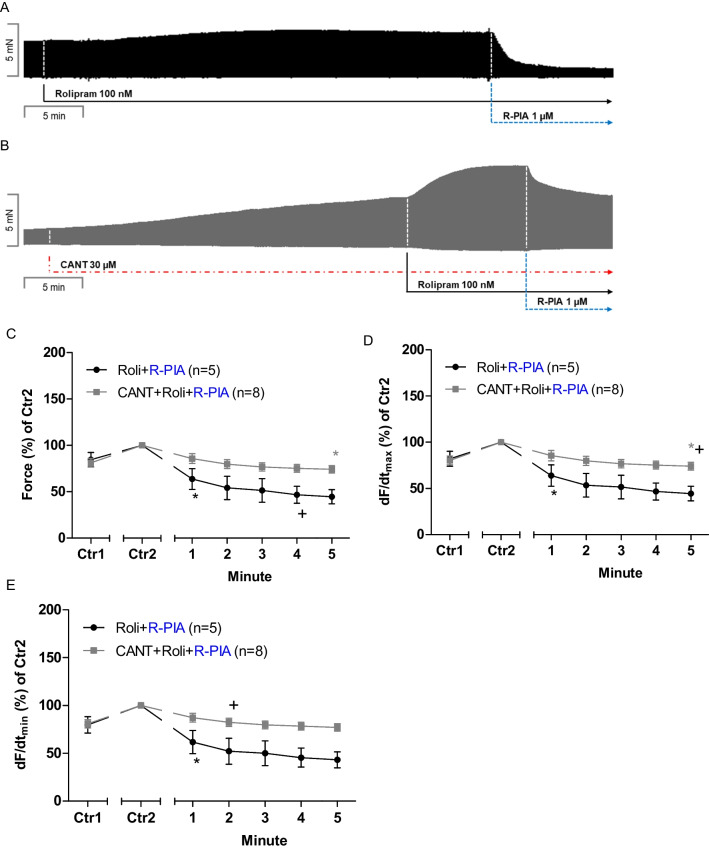
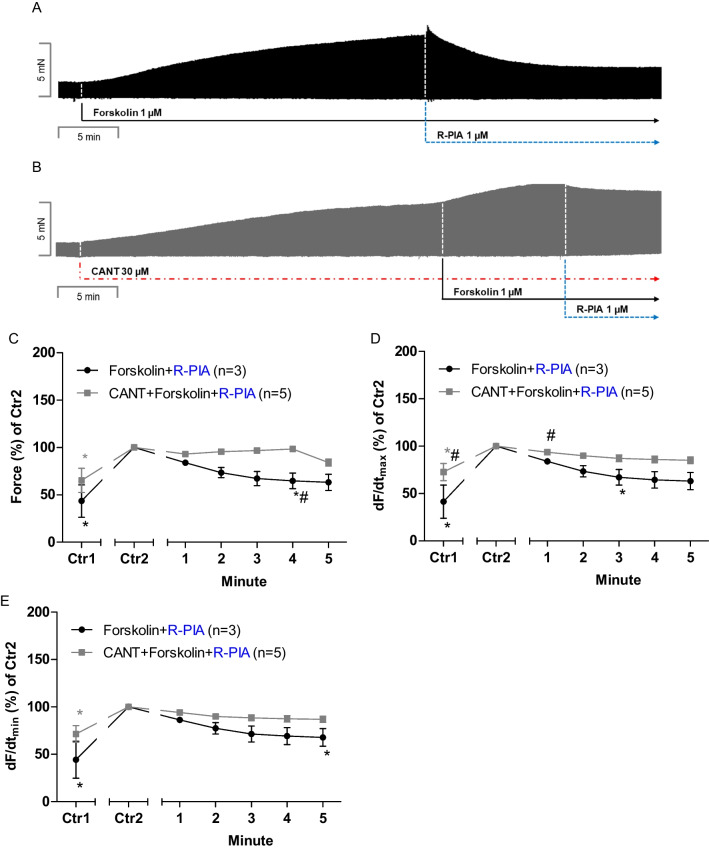
N6-(R)-Phenylisopropyladenosine (R-PIA), an agonist at A1-adenosine receptors, alone exerts negative inotropic effects (NIE) in the human atrium. This NIE is augmented in the presence of cAMP-increasing agonists like phosphodiesterase inhibitors (cilostamide, rolipram) or a direct activator of adenylyl cyclase (forskolin). Cantharidin inhibits protein phosphatases 1 and 2A (PP1, PP2A). We hypothesized that cantharidin would attenuate this NIE of R-PIA in the presence of cilostamide or forskolin. During open heart surgery (patients were suffering from severe coronary heart disease), isolated human atrial preparations (HAP) were obtained. These HAP were mounted in organ baths and electrically stimulated (1 Hz). For comparison, we studied isolated electrically stimulated (1 Hz) left atrial preparations (LA) from wild type mice. We noted that R-PIA exerted negative inotropic effects in LA and HAP in the presence of cilostamide or rolipram and forskolin that were attenuated by cantharidin. We hypothesize that R-PIA in the presence of phosphodiesterase inhibitors or forskolin stimulates PP in the human atrium. Hence, R-PIA acts, at least in part, by stimulating PP in HAP.
Keywords: Adenosine receptor; CAMP; Cantharidin; Human atrium; Phosphatases.
© 2025. The Author(s).
Conflict of interest statement
Declarations. Ethical approval: The investigation conformed to the Guide for the Care and Use of Laboratory Animals as published by the National Research Council (2011). The animals were handled and maintained according to the approved protocols of the Animal Welfare Committee of the University of Halle-Wittenberg, Halle, Germany. Humans: This study complies with the Declaration of Helsinki and has been approved by the local ethics committee. Consent to participate: Informed consent was obtained from all patients included in the study. Consent for publication: All authors declare that they have seen and approved the submitted version of this manuscript. Competing interests: The authors declare no competing interests.
Figures



References
-
- Ahmad Z, Green FJ, Subuhi HS, Watanabe AM (1989) Autonomic regulation of type 1 protein phosphatase in cardiac muscle. J Biol Chem 264(7):3859–3863 - PubMed
-
- Baumann G, Felix SB, Schrader J, Heidecke CD, Riess G, Erhardt WD, Ludwig L, Loher U, Sebening F, Blömer H (1981) Cardiac contractile and metabolic effects mediated via the myocardial H2-receptor adenylate cyclase system. Characterization of two new specific H2-receptor agonists, impromidine and dimaprit, in the guinea pig and human myocardium. Res Exp Med (Berl) 179(1):81–98. 10.1007/BF01852128 - PubMed
MeSH terms
Substances
LinkOut - more resources
Full Text Sources
Miscellaneous
