


Innovations in acute and chronic pain biomarkers: enhancing diagnosis and personalized therapy
- PMID: 39909549
- PMCID: PMC11877092
- DOI: 10.1136/rapm-2024-106030
Innovations in acute and chronic pain biomarkers: enhancing diagnosis and personalized therapy
Abstract
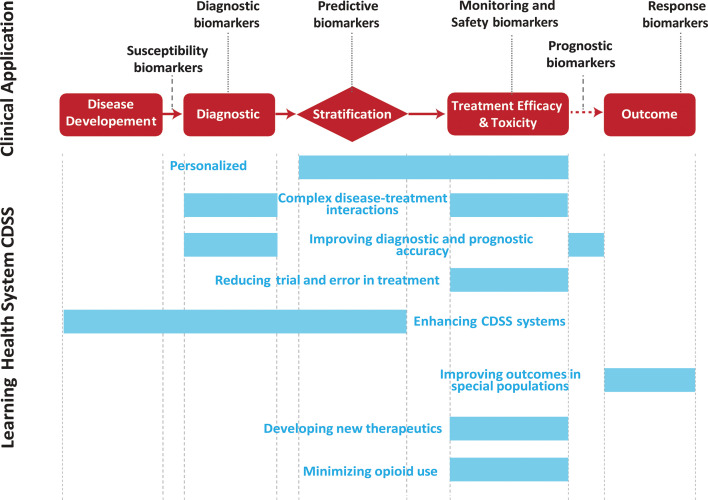
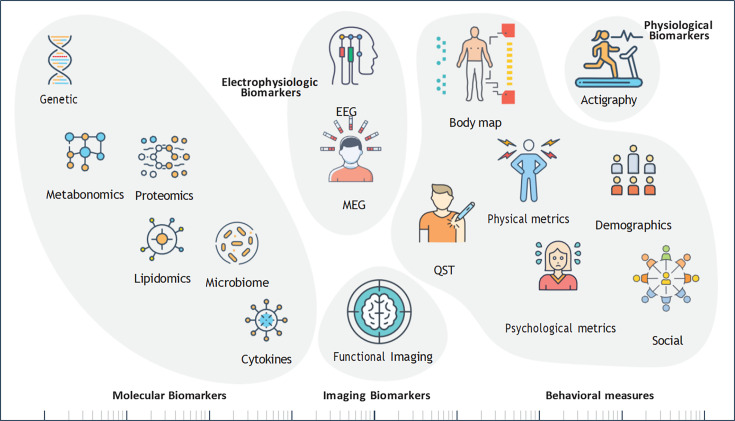
Pain affects millions worldwide, posing significant challenges in diagnosis and treatment. Despite advances in understanding pain mechanisms, there remains a critical need for validated biomarkers to enhance diagnosis, prognostication, and personalized therapy. This review synthesizes recent advancements in identifying and validating acute and chronic pain biomarkers, including imaging, molecular, sensory, and neurophysiological approaches. We emphasize the emergence of composite, multimodal strategies that integrate psychosocial factors to improve the precision and applicability of biomarkers in chronic pain management. Neuroimaging techniques like MRI and positron emission tomography provide insights into structural and functional abnormalities related to pain, while electrophysiological methods like electroencepholography and magnetoencepholography assess dysfunctional processing in the pain neuroaxis. Molecular biomarkers, including cytokines, proteomics, and metabolites, offer diagnostic and prognostic potential, though extensive validation is needed. Integrating these biomarkers with psychosocial factors into clinical practice can revolutionize pain management by enabling personalized treatment strategies, improving patient outcomes, and potentially reducing healthcare costs. Future directions include the development of composite biomarker signatures, advances in artificial intelligence, and biomarker signature integration into clinical decision support systems. Rigorous validation and standardization efforts are also necessary to ensure these biomarkers are clinically useful. Large-scale collaborative research will be vital to driving progress in this field and implementing these biomarkers in clinical practice. This comprehensive review highlights the potential of biomarkers to transform acute and chronic pain management, offering hope for improved diagnosis, treatment personalization, and patient outcomes.
Keywords: Acute Pain; CHRONIC PAIN; Multimodal Imaging; Pain Measurement; TECHNOLOGY.
© American Society of Regional Anesthesia & Pain Medicine 2025. Re-use permitted under CC BY. Published by BMJ.
Conflict of interest statement
Competing interests: None declared.
Figures
References
-
- In relieving pain in America: a blueprint for transforming prevention, care. Washington (DC): 2011. - PubMed
-
- Disease, G.B.D., I. Injury, and C Global, regional, and national incidence, prevalence, and years lived with disability for 354 diseases and injuries for 195 countries and territories, 1990- 2017: a systematic analysis for the Global Burden of Disease Study 2017. Lancet. 2018;392:1789–858. - PMC - PubMed
-
- Von Korff M, et al. United States National Pain Strategy for Population Research: Concepts, Definitions, and Pilot Data. J Pain. 2016;17:1068–80. - PubMed
-
- (NPSTF), N.P.S.T.F National pain strategy - a comprehensive population health-level strategy for pain, N.I.o health. 2015.
Publication types
MeSH terms
Substances
Grants and funding
LinkOut - more resources
Full Text Sources
Medical
