


Zoonotic risks and conservation challenges: Gastrointestinal parasites in wild mammals of Chitwan National Park, Nepal
- PMID: 39911264
- PMCID: PMC11794162
- DOI: 10.1016/j.ijppaw.2025.101041
Zoonotic risks and conservation challenges: Gastrointestinal parasites in wild mammals of Chitwan National Park, Nepal
Abstract
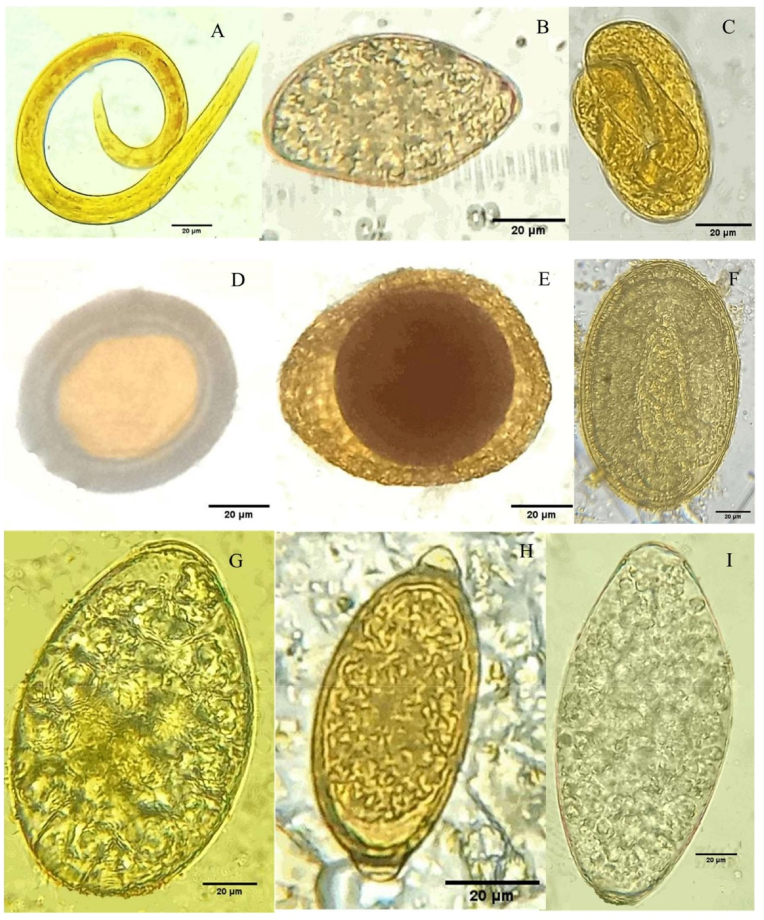
Gastrointestinal parasites (GIPs) pose a significant threat to wildlife health and biodiversity, impacting reproductive activities, behavior, survival, and population dynamics. Identifying parasitic infections in wild animals can help to mitigate extinction risk and support conservation efforts. This study investigates the prevalence, diversity, and zoonotic risks of GIPs in six large wild mammals in Chitwan National Park, Nepal. Fresh fecal samples were collected between December 2022 and April 2023 and examined using direct wet mount and concentration methods. By analyzing 63 fecal samples: Royal Bengal Tiger (Panthera tigris) (n = 7), Asian elephant (Elephus maximus) (n = 9), One-horned rhinoceros (Rhinoceros unicornis) (n = 10), Sloth bear (Melursus ursinus) (n = 9), Spotted deer (Axis axis) (n = 25), and Rhesus Monkey (Macaca mullata) (n = 3), we identified 19 GIP types: 3 protozoan species (Balantioides coli, Isospora spp., and coccidia) and 16 helminth species, revealing an 85.7% infection rate. Helminths had a higher prevalence (85.7%) than protozoans (22%). Among helminths, nematodes were the most prevalent (69.8%) followed by trematodes (38.0%) and cestodes (17.4%). Eleven types of nematodes, three types of cestodes, and two types of trematodes were recorded. Multiple infections were more common than single infections. The high prevalence of GIPs indicates a major health issue that could affect species survival and conservation efforts in Chitwan National Park, highlighting the need for proactive conservation and health monitoring strategies for conservation.
Keywords: Concentration methods; Helminths; Prevalence; Protozoans; Wildlife; Zoonotic.
© 2025 The Authors.
Conflict of interest statement
The authors declare that they have no known competing financial interests or personal relationships that could have appeared to influence the work reported in this paper.
Figures


References
-
- Achhami B., Sharma H.P., Bam A.B. Gastro intestinal parasites of musk deer (moschus chryso-gaster hodgson, 1839) in langtang national park, Nepal. J. Instr. Sci. Technol. 2016;21(1):71–75. doi: 10.3126/jist.v21i1.16053. - DOI
-
- Adhikari J.N., Adhikari R.B., Bhattarai B.P., Thapa T.B., Ghimire T.R. A small-scale coprological survey of the endoparasites in the Himalayan goral Naemorhedus goral (Hardwick, 1825) in Nepal. Biodiversitas J. of Biological Diversity. 2021;22(3) doi: 10.13057/biodiv/d220326. - DOI
LinkOut - more resources
Full Text Sources
Miscellaneous
