


Spontaneous Reduction of Posterior Shoulder Dislocation Due to Electrical Injury and the Conservative Management of Associated Complications
- PMID: 39911291
- PMCID: PMC11796310
- DOI: 10.7759/cureus.78464
Spontaneous Reduction of Posterior Shoulder Dislocation Due to Electrical Injury and the Conservative Management of Associated Complications
Abstract
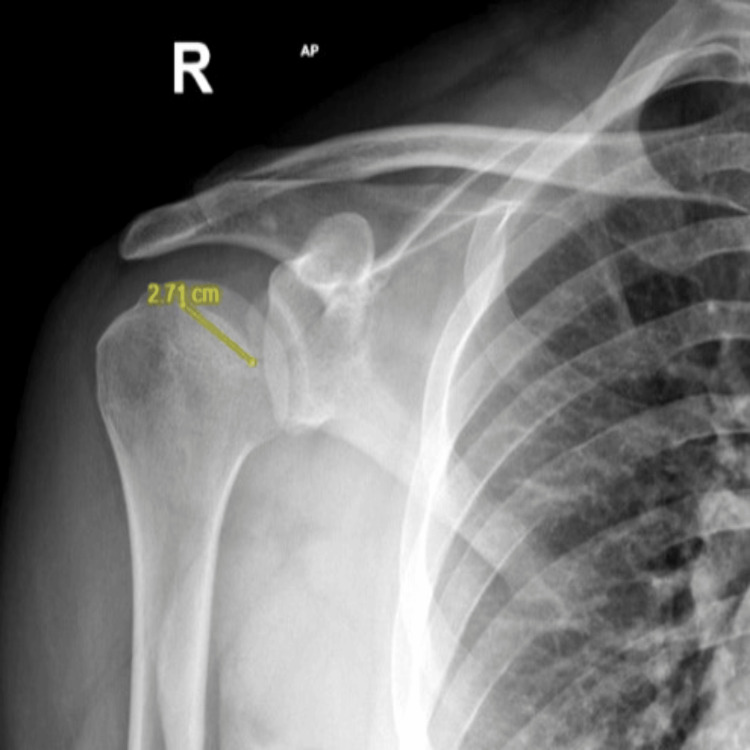
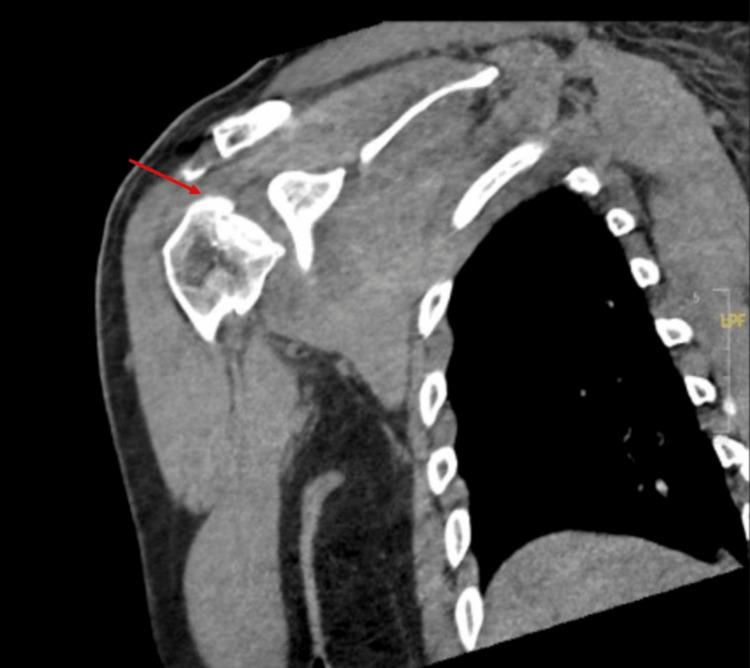
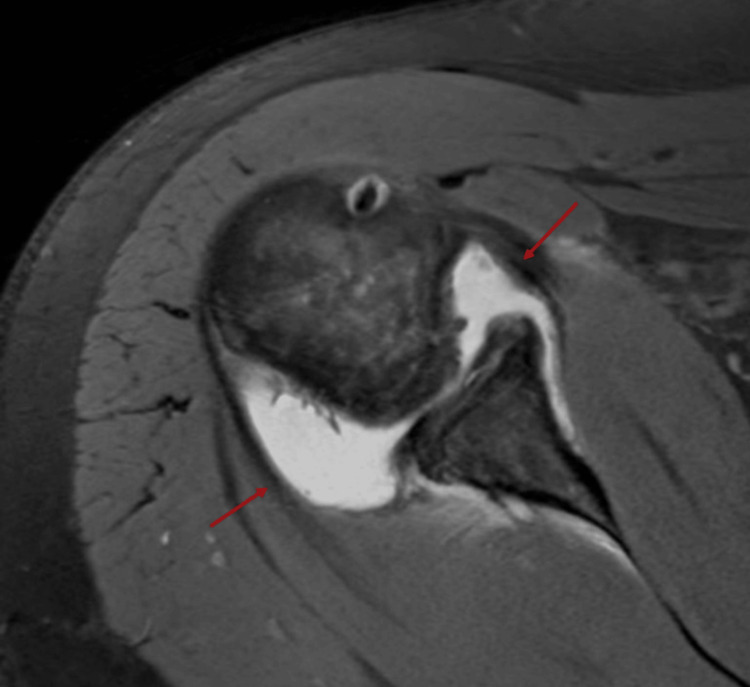
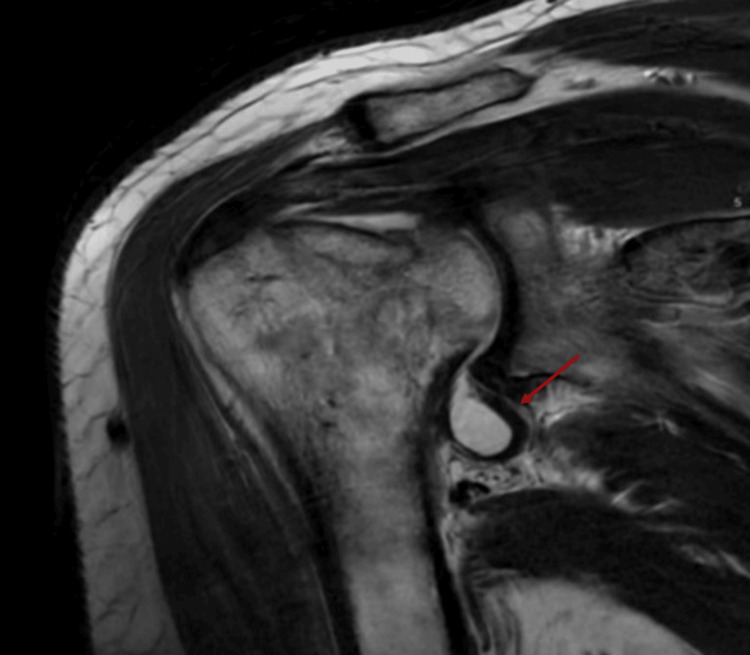
Posterior shoulder dislocation is a rare and often missed injury, usually due to seizures, electrical shocks, or high-impact trauma. A 32-year-old man with a history of diabetes presented to the emergency department following an electric shock that threw him to the ground. He complained of right shoulder pain with limitation of movement. The initial radiographs of both shoulders did not show fracture or dislocation of either shoulder joint, and the condition was managed with an arm sling. A subsequent CT scan confirmed an irregular depression with sclerosis in the subchondral bone in the anterosuperior part of the humeral head, associated with a spontaneous reduction during the course of the electrical injury. He was managed conservatively, and the one-year follow-up showed excellent clinical results. Most shoulder injuries can be treated satisfactorily without surgery, provided there is no significant instability. This case report emphasizes the successful non-surgical treatment of this very rare posterior shoulder dislocation and highlights that careful rehabilitation, along with conservative management, is effective in ensuring significant recovery. This is further supported by evidence seen in the benefits of non-surgical procedures in similar cases.
Keywords: complication; conservative approach; electrical injury; posterior dislocation of the shoulder; shoulder.
Copyright © 2025, Alhamam et al.
Conflict of interest statement
Human subjects: Consent for treatment and open access publication was obtained or waived by all participants in this study. Conflicts of interest: In compliance with the ICMJE uniform disclosure form, all authors declare the following: Payment/services info: All authors have declared that no financial support was received from any organization for the submitted work. Financial relationships: All authors have declared that they have no financial relationships at present or within the previous three years with any organizations that might have an interest in the submitted work. Other relationships: All authors have declared that there are no other relationships or activities that could appear to have influenced the submitted work.
Figures
References
-
- Complex posterior fracture-dislocation of the shoulder. Epidemiology, injury patterns, and results of operative treatment. Robinson CM, Akhtar A, Mitchell M, Beavis C. J Bone Jt Surg. 2007;89:1454–1466. - PubMed
-
- Anatomical reconstruction for reverse Hill-Sachs lesions after posterior locked shoulder dislocation fracture: a case series of six patients. Bock P, Kluger R, Hintermann B. Arch Orthop Trauma Surg. 2007;127:543–548. - PubMed
-
- Triple "E" syndrome: bilateral locked posterior fracture dislocation of the shoulders. Brackstone M, Patterson SD, Kertesz A. Neurology. 2001;56:1403–1404. - PubMed
-
- Bilateral posterior fracture-dislocation of the shoulder and other trauma caused by convulsive seizures. Shaw Shaw, JL JL. J Bone Jt Surg. :53–1437. - PubMed
-
- Posterior dislocation of the shoulder. McLaughlin HL. https://pubmed.ncbi.nlm.nih.gov/14946209/ J Bone Joint Surg Am. 1952;24:584–590. - PubMed
Publication types
LinkOut - more resources
Full Text Sources