


Community perceptions and determinants of obstetric fistula across gender lines
- PMID: 39915531
- PMCID: PMC11802775
- DOI: 10.1038/s41598-025-87192-4
Community perceptions and determinants of obstetric fistula across gender lines
Abstract
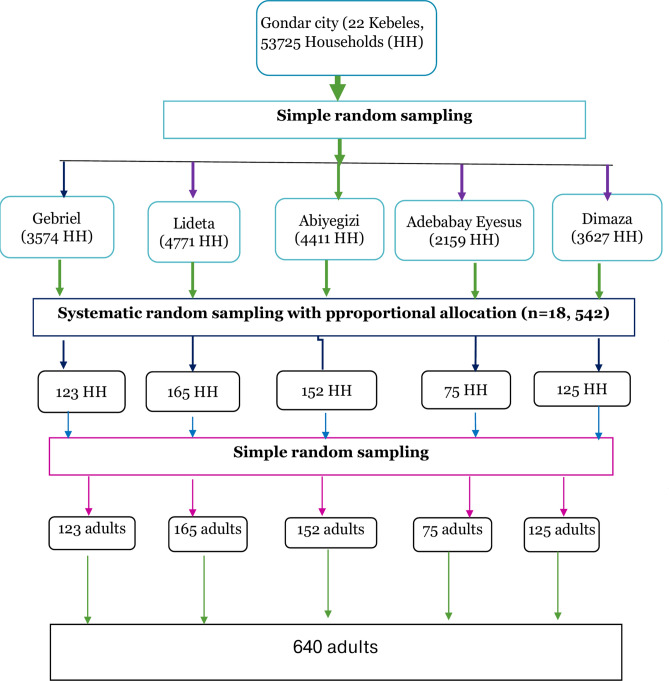
Obstetric fistula is a major maternal health challenge in low-income countries like Ethiopia. Misperceptions about obstetric fistula delay seeking and accessing healthcare. Understanding community attitudes is crucial for prevention, early detection, and support for affected women. A community-based study was conducted from February 1 to April 26, 2024, among 640 women and men to assess attitudes and influencing factors. Participants were selected using a multistage sampling. Multivariable logistic regression analysis was performed, with a p-value < 0.05 considered statistically significant. The study included nearly equal proportions of males (49.1%) and females (50.9%), with a median age of 32 years (IQR: 19-64). Among participants, 47.8% (95%CI: 43.7-51.6) had a favourable attitude towards obstetric fistula. Those under 20 years (AOR: 7.7; 95%CI: 2.3-28.6), aged 20-35 (AOR: 3.9; 95%CI: 1.8-8.5), and aged 36-50 (AOR: 6.36; 95%CI: 3.0-14.1) were more likely to have a favourable attitude compared to those over 50 years. Female gender (AOR: 1.5; 95%CI: 1.1-2.2), primary education (AOR: 1.86; 95%CI: 1.3-2.9), and awareness of obstetric fistula (AOR: 3.04; 95%CI: 2.0-4.6) were significant determinants. The study revealed unfavourable community attitudes towards obstetric fistula, with notable gender and age differences. Enhancing attitudes requires a comprehensive, tailored program involving all relevant stakeholders.
Keywords: Community attitude; Determinant factors; Ethiopia; Obstetric fistula.
© 2025. The Author(s).
Conflict of interest statement
Declarations. Competing interests: The authors declare that there are no financial and non-financial competing interests. The authors declare no competing interests. Ethics statement: The studies were conducted in accordance with the ethical standard of the University of Gondar (VP/S/10291) and compliance with local legislation and institutional guidelines. The participants provided verbal and informed consent to participate in the study. Consent for publication: Not applicable.
Figures
References
-
- Lozo, S., Morgan, M.A., Polan, M.L., Sleemi, A. & Bedane, M.M. Disease Control Priorities, Third Edition. 95 (2015).
-
- Sanni OF, Dada MO, Ariyo AO, Salami AO, Afelumo OL, Ayosanmi OS, et al. The prevalence and management of obstetric fistula among women of reproductive age in a low-resource setting. Healthc. Low-resource Setti. 11(1) (2023).
-
- HARMS WC. OBSTETRIC FISTULA. UNFPA (2012)
MeSH terms
Grants and funding
LinkOut - more resources
Full Text Sources
Medical
Miscellaneous
