


Genomic epidemiology and phenotypic characterization of Staphylococcus aureus isolated from atopic dermatitis patients in South China
- PMID: 39922832
- PMCID: PMC11807149
- DOI: 10.1038/s41598-025-87317-9
Genomic epidemiology and phenotypic characterization of Staphylococcus aureus isolated from atopic dermatitis patients in South China
Erratum in
-
Author Correction: Genomic epidemiology and phenotypic characterization of Staphylococcus aureus isolated from atopic dermatitis patients in South China.Sci Rep. 2025 Mar 17;15(1):9191. doi: 10.1038/s41598-025-93289-7. Sci Rep. 2025. PMID: 40097601 Free PMC article. No abstract available.
Abstract
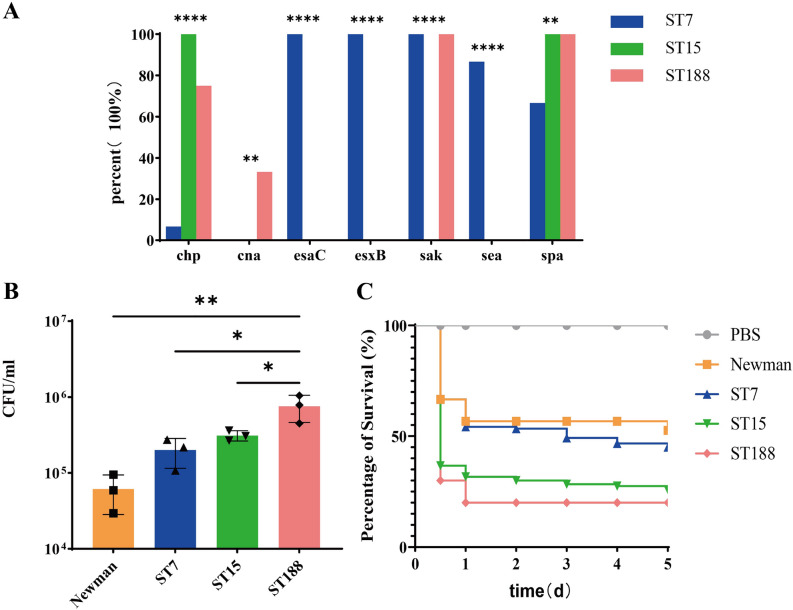
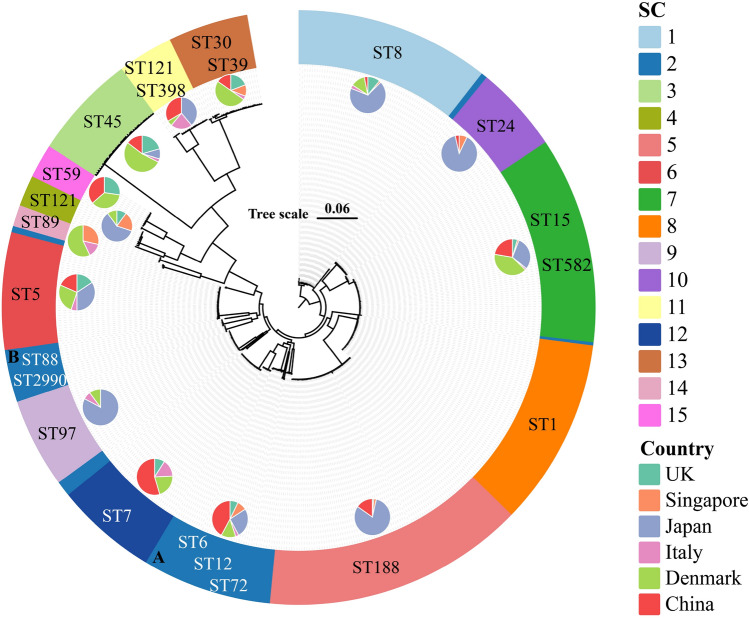
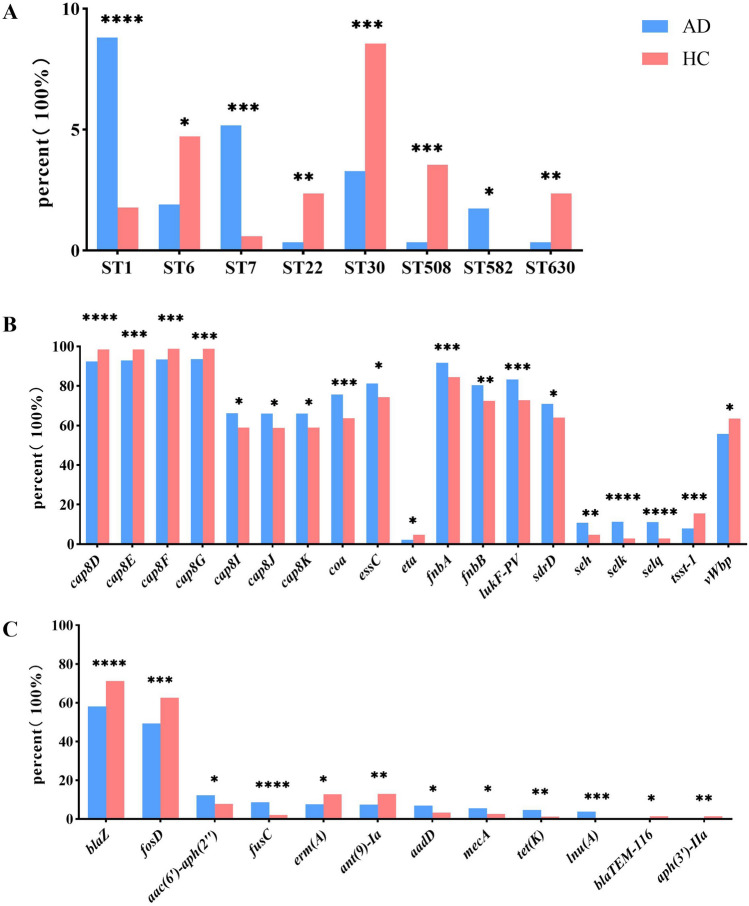
Atopic dermatitis (AD) is a multifactorial, chronic relapsing disease. Staphylococcus aureus is the key microbial factor in AD, linked to disease activity. However, there is limited knowledge of genomic prevalence characteristics and phenotypic features of S. aureus in AD patients in China. We investigated 108 S. aureus of AD in China and globally publicly available genome sequences of 579 S. aureus of AD. Sequence type (ST) 7, ST15 and ST188 were the major lineages in China. Genes esaC, esxB, and sea were only detected in ST7, potentially contributing to its prevalence in AD. ST188 exhibited high virulence and adhesion, possibly due to the cna gene. Phylogenetic and population structure analysis revealed that 579 strains of global AD were classified into 15 sequence clusters (SCs), with SC5, SC2, and SC7 dominating. S. aureus of Chinese AD patients was mainly distributed in SC2, SC7, and SC12. Comparative genomic highlighted genes linked to AD, including enterotoxins (seh, selk, selq, entH), adhesion genes (fnbA, fnbB, sdrD, map, fib, narH). From China and global perspectives, we analyzed S. aureus's genomic epidemic traits, phylogeny, and population structure in AD skin. These findings contribute to understanding S. aureus-host interactions and genomic diversity in AD.
Keywords: Staphylococcus aureus; Atopic dermatitis; PGWAS; Phylogenetic analysis; Whole-genome sequencing.
© 2025. The Author(s).
Conflict of interest statement
Declarations. Competing interests: The authors declare no competing interests. Ethical approval: The protocol was approved by the Guangdong Hospital of Traditional Chinese Medicine (approval no. BE2019-165-01 and BF2022-145-01). Consent to participate: Informed consent was obtained from each participant included in the study.
Figures


References
MeSH terms
Substances
Grants and funding
LinkOut - more resources
Full Text Sources
Medical
Molecular Biology Databases
